Mountain Lions

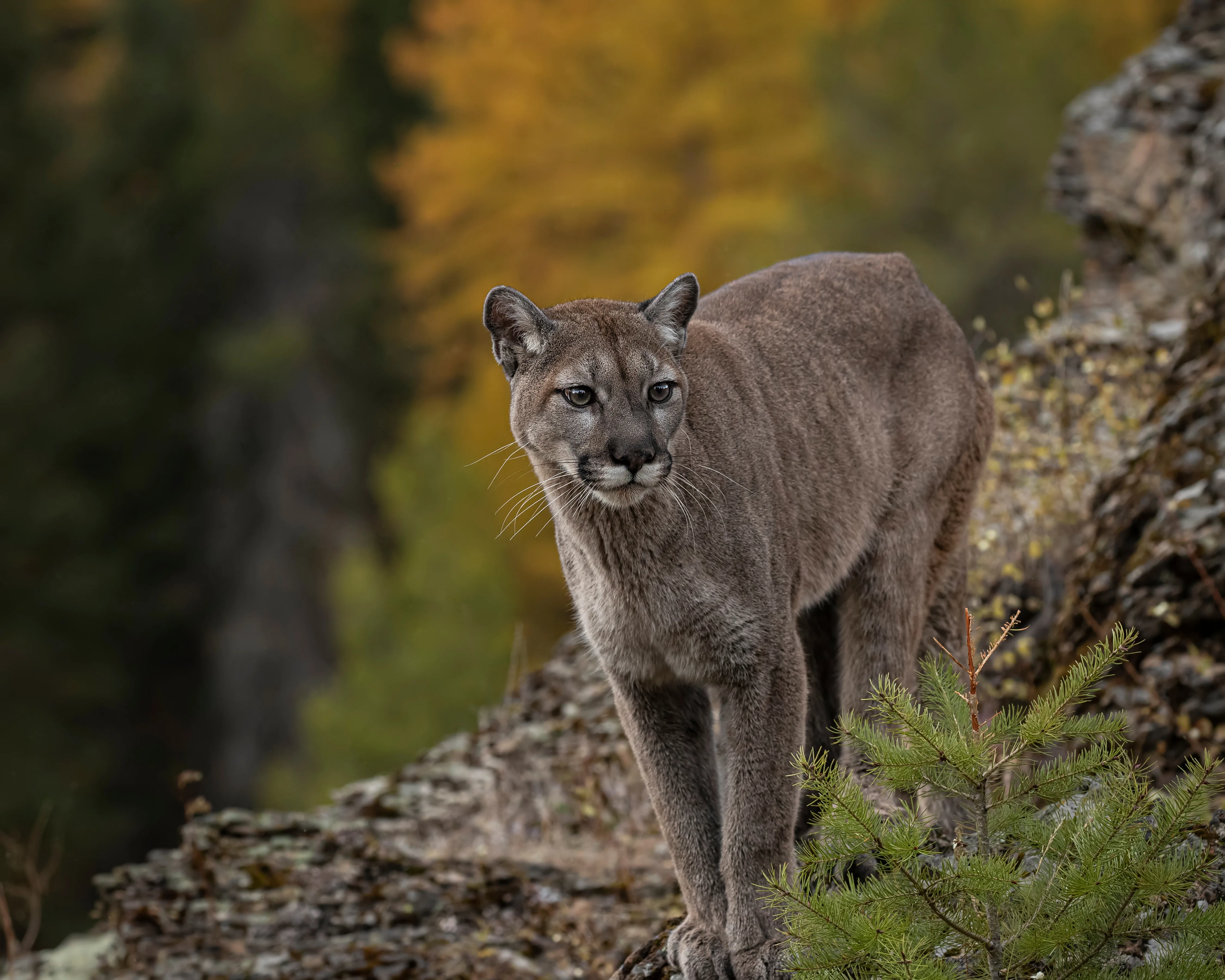
Native to the Americas, mountain lions have the largest geographic range of any land mammal in the Western Hemisphere, from Canada to the southern tip of Chile. In California, mountain lions can be found wherever deer are present, including forests, wetlands, grassy valleys and sometimes, in areas where people live. Mountain lions (also known as pumas, catamounts or panthers) have an important role in the ecosystem and primarily keep to themselves, but when humans and mountain lions overlap, conflict can occur. We must learn to share our habitat with this beautiful animal, our own native cat. Oakland Zoo has made a bold commitment to the conservation of mountain lions, one that utilizes our full breadth of resources, and engages conservation actions within our community. We envision a future where humans and pumas coexist and thrive.
In 2013, we launched the Bay Area Cougar Action Team (BACAT), our local mountain lion alliance, which has helped treat over 30 mountain lions for illness and injury.

Conservation Challenges
Loss of Habitat
Mountain lion habitat is increasingly fragmented. New communities cut into mountain lion territory, causing crucial movement corridors to become blocked by highways and buildings. Mountain lions need large territories to succeed, so addressing compromised ecosystems is vital to their survival. Like many other wild animals in California, mountain lions also increasingly face the threat of habitat loss, injury or death due to wildfires.
Human-Wildlife Conflict
With encroachment and a spreading human population, mountain lions face the danger of being killed by cars much too often. When a mother mountain lion is killed in a car strike, it is likely her cubs will not survive because they rely on her for food and guidance. Illegal hunting and hunting with depredation permits (issued when livestock or pets are attacked) also impact the mountain lion population in California.
Climate Change
Like many California wild animals, mountain lions face the threat of wildfire due to climate change. Programs that address the rescue and care of injured and burned native wildlife are crucial.
Oakland Zoo is Taking Action for the Mountain Lion
BACAT
In 2012, Oakland Zoo participated in a training on Human Wildlife Conflict Resolution that resulted in a groundbreaking alliance called BACAT (the Bay Area Cougar Action Team). BACAT is made up of multiple agencies, nonprofits, local parks, the CA Department of Fish and Wildlife, and mountain lion researchers. With shared messaging and a team mindset, BACAT aims to create a model support system that can be duplicated throughout California and beyond.
Veterinary Care
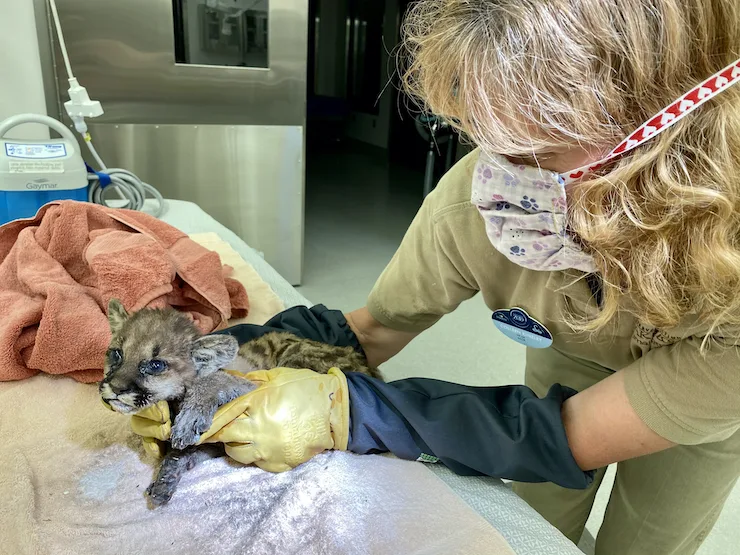
Oakland Zoo provides state-of-the-art wildlife veterinary care for sick, injured, burned, or orphaned wild mountain lions through a long-standing partnership with California Department of Fish and Wildlife. With wildfires and car strikes, the need to respond quickly is crucial. Oakland Zoo is dedicated to giving these cats the care they need at these critical times, until they can be released back into the wild in a safe place or, if release isn't possible, finding good forever homes for them.
Political Action
Oakland Zoo, along with other partners, helped pass SB 132, a measure that allows various nonprofits and other individuals and organizations help the California Department of Fish and Wildlife address incidences of mountain lions in human populated areas.
Research
Oakland Zoo partners with the Bay Area Puma Project to study hair snags to gain insight into the behavior and needs of our local pumas.
Community Engagement
Oakland Zoo shares conservation issues facing mountain lions, as well as empowering solutions through Docents and Volunteers, Teen Wild Guides, Education programs, events, exhibits, campaigns, and the media.
Forever Homes
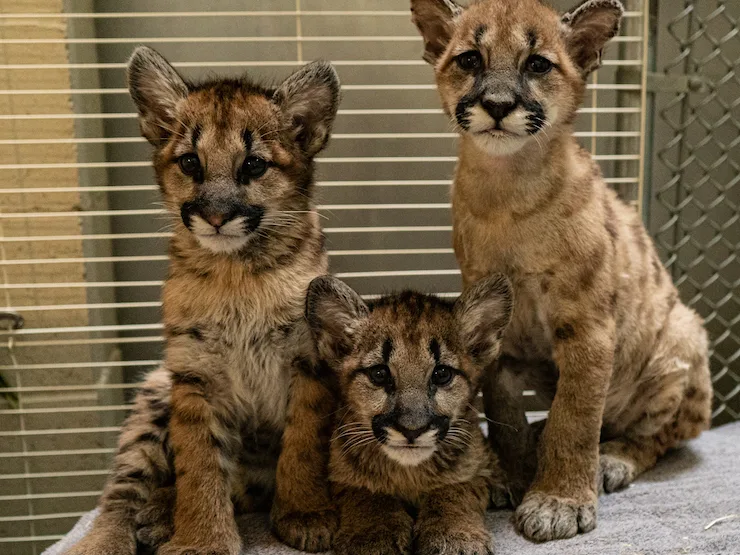
Our resident mountain lions were rescued and found their forever home in Oakland Zoo’s large mountain lion habitat, filled with mature oak trees and a myriad of natural spaces to explore, climb, and lounge. They were rescued as young cubs in various parts of California, likely orphaned due to car strike or depredation incidents. These beautiful cats now serve as ambassadors to their wild counterparts, inspiring a safer future for California’s mountain lions.
Our Partners

California Department of Fish and Wildlife
The California Department of Fish and Wildlife manages and protects the state's wildlife, wildflowers, trees, mushrooms, algae, and native ecosystems.

Bay Area Puma Project
The Bay Area Puma Project provides research and insight into the local puma population enabling us to develop new conservation and land use strategies to minimize human-puma conflict, and foster a healthy co-existence in the region.

Mountain Lion Foundation
The Mountain Lion Foundation encourages citizens nationwide to act with mountain lions in mind by inspiring people to take action to preserve habitats, developing and implementing practical solutions to conflict problems, and promoting lion research.

BACAT - Bay Area Cougar Action Team
The BayArea Cougar Action Team (BACAT) is an alliance of organizations that work together to ensure a safe future for Bay Area mountain lions (AKA cougars or pumas).
Taking Action for Mountain Lions: You Can Too!
- NEVER feed mountain lions. Mountain lions who get used to human presence can lose their natural wariness of us. If we offer access to food even once, we end up with a situation where the animal associates humans with food.
- LANDSCAPE for mountain lion safety by removing dense or low-lying vegetation that provides hiding places for mountain lions, bobcats, coyotes, and other predators near your house. Choose plants that do not attract deer or other prey. Appropriate fencing can also make your yard or play area uninviting to prey animals such as deer.
- DETER wild animals with outdoor lighting, motion sensors, and electric fencing to help stop prey animals and large cats from entering your yard. These features also make animals approaching your yard more visible to you.
- DRIVE SAFELY and obey speed limits. Reduce your speed in wildlife areas. Be extra alert during dawn, dusk, and at night.
- KEEP IT CLEAN, please don’t litter. Human food attracts wildlife, and litter thrown from a car attracts wildlife to roadsides.
- PROTECT and properly enclose livestock. Keep pets inside, especially between dusk and dawn.
- BE A RESEARCHER and report your sighting to Bay Area Puma Project’s database.