Panamanian Golden Frog
Critically Endangered
Wetlands
Panama
Diurnal
Insectivorous
Children's Zoo

Characteristics
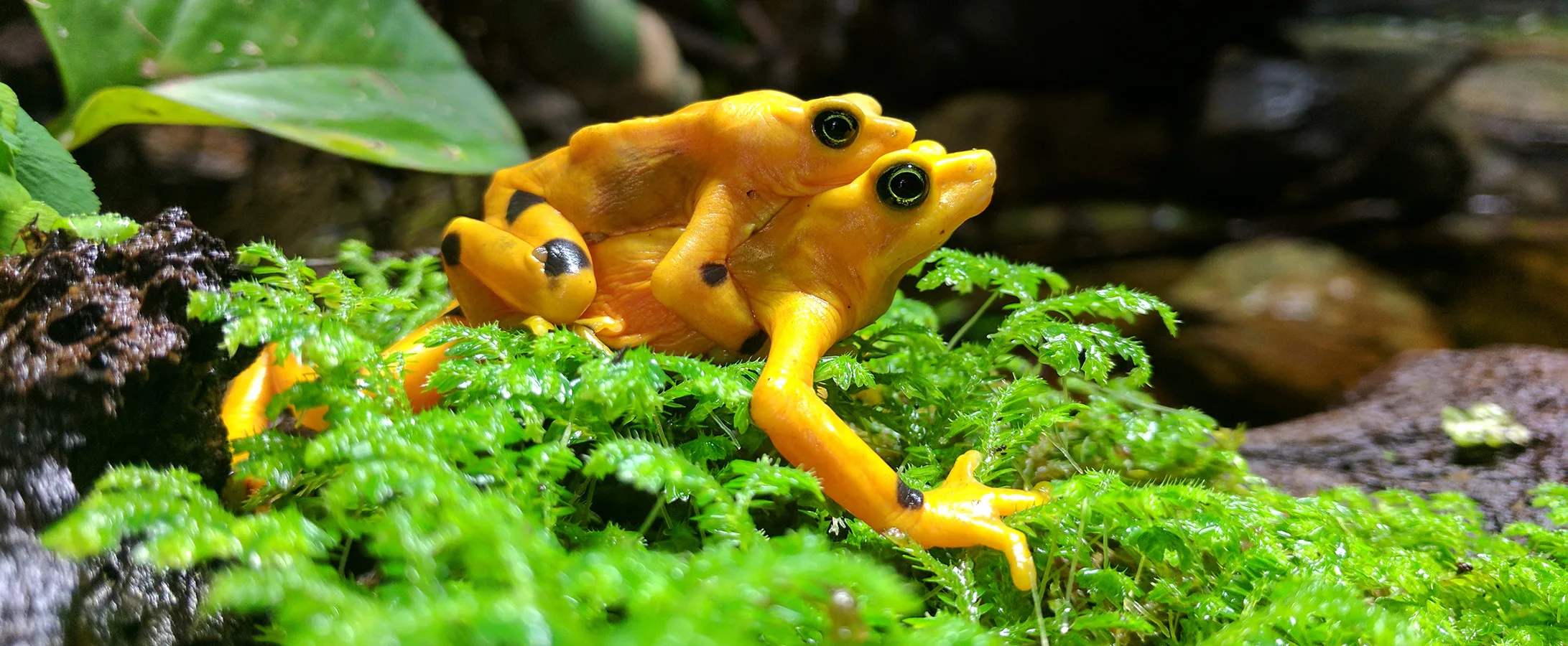
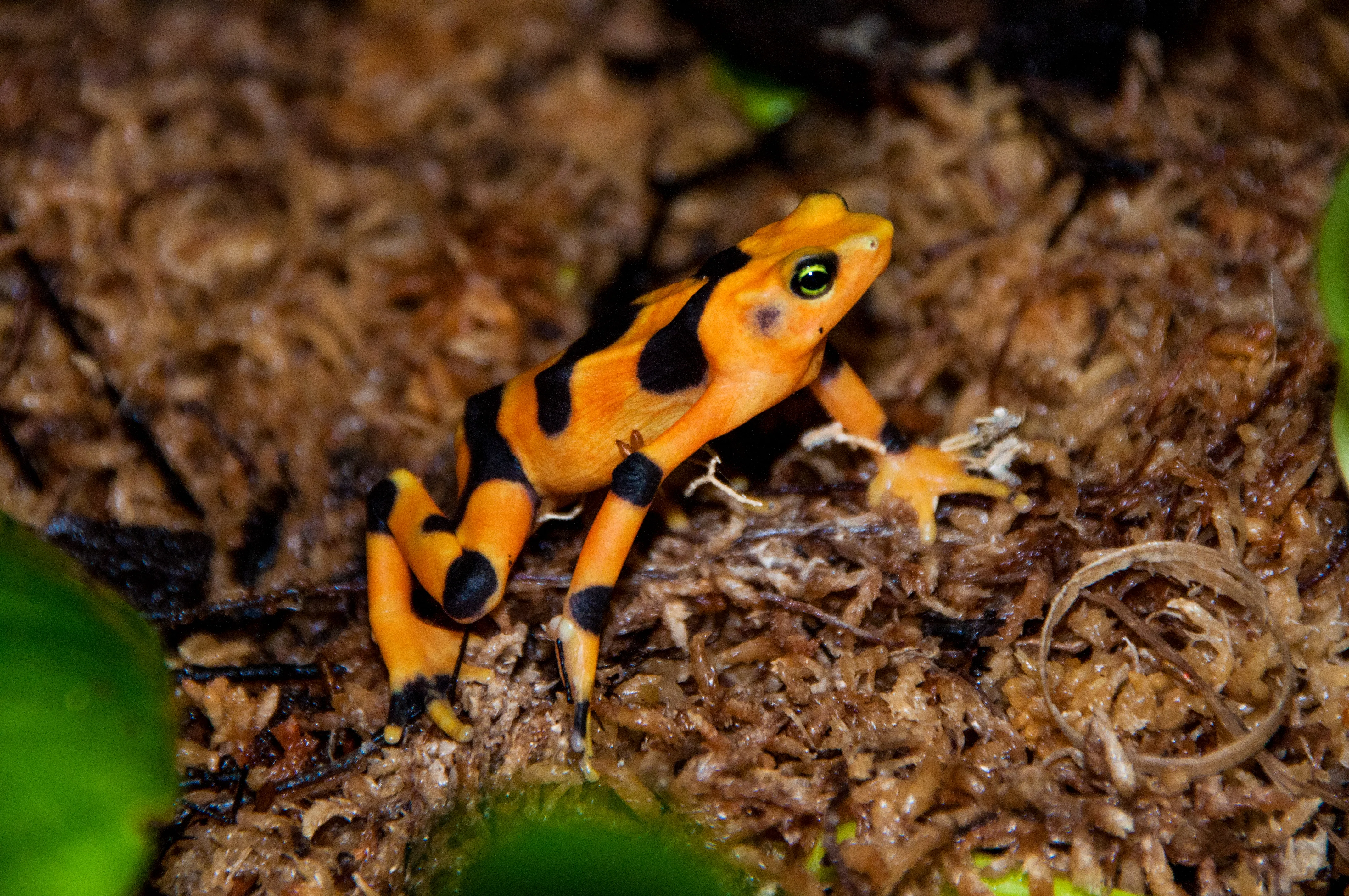
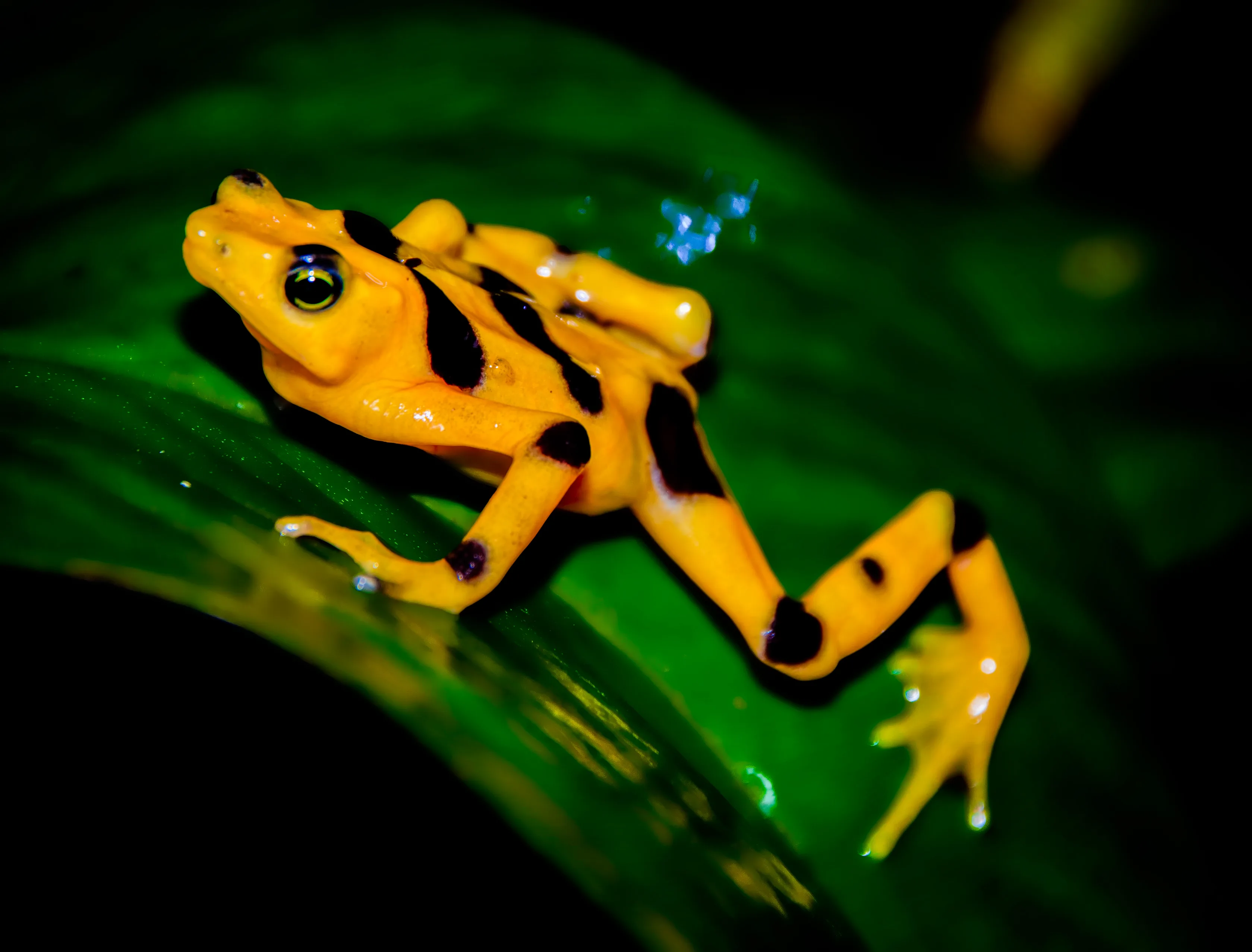
Panamanian olden frogs, as their name suggests, is a golden yellow all over their body. They have black splotches covering their backs. This bright yellow coloration is a way to warn predators of their poisonous nature. In length, these frogs range from 1 inch (3.5 cm) long all the way to 2.5 inches (6.3cm) long. Females stay on the higher end of that range, while males are on the small end of the range.
Habitat & Ecology
Panamanian golden frogs are endemic to Panama. Wild populations exclusively live in the volcanic caldrea of El Valle de Antón and Cerro Campana, that’s where they get their other common name: Cerro Campana stubfoot toad. They live along streams in dry and wet forests. Oftentimes they are found along the stream in high slopes reaching heights of 4,000 ft above sea level.
Diet
Panamanian golden frogs are insectivores. They prey on insects and other small invertebrates found in their natural habitat.
Behavior & Reproduction
Panamanian golden rogs are diurnal, meaning they are active during the day. That is when they hunt for food.
Females will lay their eggs along moving water sources, like streams. The female lays the eggs first, then the male deposits sperm over the laid eggs. Tadpoles are hatched and are white for the first few days. Because they are inmoving waters, these tadpoles have adapted to having modified “suction cups” to help keep them in place. These tadpoles will darken a few days after hatching to a green color with black spots, a way to camouflage while growing. After a few weeks, the yellow coloration will appear, alerting predators of their toxic nature.
4-7 years, over 10 in protected care
Nov-Jan
300
Yearly
Conservation
Panamanian golden frogs are listed as critically endangered with populations decreasing by the IUCN. This was last updated in 2018, so it is believed that these frogs may be extinct in the wild. If there is still a population of them in the wild, then there is believed to be less than 50 mature adults. The drastic decline in population is due in part to chytrid fungus (chytridiomycosis), an infectious skin disease that restricts their movement and breathing, along with the pressures of the illegal pet trade.
Fascinating Facts
- Panamanian golden frogs are poisonous, but they aren’t naturally poisonous. They get their toxins from the food they eat.
Our Role
Project Golden Frog is an ongoing conservation consortium which connects the Republic of Panama and the United States, in an effort to ensure the survival of this species. Plans for captive breeding in Panama are being supported by Project Golden Frog. Captive breeding programs for this species are already in place at a number of zoos, including Maryland Zoo in Baltimore, Houston Zoo, Denver Zoo, Detroit Zoo, and Oakland Zoo.