Madagascar Reed Frog
Least Concerned
Dry Forest
Madagascar
Nocturnal
Insectivorous
Children’s Zoo
Characteristics
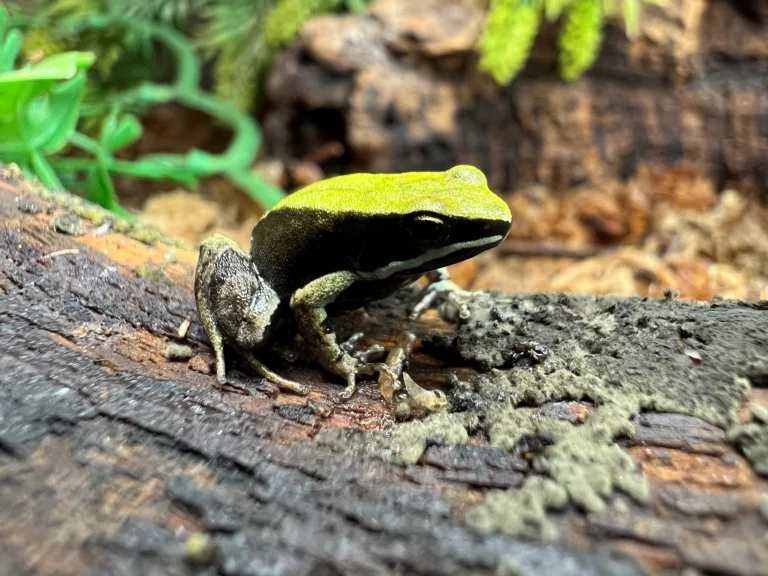
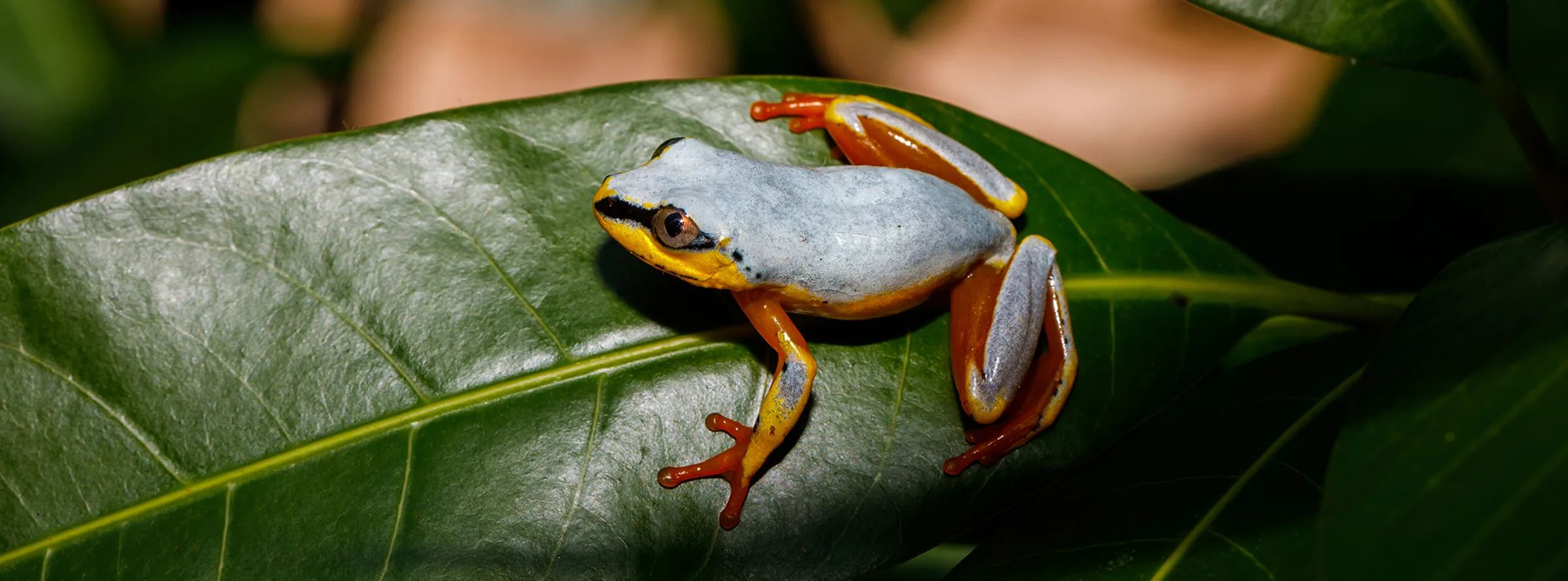
Madagascar reed frogs can reach up to 1.5 inches in length. Their dorsal (back) side is a light blue almost white, with a horizontal black stripe across their face, giving them their other commonly referred to name the blue-black reed frog. Their ventral (under) side fades from a yellow to a white or cream. Their feet are orange.
Habitat & Ecology
Madagascar reed frogs, as their name suggests are endemic to Madagascar. Thesy specifically are found on the Northeastern coast of Madagascar, in lower altitude areas up to 800m. These frogs, uncharacteristically of other amphibians, prefer drier habitats. Madagascar reed frogs generally inhabit dry forests, croplands, and urban environments. They still need access to water, whether permanent or temporary, so they will never stray too far.
Diet
Reed frogs are insectivores. They feed on a variety of small insects found within their habitat.
Behavior & Reproduction
Since they live in hotter environments, the day can be too much for this amphibian. They will sleep during the day and wake at night, making them nocturnal. They will rest on plant leaves just at the water’s edge, retreating into said water if disturbed.
Little is known about reproduction in these frogs in the wild. All frogs go through metamorphosis. The female lays eggs in a body of water and those eggs will hatch into tadpoles. Tadpoles remain in the water eating various larvae and algae until they grow legs and metamorphosis into an adult frog. This process usually takes just a couple of months.
2-3 years, over 5 in protected care
Year round, concentrated in the months of Feb, Mar, Jul, Aug, & Oct.
300
Year-round
Conservation
Madagascar reed frogs are considered Least concerned with a stable population by the IUCN. Because of their wide distribution over their natural habitat, they are considered to have a large population.
Fascinating Facts
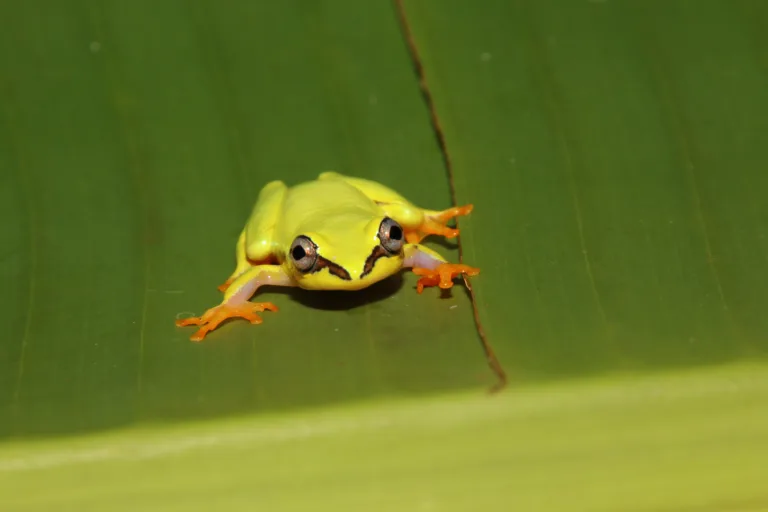
- The color of these frogs will change when exposed to sunlight. Their light blue color can shift to a yellow or white in the sun.