Starry Night Reed Frog

Least Concerned
Forests and Wetlands
Madagascar
Nocturnal
Insectivorous
Children’s Zoo

Characteristics
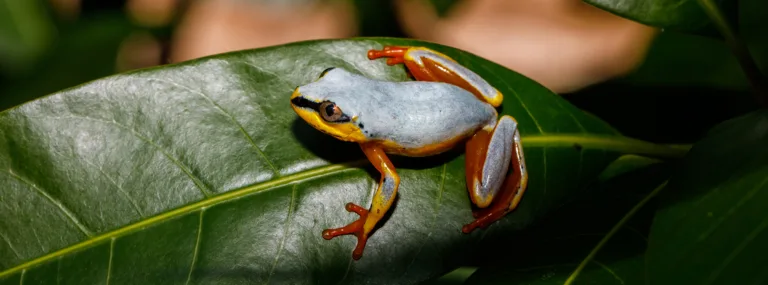
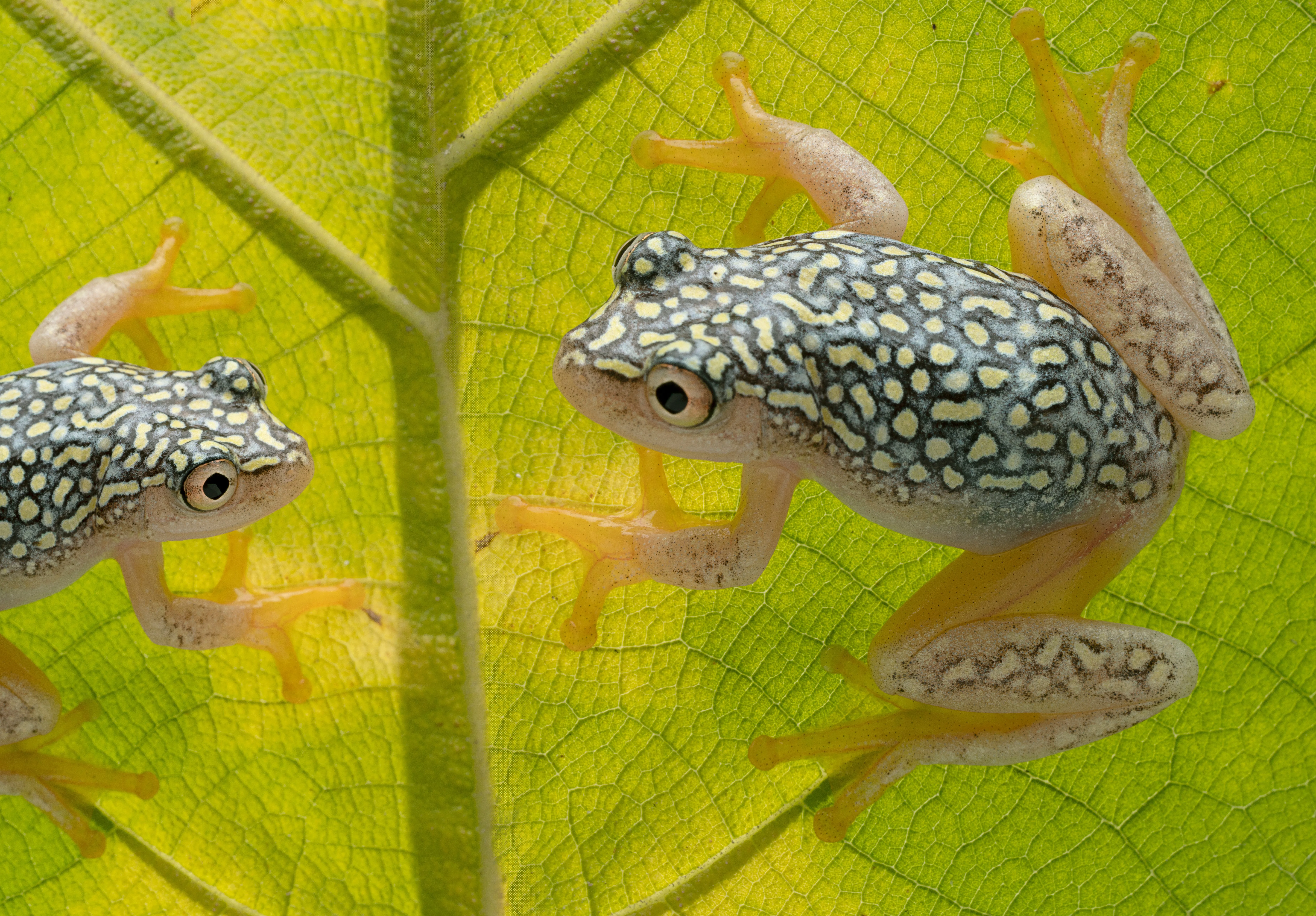
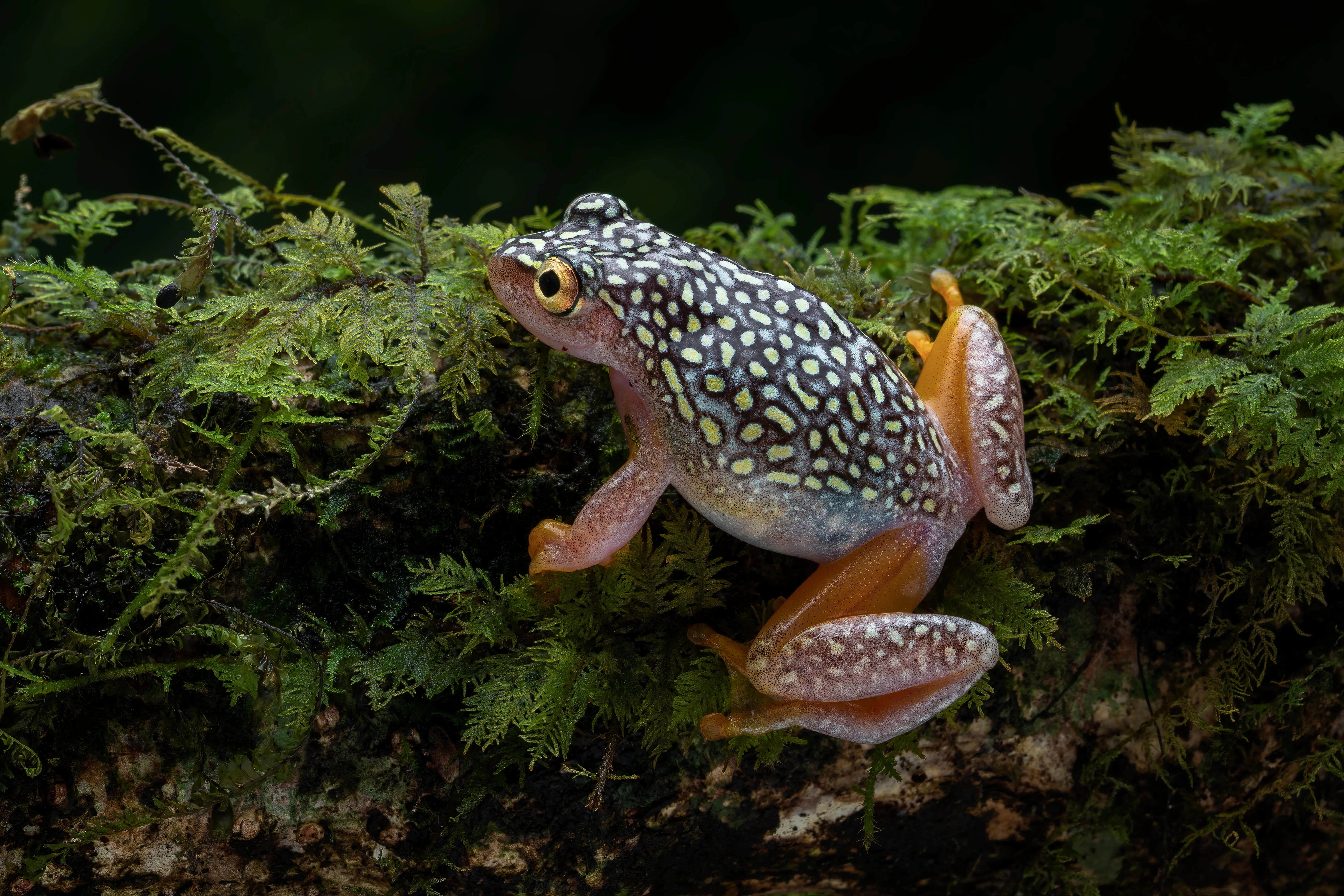
Starry night reed frogs, nicknamed “starry nights,” are named for their resemblance to that of a starry night. Their backs are dark black or gray color, with concentric circles of black and yellow. They have orange feet with a white ventral (underside), giving them their other common name whitebelly reed frog.
Habitat & Ecology
Starry nights are endemic to Madagascar, meaning in the wild they can only be found in Madagascar. They are found on the Eastern Coast of Madagascar. Being that starry nights are amphibians, they live in areas that are moist. This includes tropic and subtropic forests, shrublands, and even swamps or marshes. Starry nights are also commonly found in human care across the world, but mimicking their natural habitat can be difficult.
Diet
Reed frogs are insectivores. They will feed on most invertebrates that are the size of their head or smaller. In human care they are often fed crickets and even flies.
Behavior & Reproduction
Starry night reed frogs are nocturnal frogs. During the day they usually stay in one place conserving energy, waking up closer to dusk to feed. Starry nights are thought to be social animals. They are often found in groups in the wild and are tolerant of conspecifics (members of the same species). These frogs are also considered docile, hence why they are often found in human care.
Breeding for this species is in bodies of water, whether they are permanent or temporary. This can even include rice fields. Females are suspected to lay as many as 500 eggs at a time. Little else is known about Starry night reed frogs in the wild, but breeding has been observed in August in the Ranomafana National Park.
2-3 years, over 5 in protected care
August
500
Yearly/unknown
Conservation
Starry night reed frogs are currently listed as Least Concerned with a stable population by the IUCN. Within their natural habitat they are relatively widespread and tolerant of the different habitats.
Fascinating Facts
- The color of these frogs will change when exposed to sunlight. Their spots can change from dark orange in the sun to yellow or almost white color in the shade.