Black Beauty Walking Stick
Critically Endangered
Grassland and Forests
Peru
Nocturnal
Herbivorous
Children’s Zoo
Characteristics
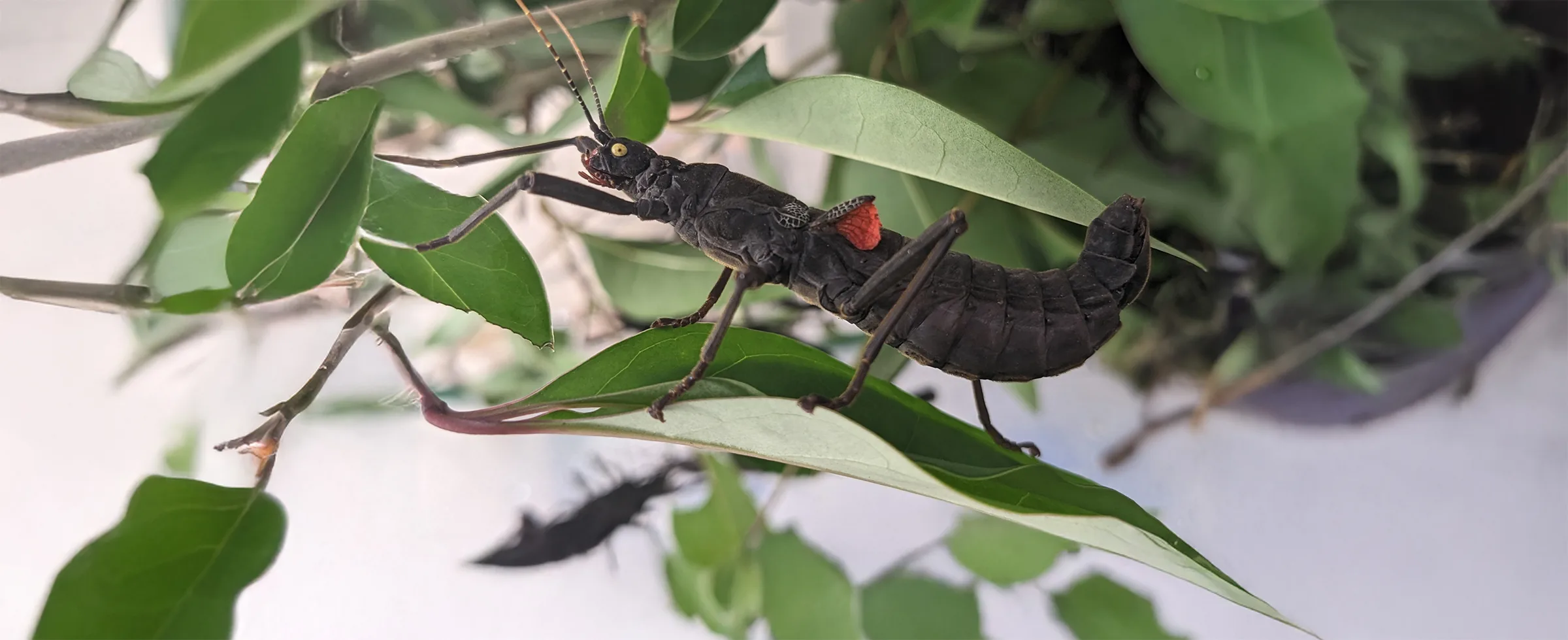
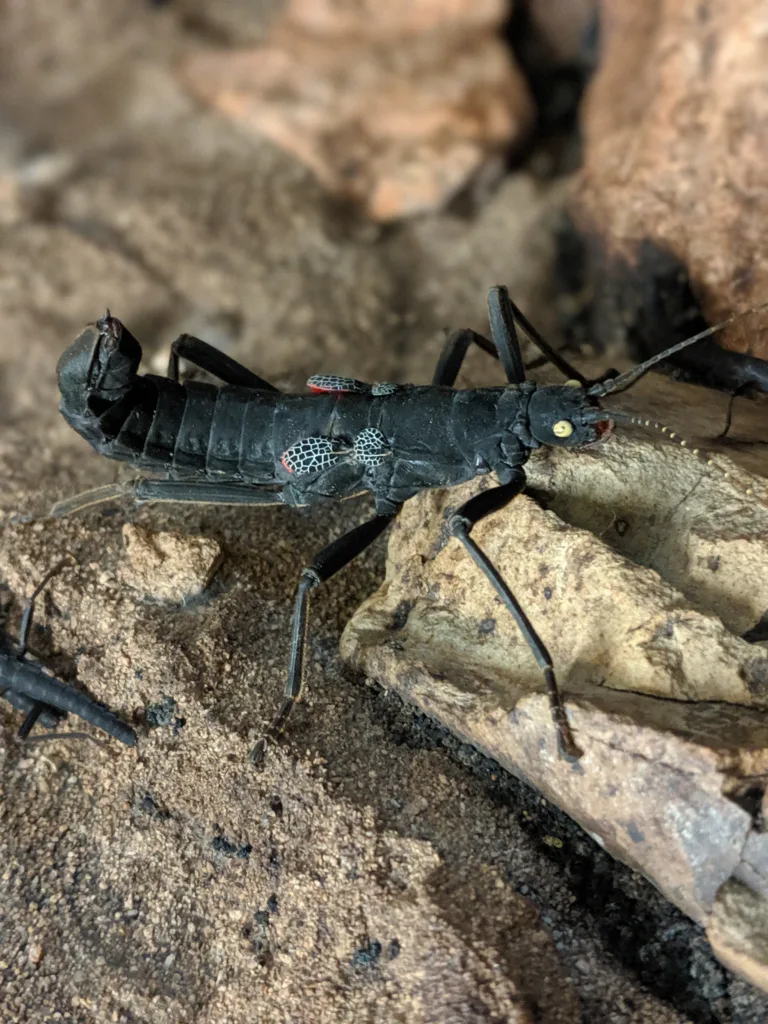
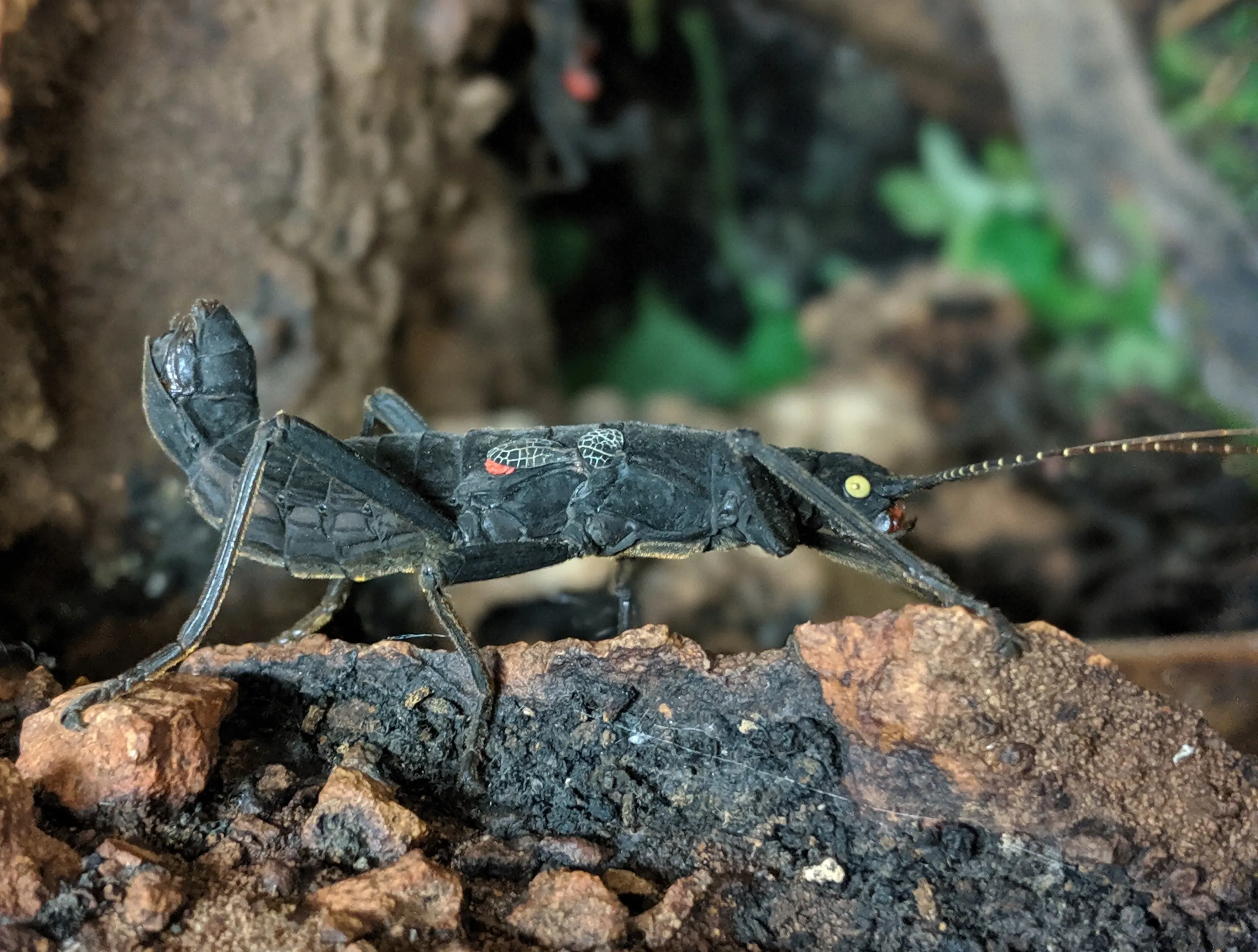
Black beauty walking sticks are primarily black. Small vestigial wings are bright red, sometimes pink, and lightly speckled. Their mouths can be brown or red, and their eyes are a striking yellow. Females are larger, getting up to 5.5 cm (2 in) long, and males smaller at 4.3 cm (1.5in) long.
Habitat & Ecology
Black beauty walking sticks are only found in a small area of Peru around 5 hectares (under 13 acres) in size. Although they are quitrare in the wild they have become a popular and widespread pet, and are now regularly bred in captivity.
Diet
Black beauty walking sticks are herbivores, but they have a very specific palate. In the wild, they are known to feed exclusively on vegetation from plants in the genus Shinus - commonly called pepper trees. In captivity they are known to feed on privet, Japanese laurel, and honeysuckle.
Behavior & Reproduction
When stressed, black beauty walking sticks can produce and spray a liquid irritant. This irritant is corrosive and has a strong odor, encouraging predators to stay away.
Black beauty walking sticks can reproduce both sexually and asexually. When males are present, they will fertilize the eggs. However, females are also able to reproduce through a process called parthenogenesis, essentially a form of cloning. Little else is currently known about their breeding habits in the wild. In captive breeding programs, however, breeding season usually happens in the summertime, with late summer when a female lays her eggs. A female can lay 5-10 eggs per week, and up to 50 in a season. The eggs do not need to be incubated, and can take 2-4 months to hatch. Adult black beauty walking sticks, male and female, only mate in the last molt of their life, usually between the ages of 8 months and 1 year.
Unknown in the wild; 1 year in protected care
Summer
50
Yearly
Conservation
Black Beauty Walking sticks are currently listed as Critically Endangered by the IUCN. Because this species occurs only within a specific geographic area they are particularly vulnerable to habitat loss reducing their already restricted range and climate change impacting conditions necessary for feeding and reproduction.
Fascinating Facts
- Black beauty walking sticks were only discovered in 2005 by Rainer Schulte. The only reason they were discovered was because of the conservation efforts to protect the endangered Marañon poison dart frog.
- Black beauty walking sticks have multiple common names. “Golden-eyed stick insect” is used primarily by the IUCN, while “Peruvian walking stick” is also used by captive breeders.
- Even though they are critically endangered in the wild, black beauty walking sticks are one of the most widespread stick insects in captivity.
About Our Animals
Oakland Zoo has a breeding colony of black beauty walking sticks in our Children’s Zoo Bug House.
Our Role
Be aware of your pet choices! While some animals look cool, they require a lot of specialized care. Make sure you are never taking an animal out of the wild, nor releasing them into the wild after caring for them.