Chaco Golden Knee Tarantula
N/A
Grasslands
South America
Nocturnal
Carnivorous

Characteristics
Tarantulas have a typical spider body but are a lot larger than other spider species and therefore easier to see. They have two body segments, a cephalothorax and an abdomen, and eight legs that attach to the cephalothorax. They also have two large pedipalps that look like an extra set of legs on the front of their cephalothorax. The tarantula’s pedipalps help them feel and navigate the environment around them. In between the pedipalps are the tarantula’s mouthparts, called chelicerae. The chelicerae contain venom sacs as well as fangs.
Tarantulas have hair covering their entire bodies. This hair is made up of chitin, which is the same material that makes up their exoskeleton, and is therefore structurally different than mammal hair, which is made up of keratin. Chaco golden knee tarantulas have special hairs on their abdomen called urticating hairs that can be flicked at predators when they feel threatened.
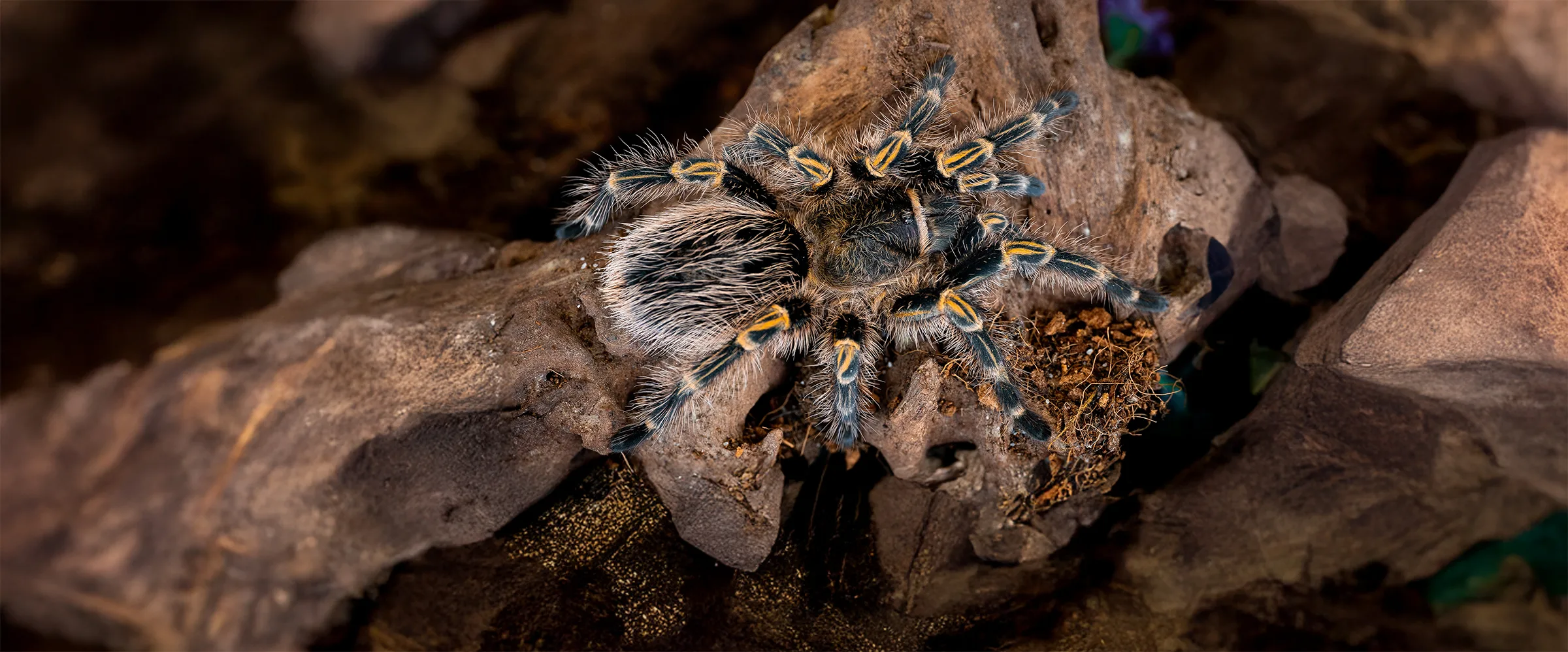
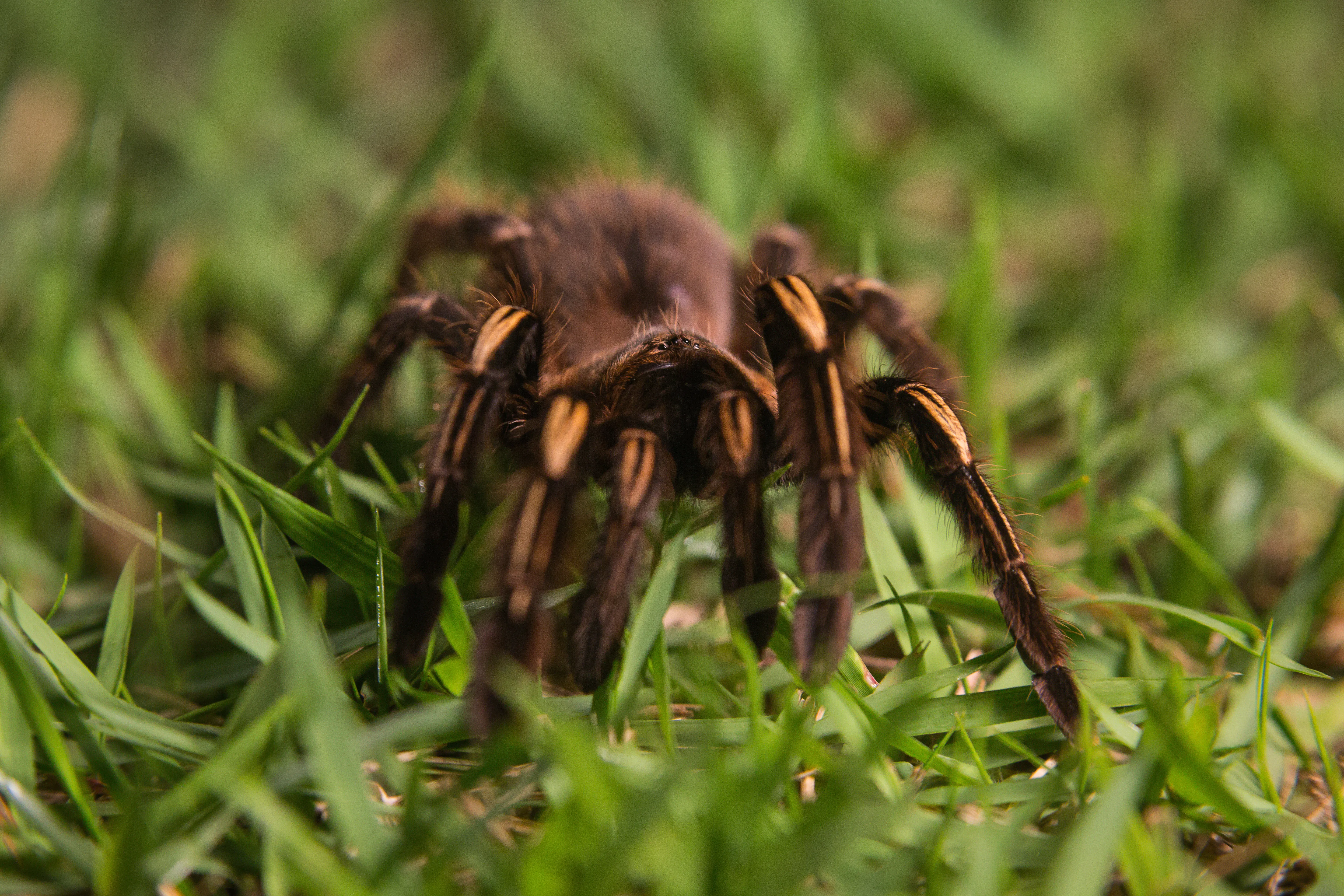
The Chaco Golden Knee Tarantula is mostly a dark chocolate brown with lighter colored hairs across their body. They have golden bands around their leg joints, which gives them their name. Adults have a 7-inch legspan. Their tiny eyes (8 of them!) are located on the top of their cephalothorax.
Habitat & Ecology
Chaco golden knee tarantulas can be found in the grasslands of Argentina, Paraguay, and Uruguay. They prefer relatively warm habitats that experience dry spells alternating with periods of heavy rainfall. They are terrestrial spiders that inhabit burrows in the ground.
Diet
Chaco golden knee tarantulas, like almost all spiders, are carnivorous and venomous. They thrive on a diet of smaller arthropods like insects or other spiders, but also eat the occasional lizard or rodent. Tarantulas rear up on their hind legs before striking downward with their fangs. These fangs inject venom into the prey that dissolves the victim’s flesh. This is because spiders are unable to eat solid food and must liquify their prey using venom and digestive fluids and then suck up the meat.
Chaco golden knees are also very sensitive to vibrations. They line their burrows with webbing that extends from inside the burrow to the entrance and the area surrounding the entrance. This webbing is weaved into the ground so that any animals that pass by will step on the webs and send vibrations through the burrow that the can feel. This can communicate to the tarantulas that there are dangerous animals or potential prey passing by. When prey sends vibrations down into the web, the tarantula will quickly run out and strike.
Behavior & Reproduction
Chaco golden knees are considered non-aggressive, but very active. They are shy and will hide at any sign of danger. As with most tarantulas, they are presumed to be nocturnal. Due to the mild climate of their home region, Chaco golden knees can mate year round. After mating, females can lay anywhere from 100-500 eggs that she wraps up in a specially woven egg sac. Females will stay with their egg sac for the 6 week incubation period to protect her offspring, but the young soon disperse after hatching.
Chaco golden knee tarantulas are solitary and therefore have limited communication with each other. They make no sounds and have very poor vision. Their primary form of interacting with the world is through physical touch. They use their pedipalps to feel the ground in front of them. The sensitive hairs that cover their body pick up on changes in the air.
Males: 5-10 years; Females: 20-25 years
Year-round
100-500
N/A
Conservation
nvertebrate predators, such as Chaco golden knee tarantulas, are highly susceptible to pesticide poisoning. While pesticides are usually targeted towards pest species, such as ants or beetles, they have massive unintended consequences for the rest of the environment around them. Many of our native wild animals that naturally help manage insect populations are dying off from pesticide poisoning.
Unfortunately, invertebrate populations are hard to track and not well studied. There is currently no conservation status assigned to the Chaco golden knee tarantula.
Fascinating Facts
- Chaco golden knees have special hairs on their abdomen called urticating hairs that can be flicked at predators. These hairs can cause rashes or even partial blindness if lodged in the eyes.
- The fangs in most spiders face inwards towards each other so that they can bite directly in front of them. In tarantulas, however, the fangs face straight downward so that tarantulas can strike down from above.
About Our Animals
The Oakland Zoo has one Chaco golden knee tarantula in the animal ambassador program, Eldora. Eldora is the gentle giant of the ambassador program. Despite her large size, which is similar to a teacup saucer, she is gentle and slow in her movements. She is very accustomed to her handlers and is great on educational programs.
You can meet Eldora during special Zoomobile, Wildlife Assembly, or ZooCamp programs. During these programs, kids can learn more about these animals and the habitats, adaptations, or other features that make them special. You might also get lucky on your next visit to the zoo and encounter her on a serendipitous Pathway Encounter or Wildlife Theater show.