Let's celebrate Latino Conservation Week!
Our planet overflows with life—millions of plants, animals, and microorganisms, each following its own remarkable path. These countless journeys, though seemingly separate, constantly intersect, weaving together adaptable, resilient ecosystems. During Latino Conservation Week, we celebrate that living spectrum in our own communities, recognizing that diversity—in nature and in us—lets us flourish.
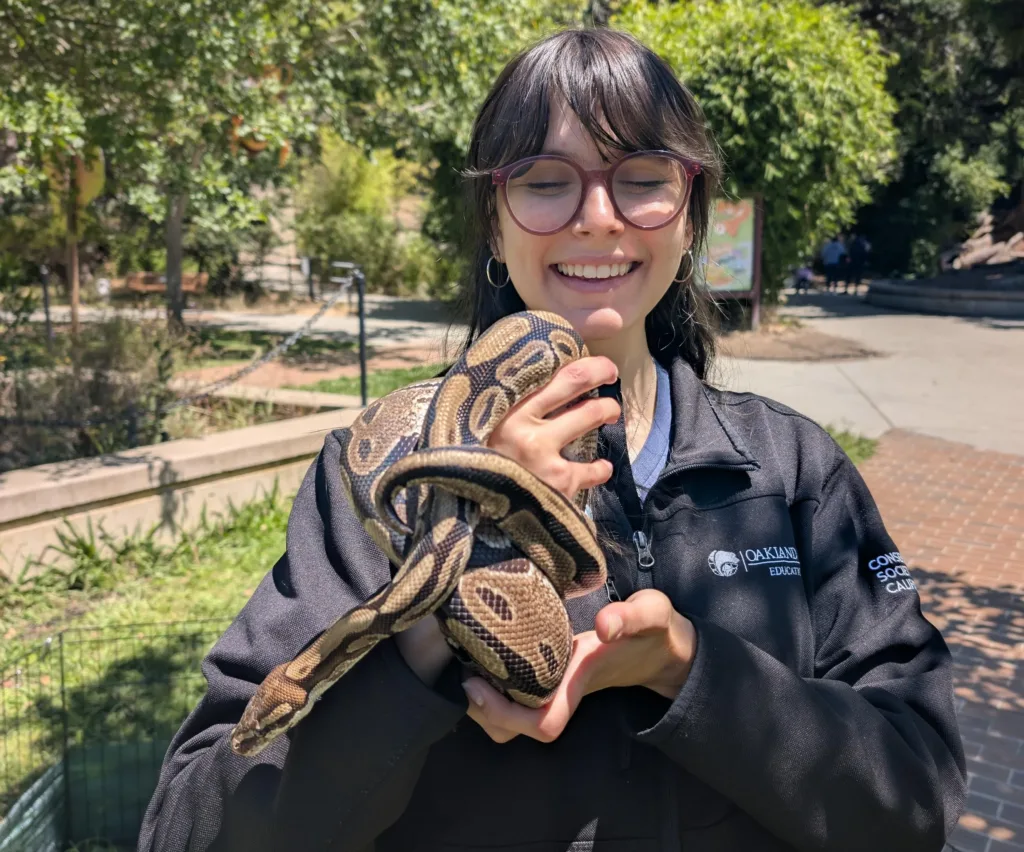
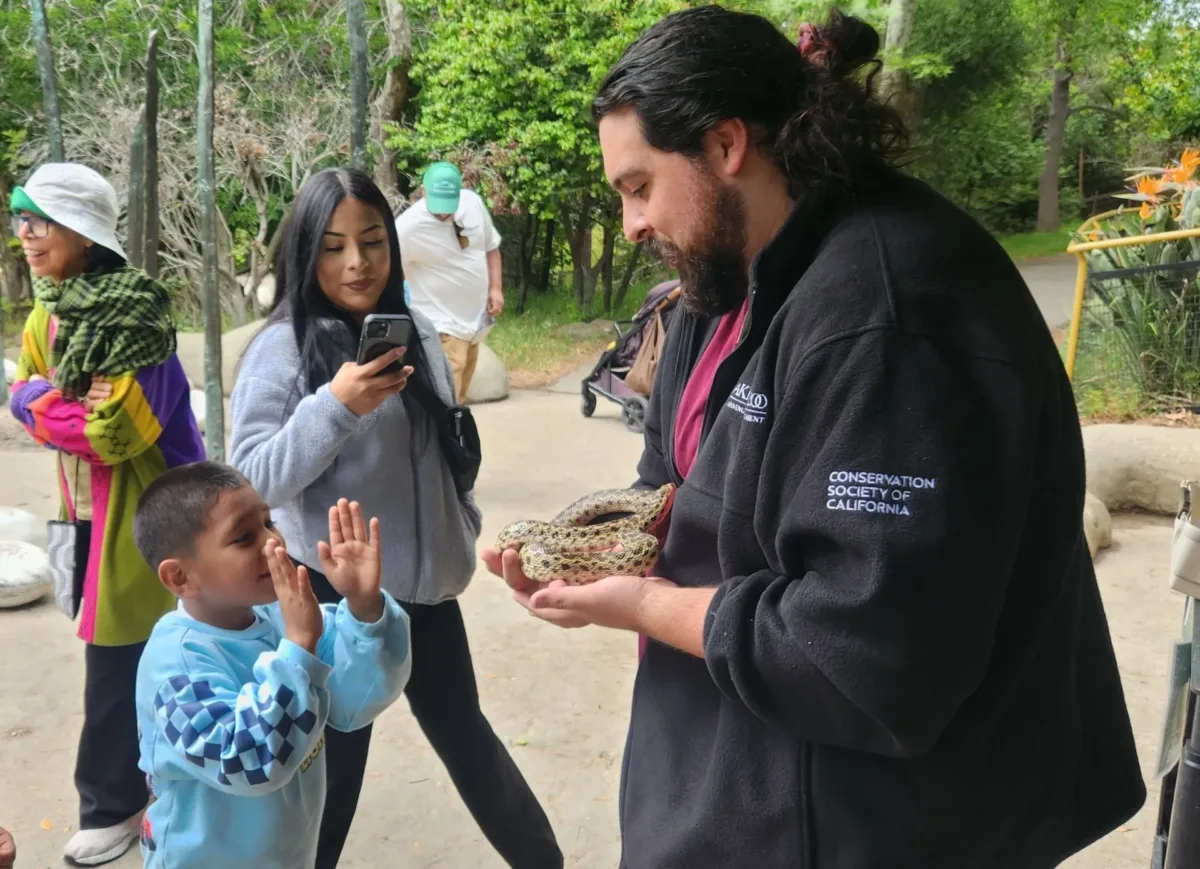
There’s more than one way to learn and in more than one place. For Zoo educators like Chris and Sophie, some of the most meaningful lessons happen along the pathway at Oakland Zoo, where guests get to know and learn about an animal ambassador up close. Many of these pathway encounters unfold bilingually, and hearing a Zoo educator speak in one’s native language can transform the guest experience across generations. For Chris, that connection is personal—older generations of his family avoided reptiles and other wildlife.
“Most of my family was very anti-snake, anti-spider,” explains Chris. That fear, rooted in a desire to keep kids safe, evolved over time into something closer to a stigma. But something shifts when he shares in Spanish with guests.
“A lot of times we see people—I don’t know how to describe the connection,” says Chris,“but it makes them more comfortable around an animal like a snake when they see we are speaking Spanish, and it’s nice to break through that stigma. You see them get curious, you see them just observing… they are appreciating the animal, spending time with them.”
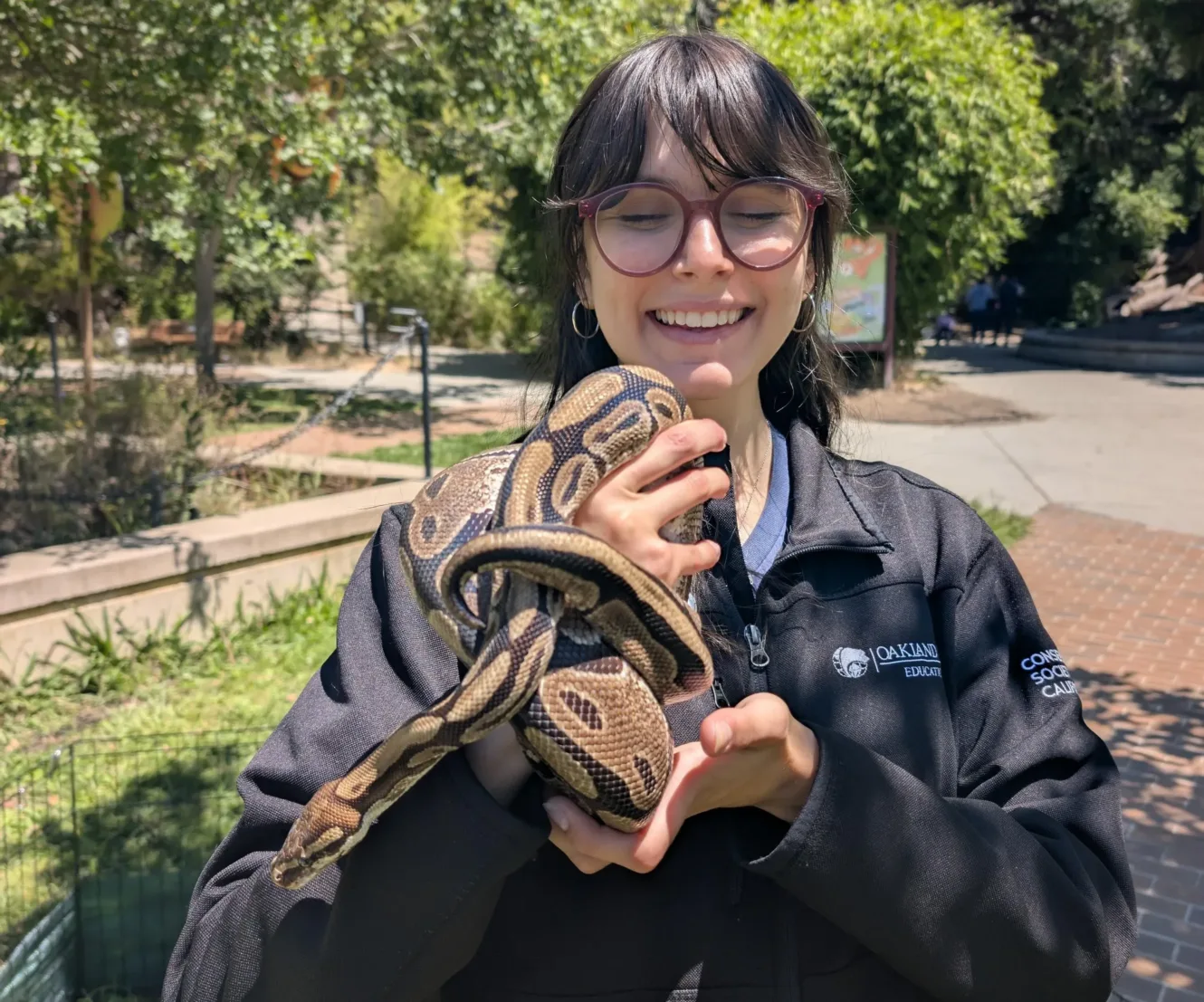
People naturally trust others when they feel “at home” or surrounded by people with shared experiences or backgrounds. Opportunities like this are designed to build understanding beyond conversation. For Fern, the California tiger salamander, communication isn’t spoken, but guests learn just how much she is saying.
“Building empathy is a really important key to conservation, especially with animals like Fern, who are phylogenetically very far away from us. She doesn’t really express with her voice like we would be used to,” Sophie explains. “A lot of people will be able to make that connection on their own in some way that feels personal to them.”
These unspoken personal connections go beyond meeting with animal ambassadors. For Sophie and Chris, embracing their own unique life experiences allowed them to break free of societal pressures and shape their own journeys as conservationists.
“Sometimes there’s this big pressure to be the ‘best Latino’ if you want a scholarship, if you want to represent your ethnicity well—you have to be the most well-spoken, most educated… We’re not a monolith, we’re just ourselves,” says Sophie, adding that a similar pressure shows up in how people think about conservation. “People think you need to be an experienced backpacker, you need to have all these skills, go on these trips… a lot of that is pushed by this one idea that in order to enjoy things we need to be the best, or spend money.”
Just as there’s no singular way to connect with nature, there’s no one way to be a conservationist, according to Chris. “Seeing the diversity of opportunities in the field of conservation—it was great learning it isn’t limited to veterinary science or data collection—that there’s still value to being in a classroom, educating about local or domestic animals.” Acknowledging the variety of paths that connect us with nature also means acknowledging the variety of barriers people experience that keep them from it—a reality Chris witnessed in his earlier education work, organizing beach trips for Bay Area students. “They lived in Alameda or the east side of the peninsula and just didn’t have access to transportation—or maybe they were caregivers for their siblings… they’d never been to the beach before.”
Outreach programs like ZooMobile and ZooKids are centered around accessibility, bringing science education to people where they are. It’s part of what drew Chris to Oakland Zoo. “Just seeing the impactful outreach that the Zoo was doing—bringing access to these spaces within the community through learning engagement…it was really inspiring.”
Sophie’s path looked different. She was studying to become a geneticist before a college internship at a local wildlife sanctuary changed everything. “I just totally fell in love with that. I changed my major as soon as I got back.”
For Zoo educators, the only constant is a lifetime of learning—a mentality that shapes the Zoo’s bilingual pathway encounters. “My favorite thing about the pathway encounters is people of all ages get excited—whether it’s grandparents or kids—families trying to teach their kids Spanish, and we let them know we’re practicing too,” says Chris. “It makes it a more comfortable setting—we feel more comfortable making mistakes and learning, and they feel okay to do that too.
"It’s important to have representation in science spaces,” Chris adds. “It’s just showing that we can be different and that we can have these different experiences,” says Sophie. “Even between Chris and me, we are different ethnicities; we have different backgrounds… There are so many ways to be Latino and to be Latino in ecology or in conservation.”
We invite you to explore your own connection with nature, whether you find yourself on a quiet pathway at Oakland Zoo, or right outside your door. “That is a valid way to connect with nature,” says Sophie. “Just be outside for a bit."