Giant African Millipede
Least Concerned
Forests and Shrublands
Africa
Nocturnal
Detritivorous
Children’s Zoo
Characteristics
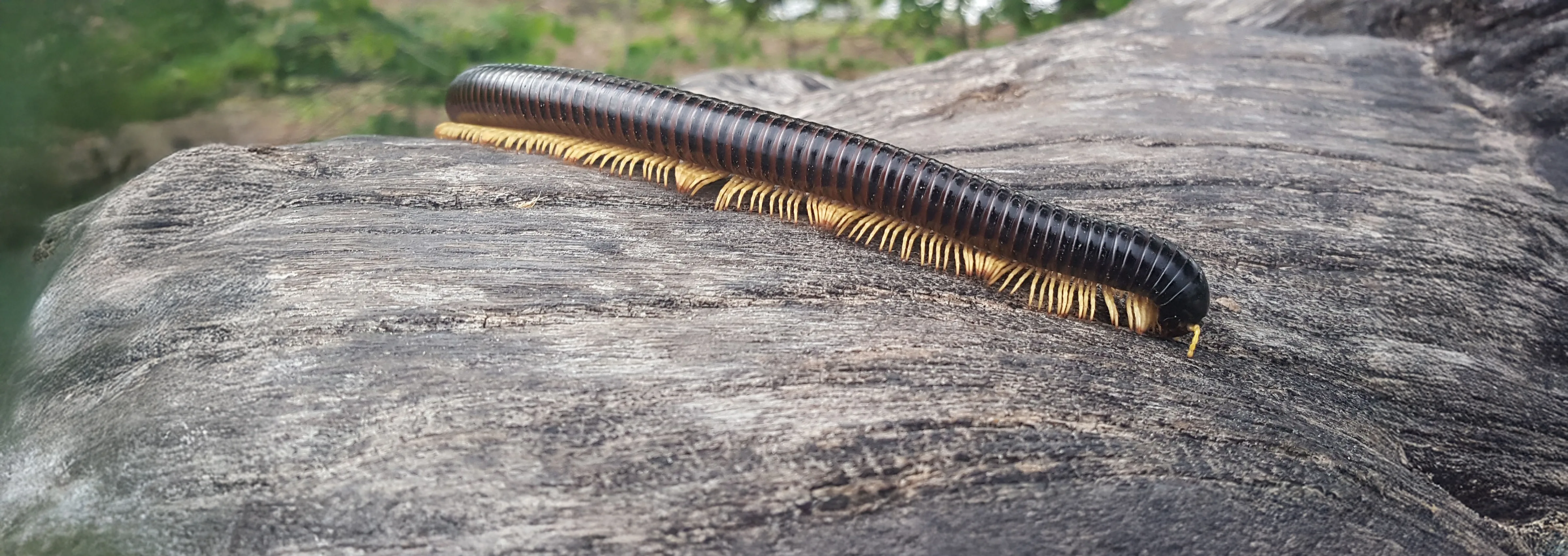
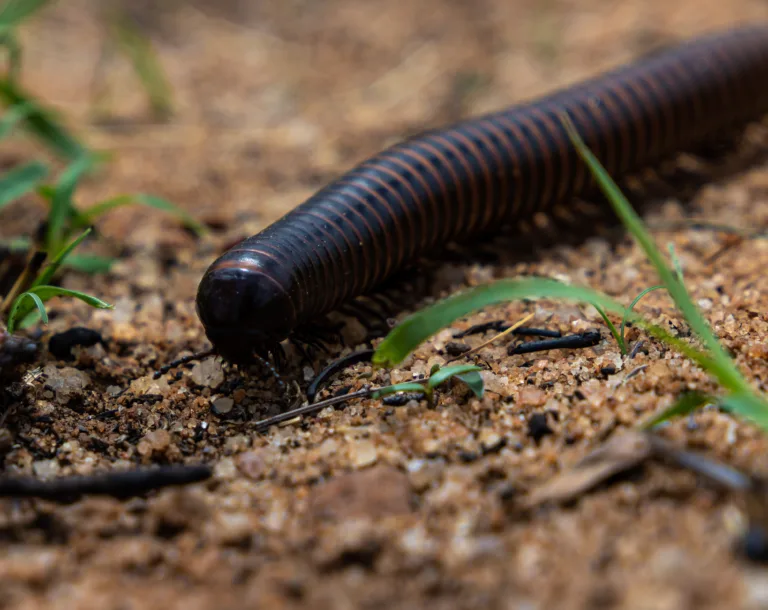
Giant African millipedes are the largest known species of millipede currently alive on Earth. They can reach up to 13 inches in length, and 2.5 inches in circumference. Contrary to what their name may suggest, they have between 100-300 legs. The number of legs a millipede has varies based on factors such as individual age, health, and molting. Millipedes have two major body parts: their head and a long trunk composed of multiple body segments. For just about every body segment, a millipede has 4 legs, two on each side of their body. Since they are a species of arthropod, a millipede’s body is made up of an exoskeleton.
Habitat & Ecology
Giant African millipedes are found in lowland parts of East Africa, from as far south as Mozambique, to as north as Kenya. They rarely reach altitudes over 3,300 ft. They live along the forest floor where they can be found near rotting wood, burrowing in leaf litter and loose soil.
In these tropical forests, giant African millipedes replace the role of earthworms.
Diet
Millipedes are a type of detritivore, meaning they will eat decomposing plant matter, such as logs, leaf litter, and any other vegetation on the forest floors.
Behavior & Reproduction
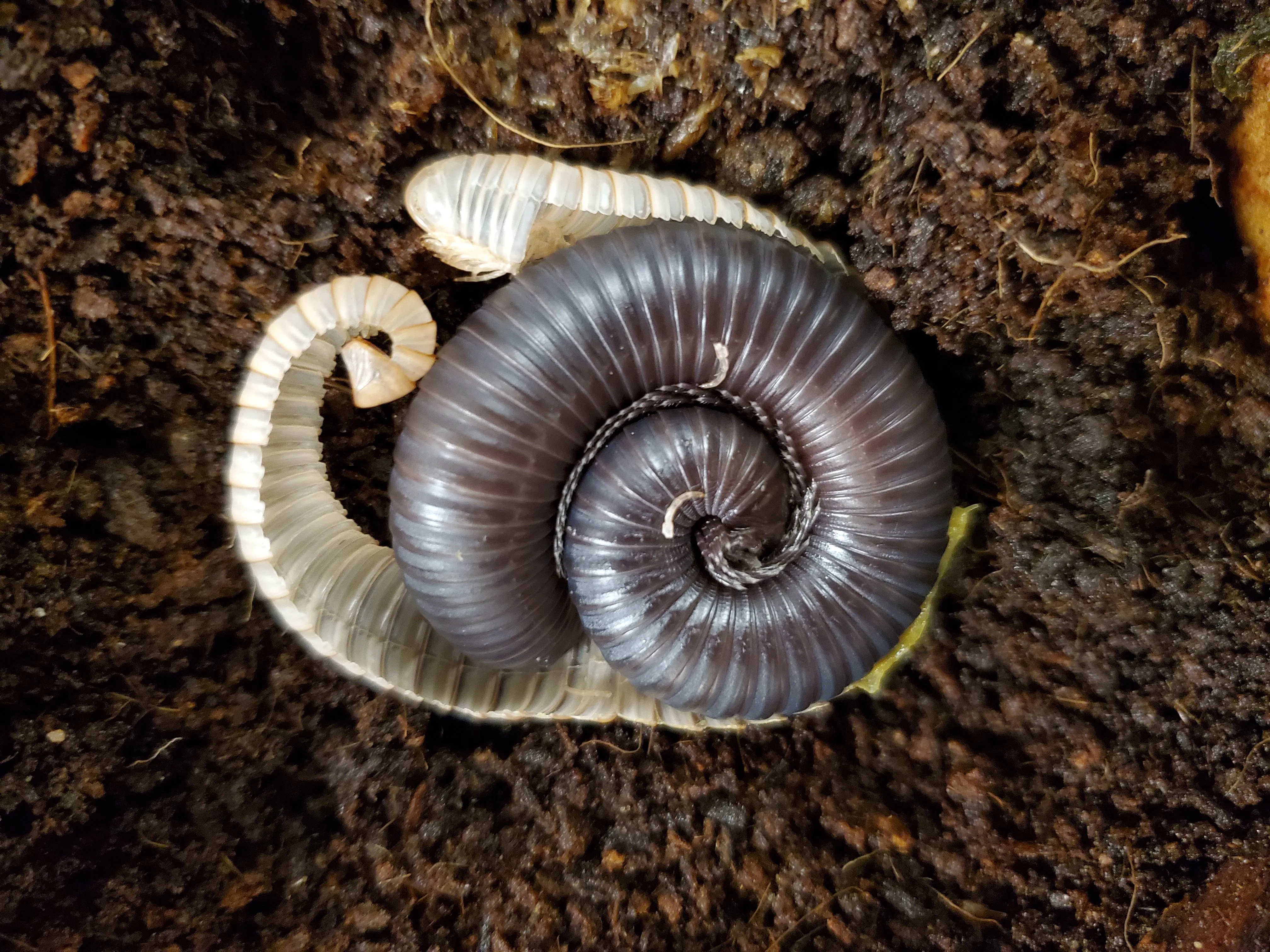
Giant African millipedes are nocturnal. They sleep during the day, and at night they come out to feed. When in danger, a millipede will curl up into a spiral to protect their soft undersides. On some of their body segments, there are stink glands that secrete hydrocyanic acid. The acid makes them unpalatable to any predators, but is not harmful to humans unless it gets in your eyes or mouth.
Males have a pair of special legs used for sperm transfer on their 7th segment. Males curl around the female in order to transfer sperm. Females will lay eggs in underground nests where they can deposit up to 2,000 eggs, but a few hundred is much more common. When hatched, millipedes only have the first three pairs of legs and a few body segments.
5-7 in the wild, 7-10 in protected care
N/A
Few hundred
N/A
Conservation
Giant African millipedes are currently listed as Least Concerned. They are widely distributed through coastal eastern Africa, and are not threatened by extinction.
Fascinating Facts
- Small mites are often observed crawling on their exoskeleton and among their legs. The millipedes have a symbiotic relationship with these mites, in which the mites help clean the millipede's exoskeleton in exchange for food and the protection of their host.
- In 2021, the first “true millipede” with over 1,000 legs was found! This small Australian species measures only a little under 10 cm, yet has 1,306 individual legs!
- Millipedes have existed for over 400 million years!