Desert Blonde Tarantula
N/A
Desert
Southwestern North America
Nocturnal
Carnivorous
Children’s Zoo
Characteristics
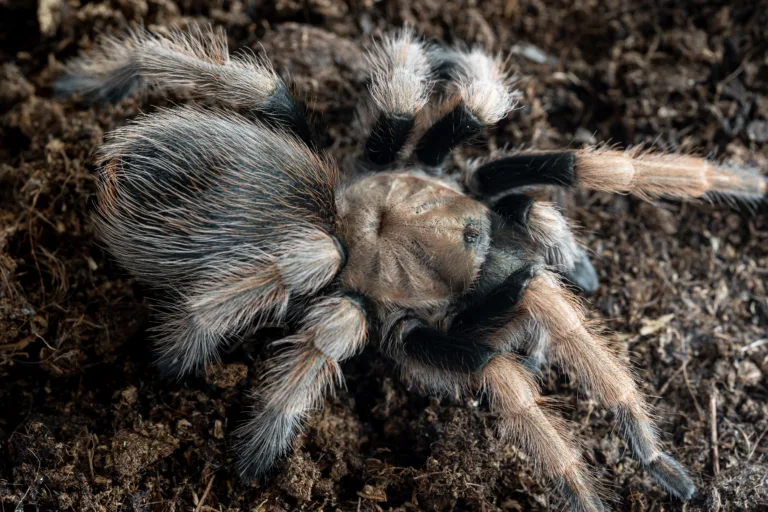
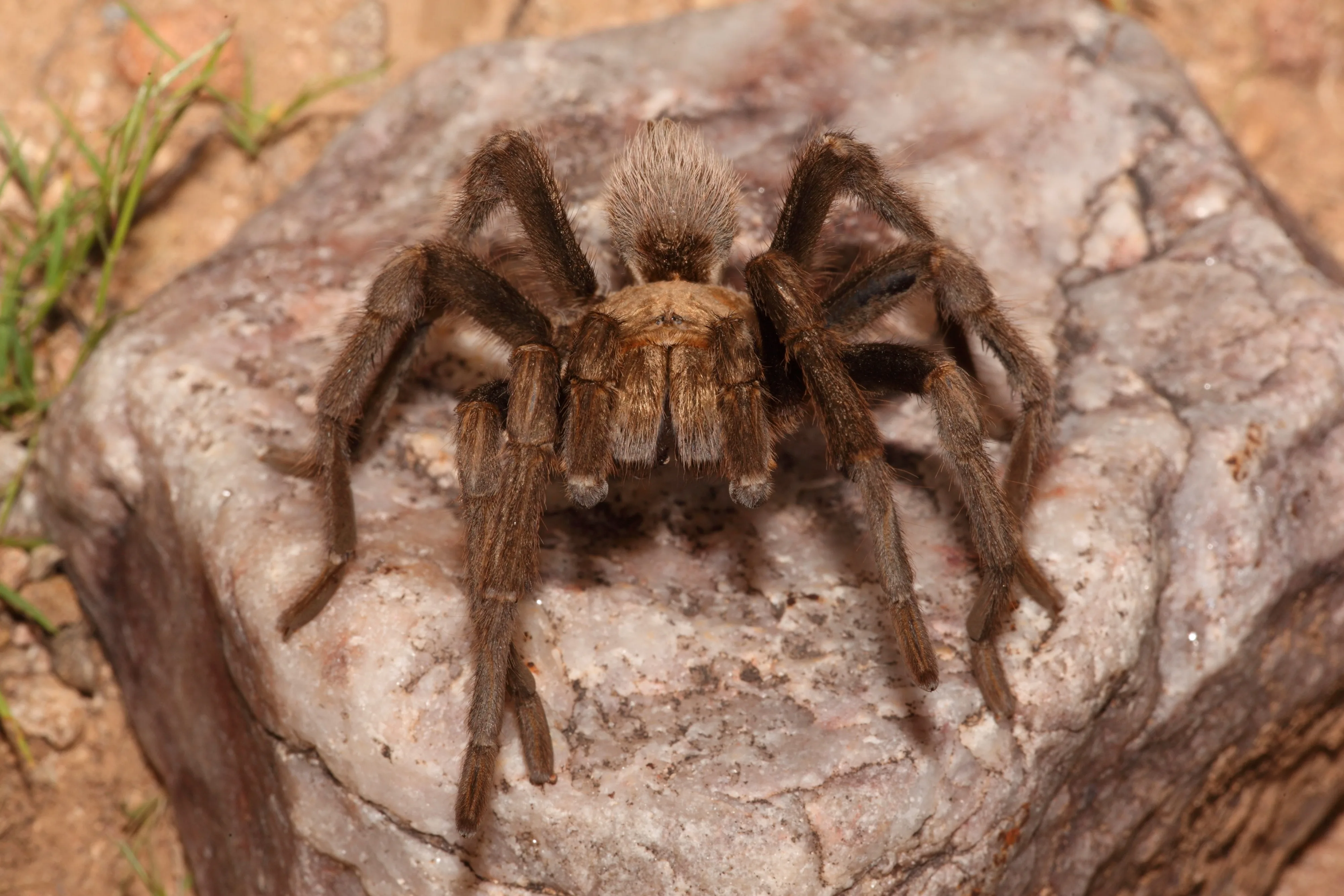
Tarantulas have a typical spider body but are a lot larger than other spider species and therefore easier to see. They have two body segments, a cephalothorax and an abdomen, and eight legs that attach to the cephalothorax. They also have two large pedipalps that look like an extra set of legs on the front of their cephalothorax. The tarantula’s pedipalps help them feel and navigate the environment around them. In between the pedipalps are the tarantula’s mouthparts, called chelicerae. The chelicerae contain venom sacs as well as fangs.
Tarantulas have hair covering their entire bodies. This hair is made up of chitin, which is the same material that makes up their exoskeleton, and is therefore structurally different than mammal hair, which is made up of keratin. Desert blonde tarantulas have special hairs on their abdomen called urticating hairs that can be flicked at predators when they feel threatened.
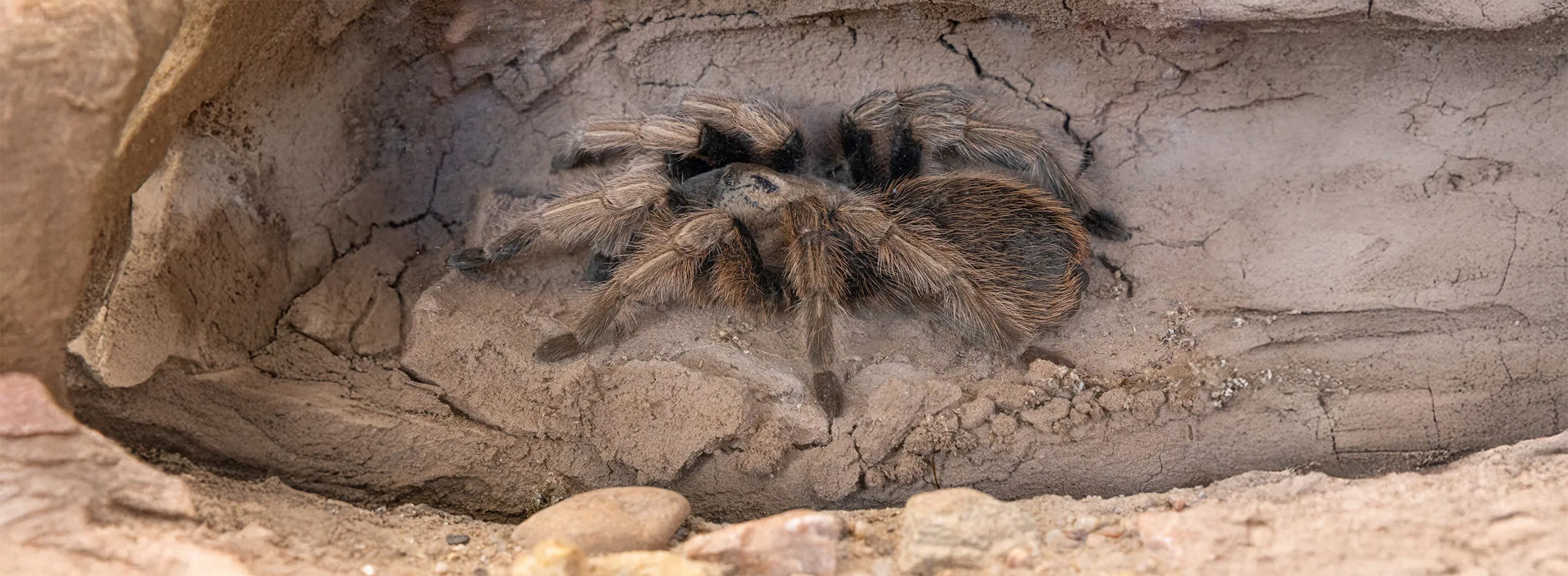
Desert blonde tarantulas have little sexual dimorphism, with females only being marginally larger than males. The average legspan is 3.8 inches. These tarantulas are named for having a very light brown cephalothorax with lighter brown legs. Their abdomen is generally darker with lighter brown flecks. Their tiny eyes (8 of them!) are located on the top of their cephalothorax.
Habitat & Ecology
Desert blonde tarantulas, also called Arizona blonde tarantulas, are found throughout the Southwestern United States. They are most common in Arizona, but also inhabit deserts in New Mexico, Southern Utah, Mexico, and Southern California. As their name implies, desert blonde tarantulas are exclusively found in desert habitats. They have a strong preference for desert soil and will dig burrows to live in. They require very little water and are adapted to live in extreme weather conditions.
Diet
Desert blonde tarantulas, like almost all spiders, are carnivorous and venomous. They opportunistically hunt lizards, crickets, beetles, grasshoppers, cicadas, and caterpillars. Tarantulas rear up on their hind legs before striking downward with their fangs. These fangs inject venom into the prey that dissolves the victim’s flesh. This is because spiders are unable to eat solid food and must liquify their prey using venom and digestive fluids and then suck up the meat.
Desert blonde tarantulas are also very sensitive to vibrations. They line their burrows with webbing that extends from inside the burrow to the entrance and the area surrounding the entrance. This webbing is weaved into the ground so that any animals that pass by will step on the webs and send vibrations through the burrow that the tarantula can feel. This can communicate to the tarantulas that there are dangerous animals or potential prey passing by. When prey sends vibrations down into the web, the tarantula will quickly run out and strike.
Behavior & Reproduction
Tarantulas are all nocturnal and solitary. Desert blonde tarantulas are hard to find as they spend almost their entire life hiding under rocks, in burrows, or abandoned holes. This is likely to avoid predation from their main threats, birds and snakes. Under the cover of night, they may venture out to hunt. During breeding season, males are much easier to spot as they venture out as early as twilight and stay out into the sunrise hours.
Desert blonde tarantulas breed during the late summer months, July-September. During this time, males go out in search of females. While mating, they try to maintain contact with the females and will actively pursue her. Males have two specialized claws at the end of their pedipalps that they use to weave a “purse” to hold their sperm and give to the female. Females can then store these sperm sacs in pouches she has on their abdomen. Sperm can be stored for weeks or months at a time. When she is ready to lay her eggs, the female weaves a silken sheet on which she lays up to 1,000 eggs. She then weaves another sheet to cover the eggs and seal them in. The eggs are warmed by the sun near the entrance of the burrow and the female will protect the egg sac until they hatch. It takes seven weeks for a desert blonde tarantula to hatch out of their egg, but only 3-6 days for them to leave the burrow and live on their own. Most spiderlings do not survive as they are heavily predated on by other animals.
It takes 8 to 10 years for both male and female desert blondes to reach sexual maturity, after which they can breed every year. However, most males pass away within 1-3 years of reaching sexual maturity.
Males: 8-10 years; Females: 20+ years
July-September
1,000
1 year
Conservation
Invertebrate predators, such as desert blonde tarantulas, are highly susceptible to pesticide poisoning. While pesticides are usually targeted towards pest species, such as ants or beetles, they have massive unintended consequences for the rest of the environment around them. Many of our native wild animals that naturally help manage insect populations are dying off from pesticide poisoning.
Unfortunately, invertebrate populations are hard to track and not well studied. There is currently no conservation status assigned to the desert blonde tarantula.
Fascinating Facts
- Contrary to popular belief, most tarantulas are not very venomous. Desert blonde tarantulas have a type of venom that is equitable to a mosquito or a bee sting.
- Tarantulas have tiny little hooks on the end of each leg that help them to grasp onto structures as they navigate their environment. If you observe them very closely, you may notice these hooking and unhooking as the tarantula moves.
About Our Animals
The Oakland Zoo has one desert blonde tarantula in the animal ambassador program, Sonora. Sonora is only 2 years old and is not yet done growing up. She is still very small, about the diameter of a golf ball. Despite her small size, she is very comfortable around people and has a slow and calm demeanor.
You can meet Sonora during special Zoomobile, Wildlife Assembly, or ZooCamp programs. During these programs, kids can learn more about these animals and the habitats, adaptations, or other features that make them special. You might also get lucky on your next visit to the zoo and encounter her on a serendipitous Pathway Encounter or Wildlife Theater show.