African Spurred Tortoise
Endangered
Desert
Africa
Crepuscular
Herbivorous
Children’s Zoo
Characteristics
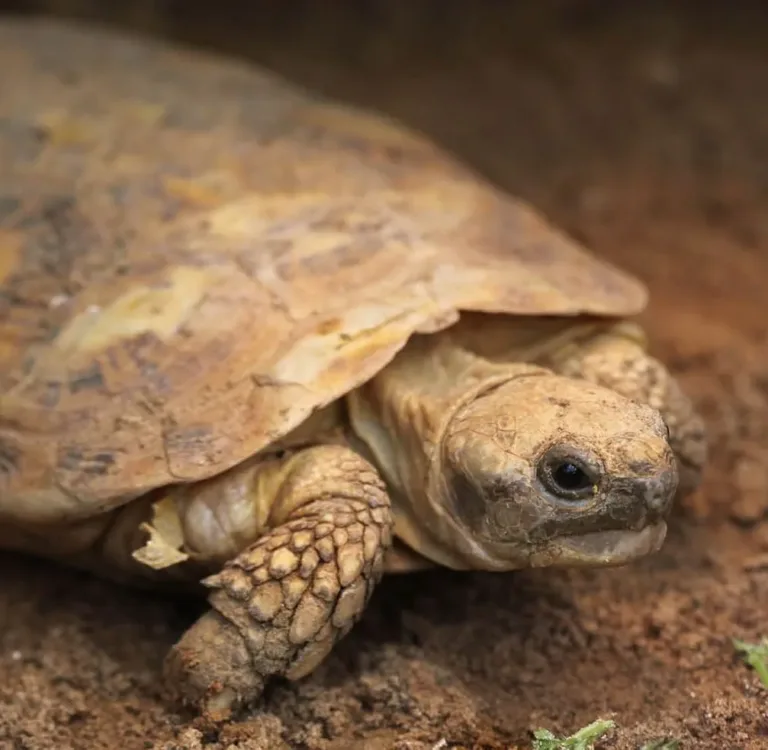
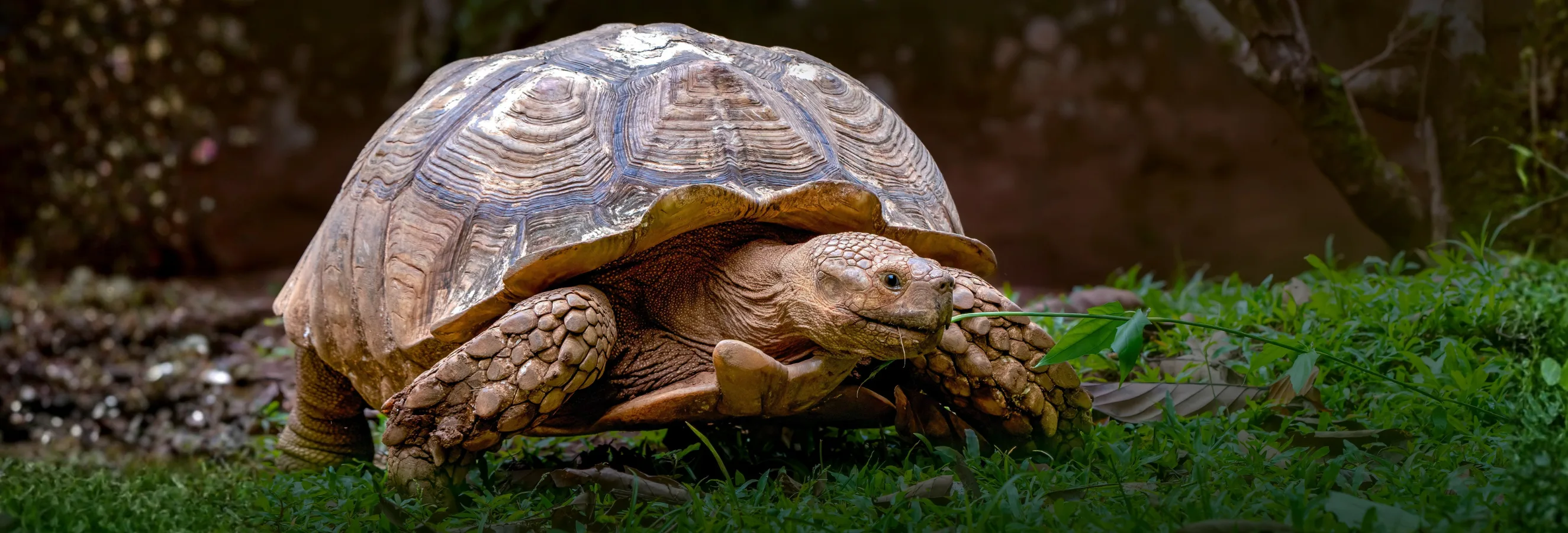
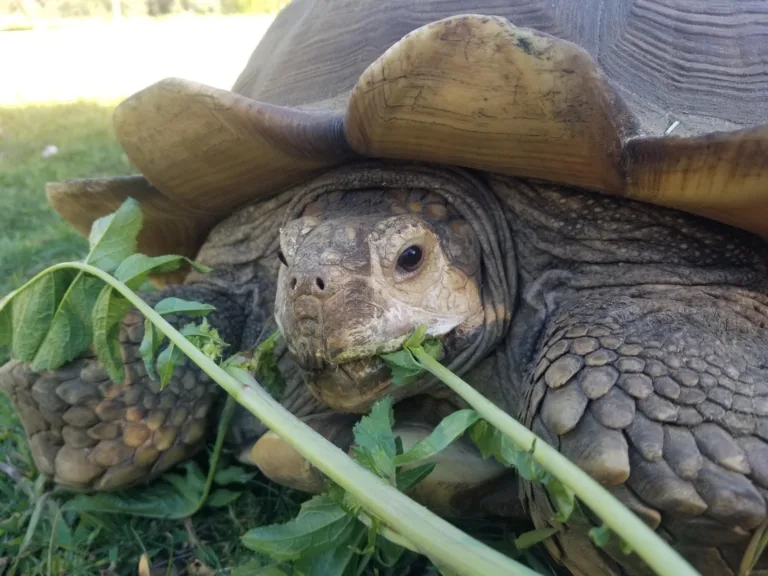
African spurred tortoises, also known as sulcata tortoises, are the largest species of African tortoise and the third largest known species of tortoise overall.This species can reach 30 inches in length and weigh upwards of 100lbs, with some large males reaching 200lbs. They are named for the characteristic conical “spurs” that stick out from their hind legs. The top of their shell, or carapace, is a broad oval shape with a slightly flattened arch and color ranging from tan to yellow. Their bottom shell, or plastron, is ivory in color and features a forked set of specialized scales called gulars which protrude below the tortoise’s chin.
Habitat & Ecology
African spurred tortoises live in a region of Africa called the Sahelian zone, a transitional biome between the dry Sahara and humid Sudani. Because of their burrowing behaviors these tortoises create shelters utilized by other animals while also aerating and tilling the soil, making them incredibly important for their ecosystem.
Diet
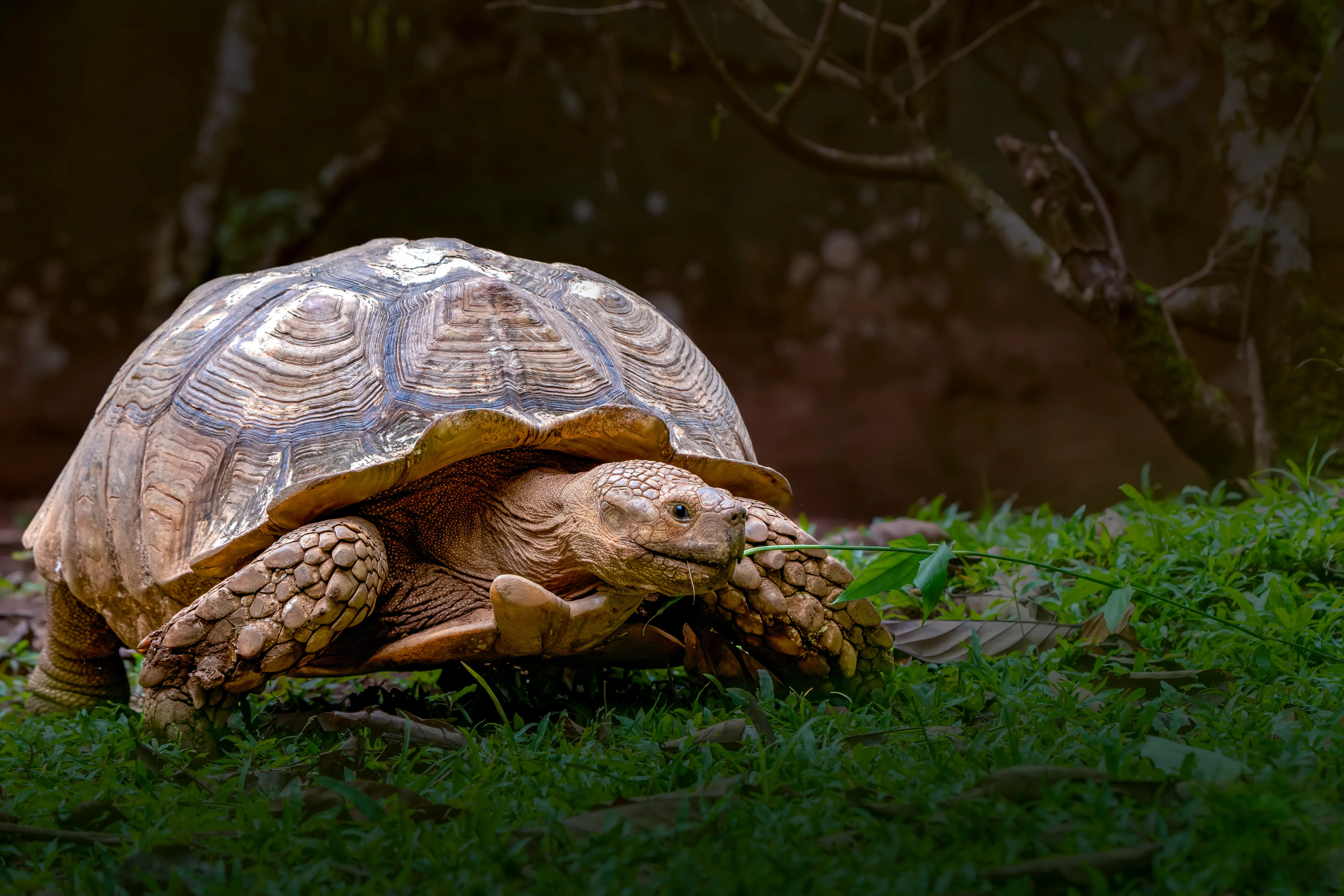
African spurred tortoises are typically herbivorous. They eat any vegetation they can find, and are known to eat succulents as a source of water. Opportunistic eaters; these tortoises have also been documented to scavenge on carrion and even human garbage in some circumstances.
Behavior & Reproduction
African spurred tortoises are crepuscular, meaning they are most active during dawn and dusk. This activity pattern allows the species to bask in the morning sun, recovering body heat from the overnight chill while avoiding high midday temperatures. They are also known to burrow underground or utilize mud wallows when temperatures are extreme.
Aggressive behavior may be noted during mating season. Males compete by ramming into each other, attempting to flip their opponent onto their back. When females are ready to lay eggs they will decrease their food intake and focus energy on finding the right nest site. It may take up to 5 nests to be dug before a female selects where she wants to lay her eggs. African spurred tortoise nests can be up to 2 ft in diameter and 3-6 inches deep, with the digging process taking up to 5 hours. Once the nest is dug a female can lay one egg every 3 minutes and have up to 30 eggs at a time. After eggs are laid she will cover them in dirt before moving on - this species is not typically known to provide parental care for eggs or hatched offspring. When hatched, baby African spurred tortoises are only 1-2 inches in length.
55-60 years in the wild, 80 in protected care
June-March
15-30
Up to six times per year
Conservation
African spurred tortoises are currently listed as Endangered by the IUCN. Their population decline is largely attributed to human-animal conflict in the form of habitat loss due to agricultural expansion as well as trapping and hunting for the pet trade.
Fascinating Facts
- Another way for African spurred tortoises to cool down in the heat is by spreading saliva on their forearms to help cool themselves down.
- African spurred tortoises are the third largest tortoise species in the world! Behind Galapagos and Aldabra tortoises.
- Their other name, sulcata, comes from the Latin word sulcus meaning “furrow.” This refers to the furrows, or deep lines on their shells.
About Our Animals
Oakland Zoo currently has one African spurred tortoise. You can visit her in the Aldabra tortoise habitat.
Our Role
African spurred tortoises are a popular pet species. However, you should never take an animal from the wild. And never release an animal you’ve cared for back into the wild.