Rosy Boa

Least Concern
Deserts, scrubland, brushland, chaparral
Southern California, Arizona, and northern Mexico
Diurnal/Nocturnal
Carnivorous
Characteristics
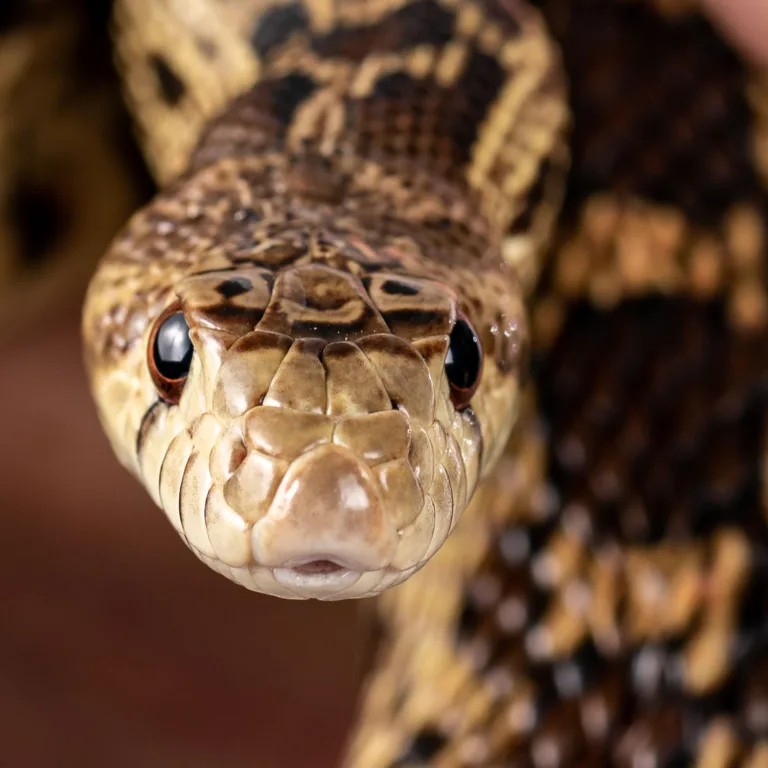
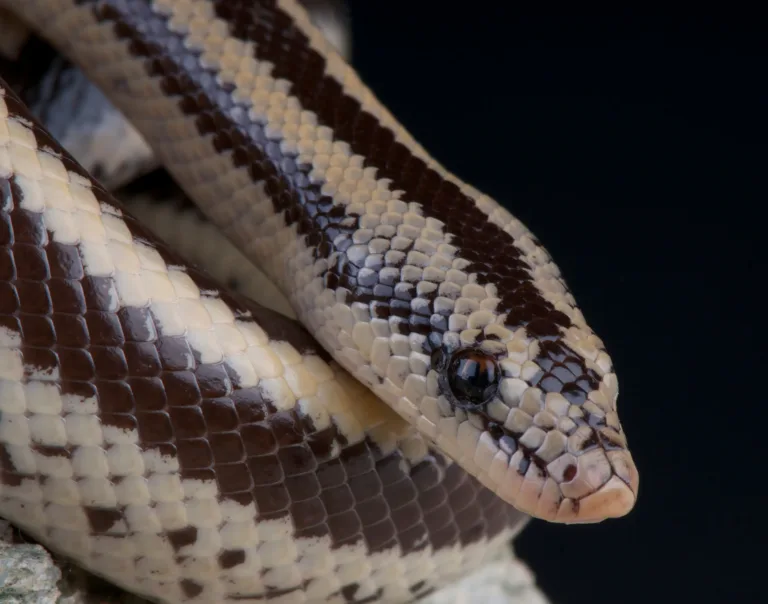
Rosy boas are one of the smallest snakes in the boid family, with adults ranging from 17 inches to 3.5 feet in length. Males tend to be smaller than females, but size is variable. Despite their tiny stature, they are considered heavy-bodied snakes.Their small scales are smooth and close together. They have vertically elliptical pupils, resembling that of a cat. Rosy boas are named for the color of their stripes and belly. Most commonly, they have three stripes running down the length of their body that can be black, brown, red, orange, or, of course, rose-colored. These stripes stand out against their pale grey or cream-colored bodies. Occasionally, individuals are found that are all one color and lack stripes completely. Some of these colorations are more common in specific regions, but there is enough overlap that no universal rule can help distinguish the different species' populations.
Habitat & Ecology
Rosy boas reside in dry, open habitats such as deserts, scrubland, brushland, chaparral, and more. They are drawn to areas where water is available, but do not depend on a permanent water fixture to survive. While rosy boas are entirely terrestrial, they are also capable climbers.
Rosy boas are found in California, southwestern Arizona, and northwestern Mexico. There are two different subspecies of rosy boa found in California, the coastal rosy boa (L.t. roseofusca) and the desert rosy boa (L.t. gracia). The two species appear identical and are therefore usually identified by the region they inhabit. Coastal rosy boas can be found in California as far north as Death Valley, and down into San Diego County and the Mexico-California Border. Desert rosy boas have a range that starts around where the coastal rosy’s habitat ends, extending southward from near the Mexico-California border and down into Baja California and southwestern Mexico. A third subspecies of rosy boa, the Mexican rosy boa (L.t. trivirgata), is found from the southeastern corner of Arizona, Sonora, Mexico, and southern Baja California.

Diet
A Rosy Boa’s diet consists primarily of mice, rats, and rabbit kits, but they will also eat nestling birds, bats, lizards, amphibians, and other snakes. Their jaw structure allows them to eat any prey that is 2-2.5 times the size of their heads, and they are opportunistic hunters. While out hunting, these snakes use their forked tongues to pull scent information into the Jacobson Organ in the roofs of their mouths, which the snakes translate into information about their surroundings, including the direction and types of potential prey nearby. Rosy boas are very slow-moving snakes, and are mostly ambush predators. Once prey is within a 2-3 inch range, they attack in a quick strike, using their recurved teeth to hold prey in place before beginning to constrict, cutting off circulation to the heart and brain. It was previously believed that constriction suffocated prey, but new research shows otherwise. Once the prey stops fighting, they consume it in one bite, head first.
Behavior & Reproduction
These snakes are usually active during the mildest part of the day, resulting in wide variations in behavior patterns seasonally. They are mostly nocturnal during summer months and mostly diurnal in late winter and early spring, with a lot of fluctuation based on temperature. They generally shelter under surface objects like rocks and vegetation, and have been known to use human-made structures as shelters as well. When sheltering from the cold, they prefer underground spaces like rodent dens and rock crevices. When threatened, rosy boas tuck themselves into a tight coil, protecting the head. As additional protection, they can emit a fowl-smelling musk from glands near the cloaca.
Breeding generally takes place from May-July. This species is viviparous, meaning fertilized eggs are incubated inside the female. She incubates the eggs for 103-143 days, giving birth to live, independent young in August-November. Clutches are usually 3-8 individuals, but clutches of up to 14 have been recorded. Males and females reach maturity at 2-3 years of age, when the male reaches 43-58 cm and the females reach 60 cm.
15-30 yrs
May-July
3-8
Every other year
Conservation
Rosy boas are Least Concern by IUCN. Plenty of suitable habitat still exists for them, and their populations currently appear stable.
These creatures are common in the pet trade, but captive breeding seems to satisfy the demand.
Fascinating Facts
- These snakes are viviporous, meaning that the mother incubates the eggs inside of her and gives live birth.
- When threatened, rosy boas tuck themselves into a tight coil and can emit a foul-smelling musk.
About Our Animals
Oakland Zoo is currently home to a female rosy boa named Ember. You may get to meet her at Oakland Zoo on a Pathway Encounter or during another one of our educational programs.