Hermann’s Tortoise
Vulnerable
Forest
Europe
Diurnal
Herbivorous

Characteristics
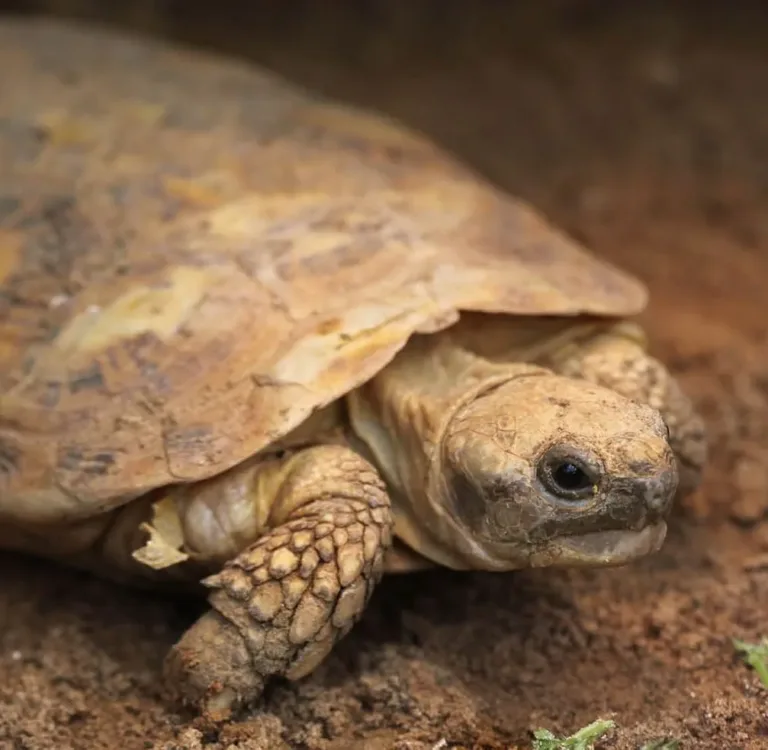
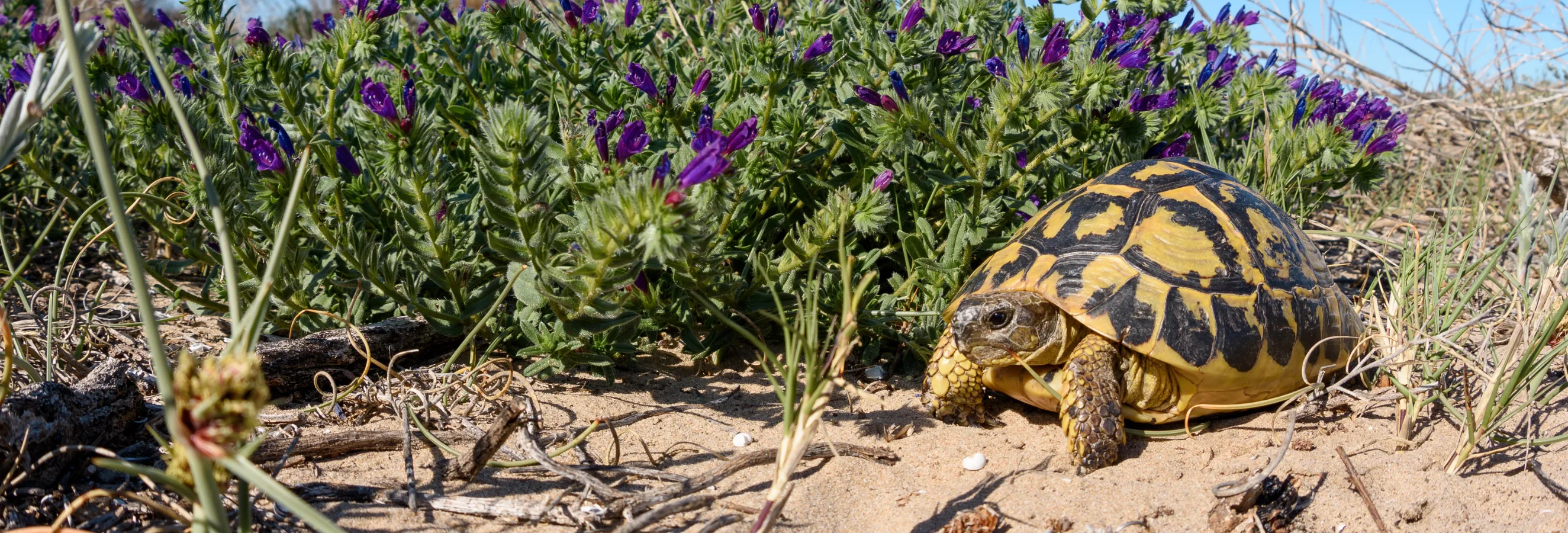
Hermann’s tortoises have a characteristically domed shell covered in keratinous scales called scutes. One thing that makes Hermann’s tortoises unique is that their supercaudal scale, the scale located just above the tail, is divided in two. They also have a special horny scale on their tail.
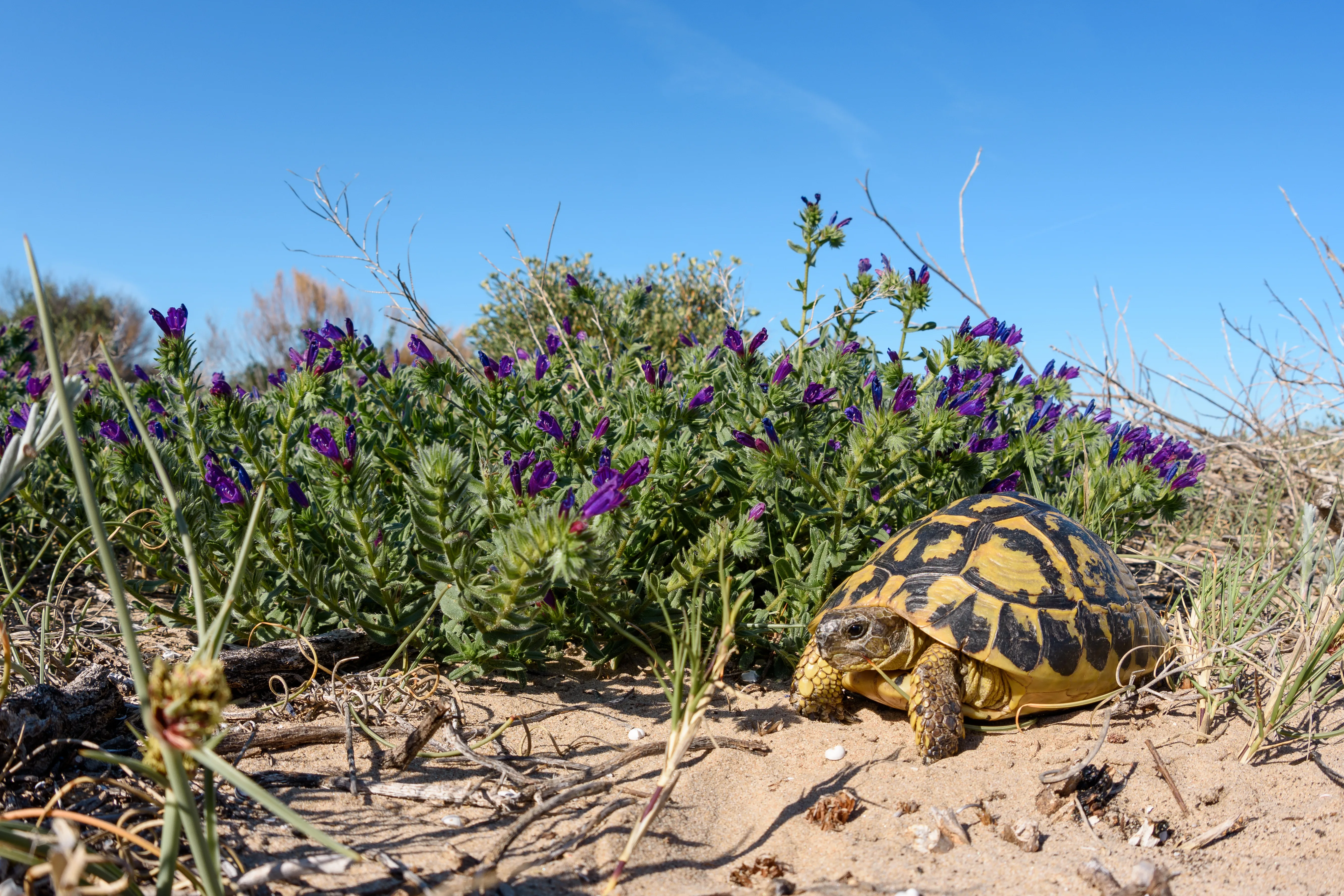
The color of the shell can vary based on region, but all have roughly the same pattern. This pattern consists of black markings along one or two of the edges of each scute, and a black marking in the middle of the scute. The scute markings form an almost perfect symmetry across the shell. There are two recognized subspecies of Hermann’s tortoise— the western and the eastern. The western subspecies is more colorful, with the lighter parts of their shell being a bright yellow or yellow-orange. The eastern subspecies is duller in color, mostly beige or very light brown. The black markings on the eastern subspecies are usually less prominent than in the western subspecies, though there is much variation.
Hermann’s tortoises are usually between 4.7 to 9 inches long and weigh between 4.4 to 5.5 pounds. There is a slight sexual dimorphism with females being about 12% larger than males. Males also usually have a longer, thicker tail and a concave plastron (chest plate/underside of the shell) as well as some other small difference. These differences, called secondary sexual characteristics, are only apparent after the tortoise has grown 4 inches long (this is usually when they are 6-7 years old).
Habitat & Ecology
Hermann’s tortoises are found in Europe along the northern coast of the Mediterranean Sea. Their range spans all the way from Romania to Spain. There is a large concentration of them in Italy, which accounts for almost a quarter of their overall population. This range has a very similar climate to California! Hermann’s tortoises prefer inland and coastal forest habitats.
These tortoises don’t travel much and stay in roughly the same territory for their whole lives. This territory is only about 2.5 acres, which is roughly the size of two football fields. They are not territorial, and these territories frequently overlap.
Diet
As with most tortoises, Hermann’s tortoises are herbivorous. They feed on ground vegetation such as grass, leaves, fruits and flowers. Plant material makes up 97.4% of their natural diet. Tortoises are only selectively herbivorous and are capable of eating other prey. Very occasionally they feed on small bugs or carrion to supplement their diet when food is scarce. They have also been observed eating mushrooms, cyanobacteria, and even soil to boost their mineral intake.
Behavior & Reproduction
Hermann’s tortoises are inactive for most of the year. In the cold months, they undergo a period of inactivity known as brumation. Brumation is a period of inactivity exhibited by reptiles that is similar to hibernation in mammals. During this period of inactivity, the tortoises will stir occasionally to shift around or drink water. However, they will go several months without food. They come out of their brumation in February and immediately jump into the breeding season.
Males use high-pitched calls to communicate with females and attract their attention. Both males and females will take multiple partners during breeding. The mating period can last until May, when females begin digging holes in the ground to deposit their eggs. Females lay between 2-3 clutches of eggs and then leave the offspring to hatch on their own. These young tortoises usually stick near the nesting site to be around other juveniles. Though not particularly social, these tortoises can frequently be found around each other.
From July-August, Hermann’s tortoises sometimes undergo another period of inactivity known as aestivation. During this time, eggs are incubated for 90 days and begin to pip in September.
70-100 years
February-July
6-9
1 year
Conservation
Hermann’s tortoises are listed as Vulnerable on the IUCN Red List. Due to climate change and deforestation, Hermann’s tortoises have been driven to inhabit dry grasslands or farmland. These habitats are not ideal, but they provide enough ground vegetation to sustain some Hermann’s tortoise populations.
Fascinating Facts
- Tortoises experience temperature sex determination. This means that the temperature during the incubation period affects the gender of the offspring. Higher temperatures result in more females than males, while lower temperatures result in more males than females.
- Not all Hermann’s tortoises have the same number of claws. Some individuals have four front claws, while others have five front claws. This is a trait explicitly passed down from their mothers!
About Our Animals
There are two Hermann’s tortoises that live at Oakland Zoo, Vesuvius and Lorica. They are estimated to have been born in 1993, but have only lived at the Zoo since 2023. Since Vesuvius and Lorica are animal ambassadors, they usually live behind the scenes. You can meet Vesuvius and Lorica during special Zoomobile, Wildlife Assembly, or ZooCamp programs. During these programs, kids can learn more about these animals and the habitats, adaptations, or other features that make them special. You might also get lucky on your next visit to the oo and encounter them on a serendipitous Pathway Encounter or Wildlife Theater show.