Pancake Tortoise
Critically Endangered
Grassland
East Africa
Diurnal
Herbivorous
African Savanna
Characteristics
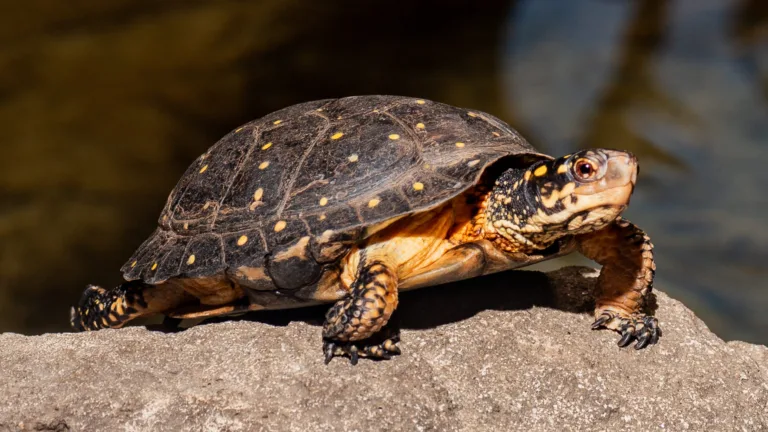
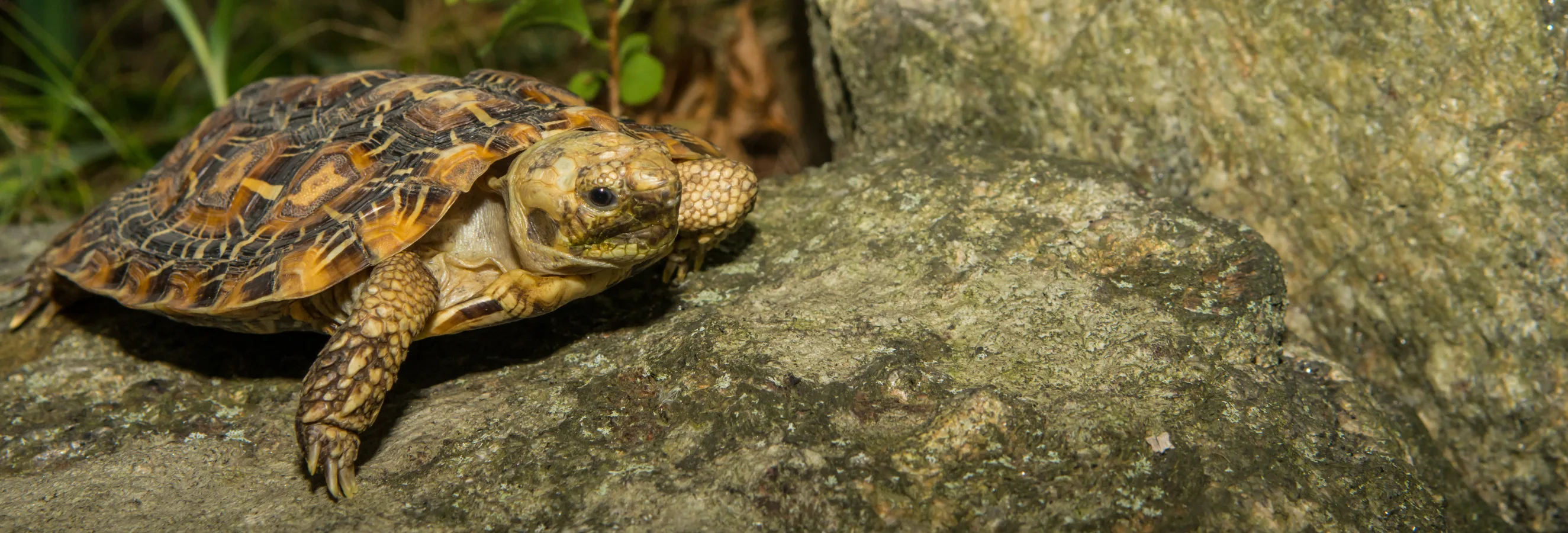
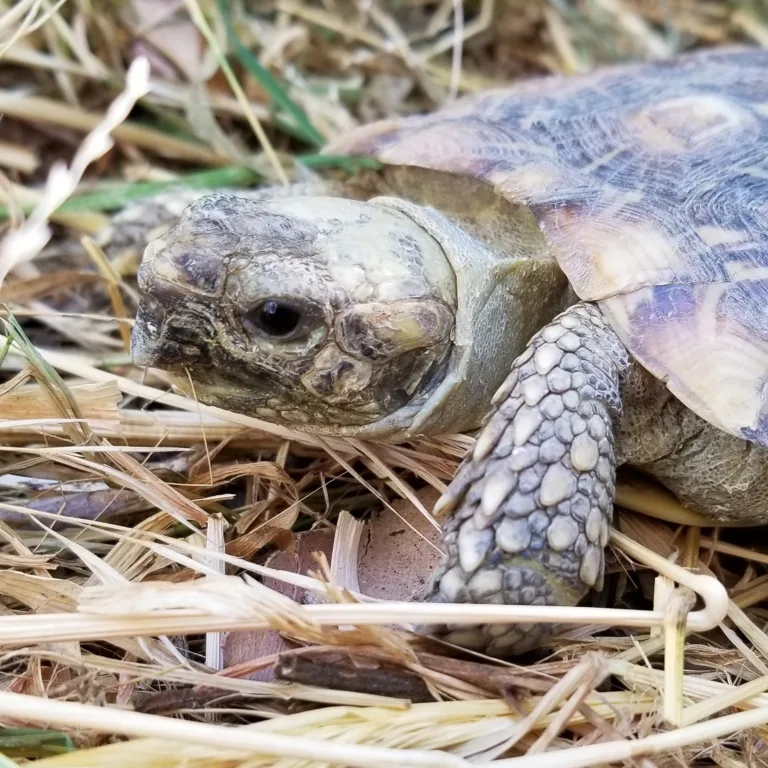
The pancake tortoise is unique among tortoises because of their extremely flattened and flexible shell. The upper shell, called a carapace, measures about 6 inches in adult pancake tortoises, with females slightly larger than males. Most species of tortoise sport a high, rigid carapace and a solid underlying bone. In this species, however, the underlying bone is filled with gaps. This highly specific shell may look unusual, but makes them perfectly adapted to their rocky habitats. With their flat, flexible shell, this reptile can squeeze into rocky crevices.
Pancake tortoises also have strong limbs that help to wedge themselves into rocks. They use this ability to hide from predators or to cool off during the heat of the day. Their strong limbs are also great for climbing around uneven terrain. Their brown shell with yellow markings blends into their rocky surroundings. Their camouflaged appearance is particularly useful when they go on foraging missions.
Habitat & Ecology
Found at altitudes of 1000 to 6000 feet, pancake tortoises live in isolated parts of Kenya and Tanzania. Specifically, they can be found in southern Kenya and northern and eastern Tanzania. An introduced population may also occur in Zimbabwe.
Pancake tortoises prefer thorn bush areas and savannas with small hills and rocky outcrops known as kopjes.
Diet
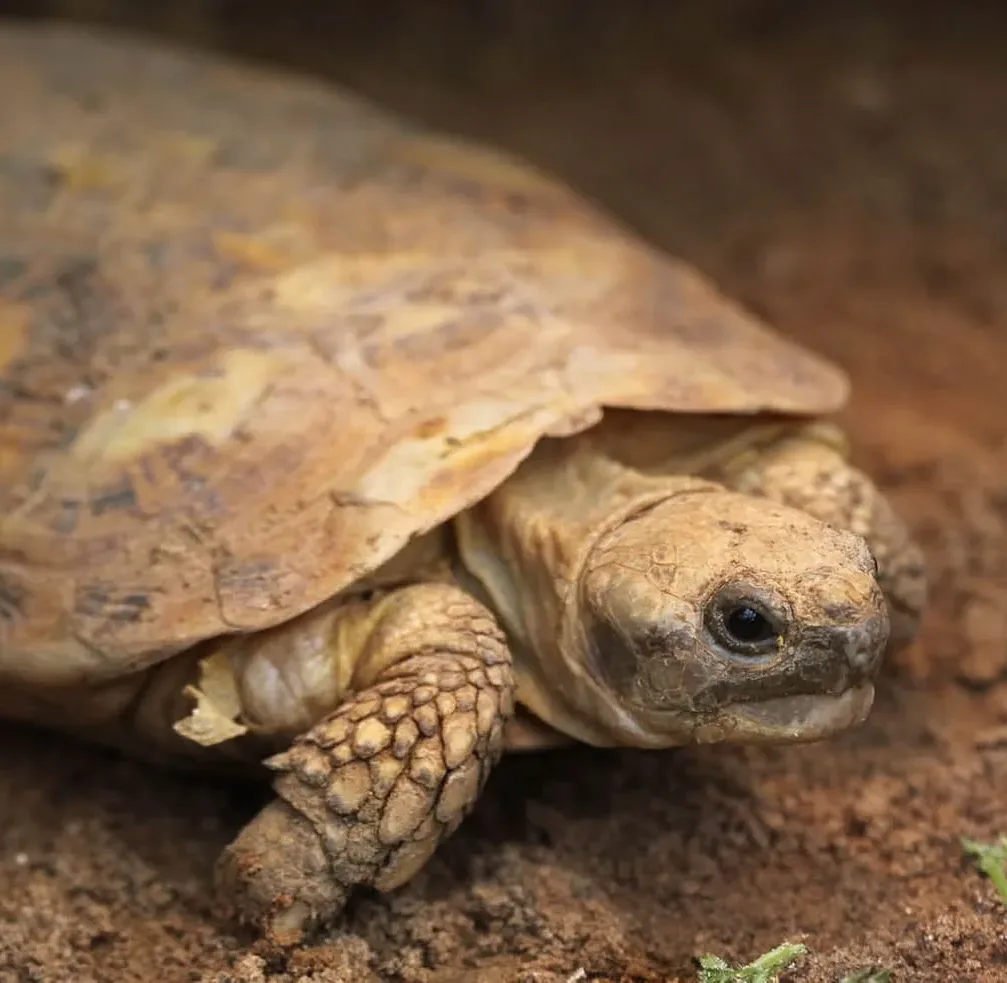
Like most tortoises, pancake tortoises are herbivores. Their diet primarily consists of succulents, thorn bushes, and dried grasses. They take advantage of any fallen fruit they come across, but will also eat most other vegetation.
Behavior & Reproduction
The pancake tortoise spends a lot of its time among the rocks, where they are sheltered. These tortoises are most active in the early morning and the evening while they bask and feed. They generally only emerge from shelter for about an hour, never straying too far, but are quite mobile during that time. When threatened, they will run into a crevice and use their legs to wedge themselves as deeply as they can and remain there until the danger is gone. These tortoises are surprisingly social and get along well in groups as long as there is enough food for all. As many as ten tortoises have been found sharing the same crevice.
Mating takes place in January and February, with a single egg laid in July or August. Males fight for access to females during the mating season, in January and February, with large males tending to get the most chances to mate. Nesting in the wild seems to occur in July and August, but clutches are produced year-round in captivity. The female digs a nest cavity about 7.5-10 cm deep in loose, sandy soil. Usually one egg is laid at a time, but a female can lay multiple eggs over the course of a single season, with eggs appearing every 4-8 weeks. The eggs must gestate for 150-221 days. The hatchling has a hard shell, which quickly becomes flat and soft. There is no parental care. When these tortoises hatch, they are about an inch long and have a domed shell much like other species of tortoise. The shell flattens out as the tortoise grows.
Wild: 25-35+ years
January-February
1
1 year
Conservation
Pancake tortoises are listed as Critically Endangered on the IUCN Red List. They are affected by over consumption and habitat destruction due to agricultural development and overgrazing of domestic cattle and goats.
Due to their unique physical attributes, pancake tortoises are severely impacted by the illegal pet trade. Juveniles are frequently targeted to be poached, which further isolates populations. Some measures have been taken to protect them, and pancake tortoises are now restricted by the Convention on International Trade in Endangered Species of Wild Fauna and Flora (CITES).
Fascinating Facts
- This tortoise is the fastest tortoise in the world thanks to their lightweight shell.
- These tortoises can climb vertical crevices in the rocks using the technique mountaineers call "chimney climbing", where the carapace is pressed against one wall and the feet against the other, allowing the tortoise to wriggle upwards.
- Pancake tortoises hatch with a domed shell that flattens as they grow.
About Our Animals
Our pancake tortoise, Maple, was hatched in 2007 at the Bronx Zoo. She has been with us since 2010. Weighing in at only 1 lb, Maple easily climbs and squeezes into the rock crevices in her exhibit. Like a typical pancake tortoise, Maple spends most of her time hiding in her favorite dark crevice and only wanders out in search of food.