Desert Tortoise
Critically Endangered
Desert
Southwestern U.S.
Diurnal
Herbivorous
Characteristics
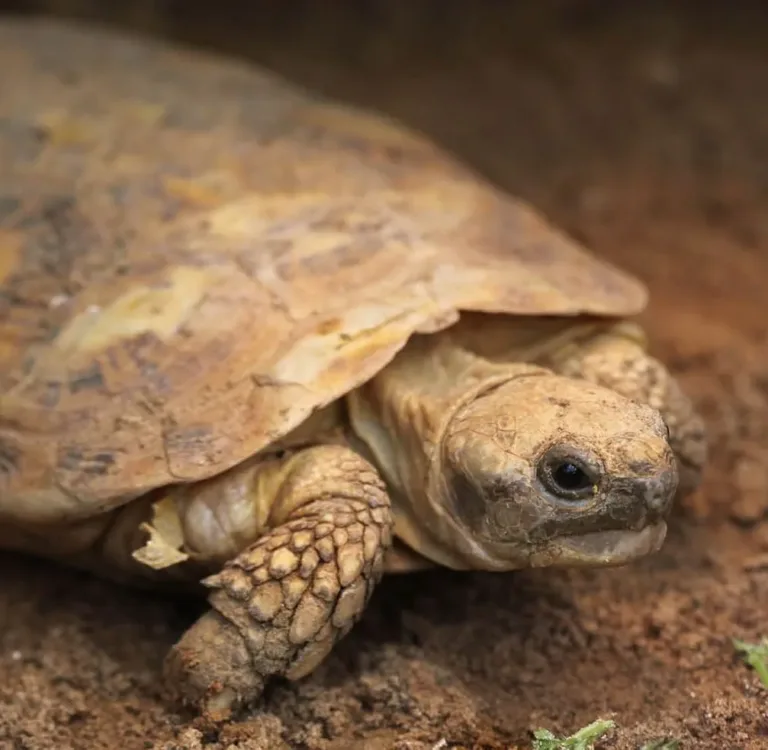
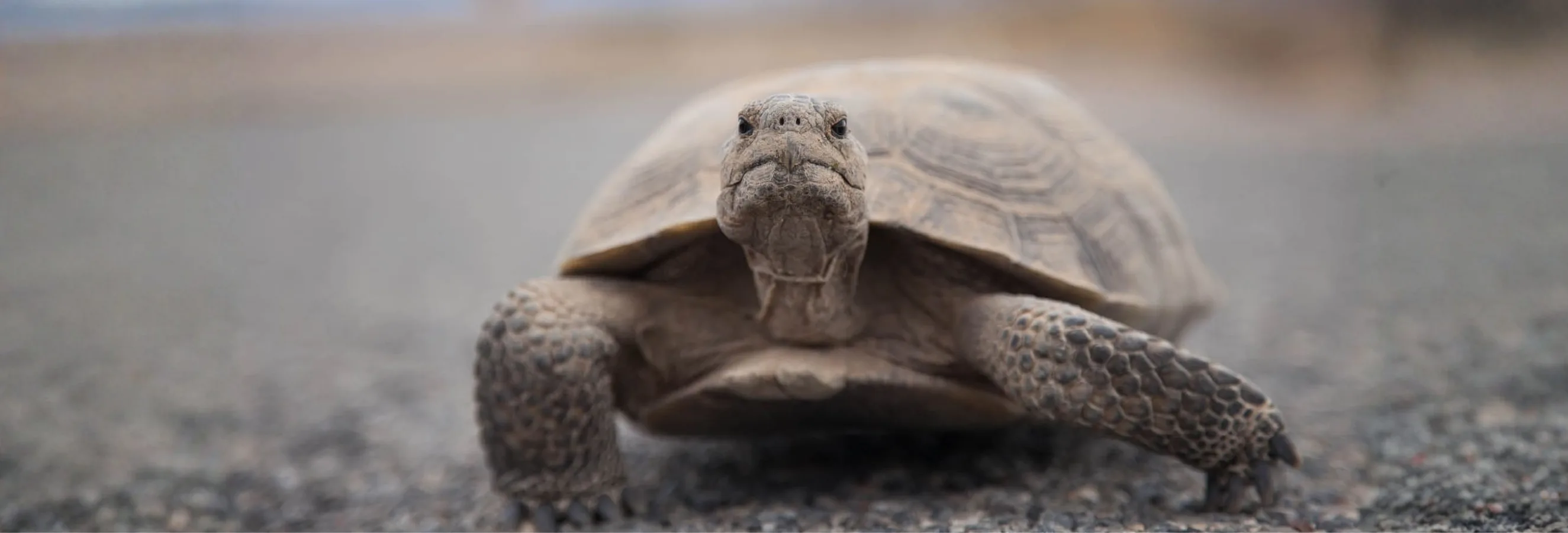
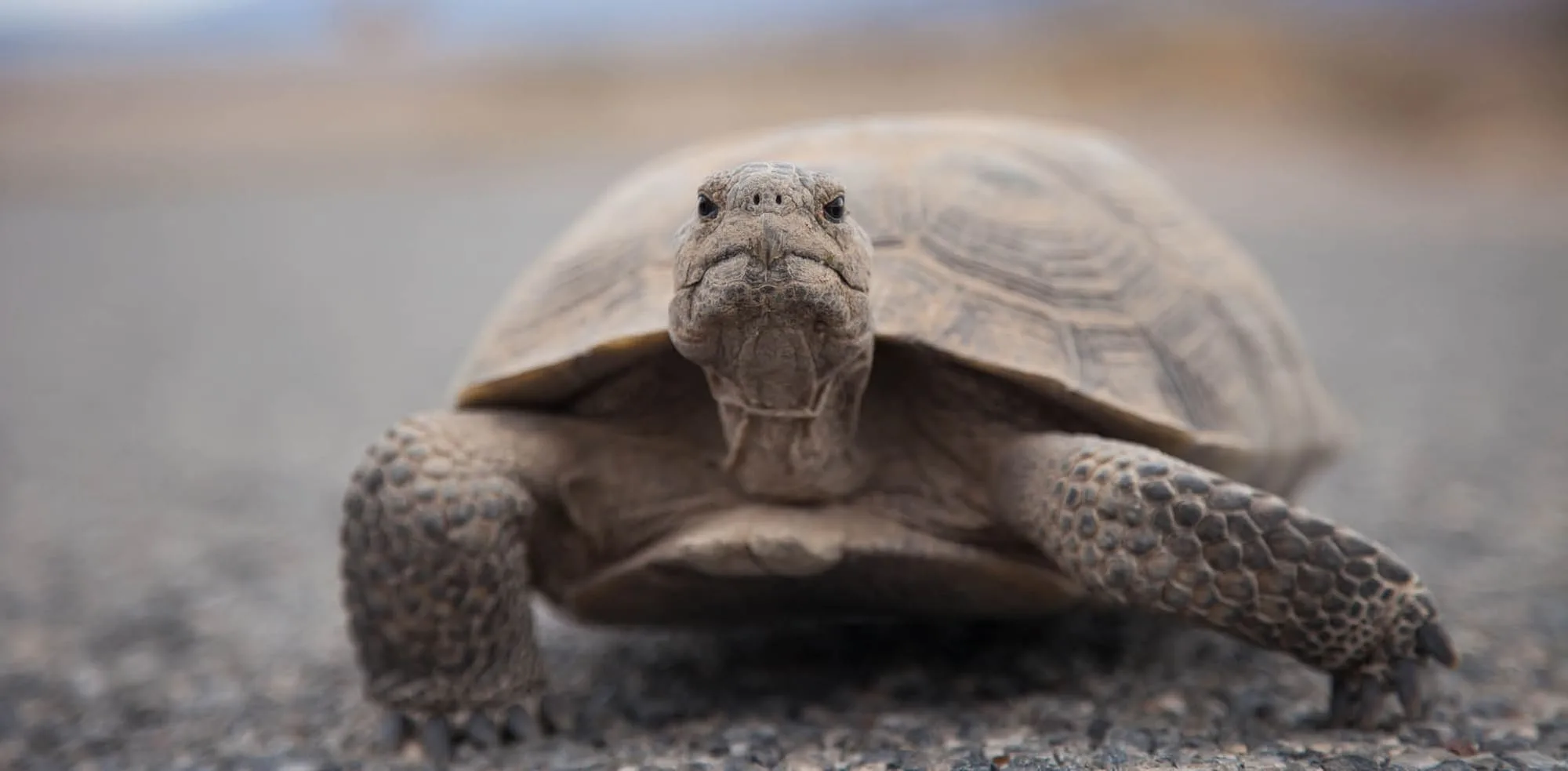
This tortoise species is relatively large and can get up to 14 inches long and weigh as much as 15 pounds. The top of their shells, called the carapace, are relatively flat as is typical for fossorial tortoises. These shells are usually dull gray or brown with no noticeable pattern. The underside, called the plastron, tends to be yellow or tan. Desert tortoises have very long nails, which can help them dig out their burrows.
Males have long, curved gular horns located on their plastron underneath their necks. These are used for leverage in male-male combat. Males also tend to have heavier claws, longer tales, and a depression in the plastron to aid in copulation. Females conversely have flat plastrons and a curved carapace. These features help the males and females fit like two puzzle pieces, with the indented male plastron fitting over the curved female carapace.
Habitat & Ecology
The Mojave desert tortoise is found north and west of the Colorado river. They are found only in the United States in Arizona, Utah, Nevada, and California. Desert tortoises live in desert scrub characterized by creosote bush, white bursage, and galleta grass. To escape the harsh sun, they dig extensive burrow systems that can be up to 10 meters long. Sometimes five tortoises or more will even share a burrow.
Diet
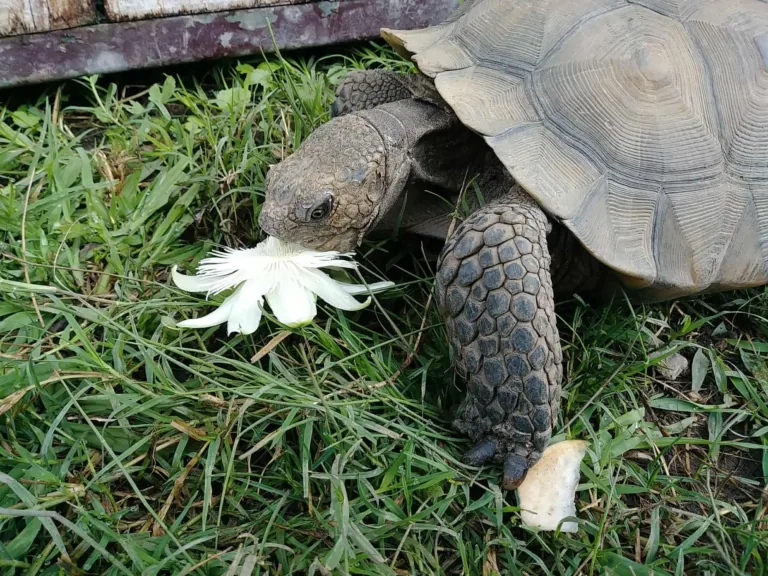
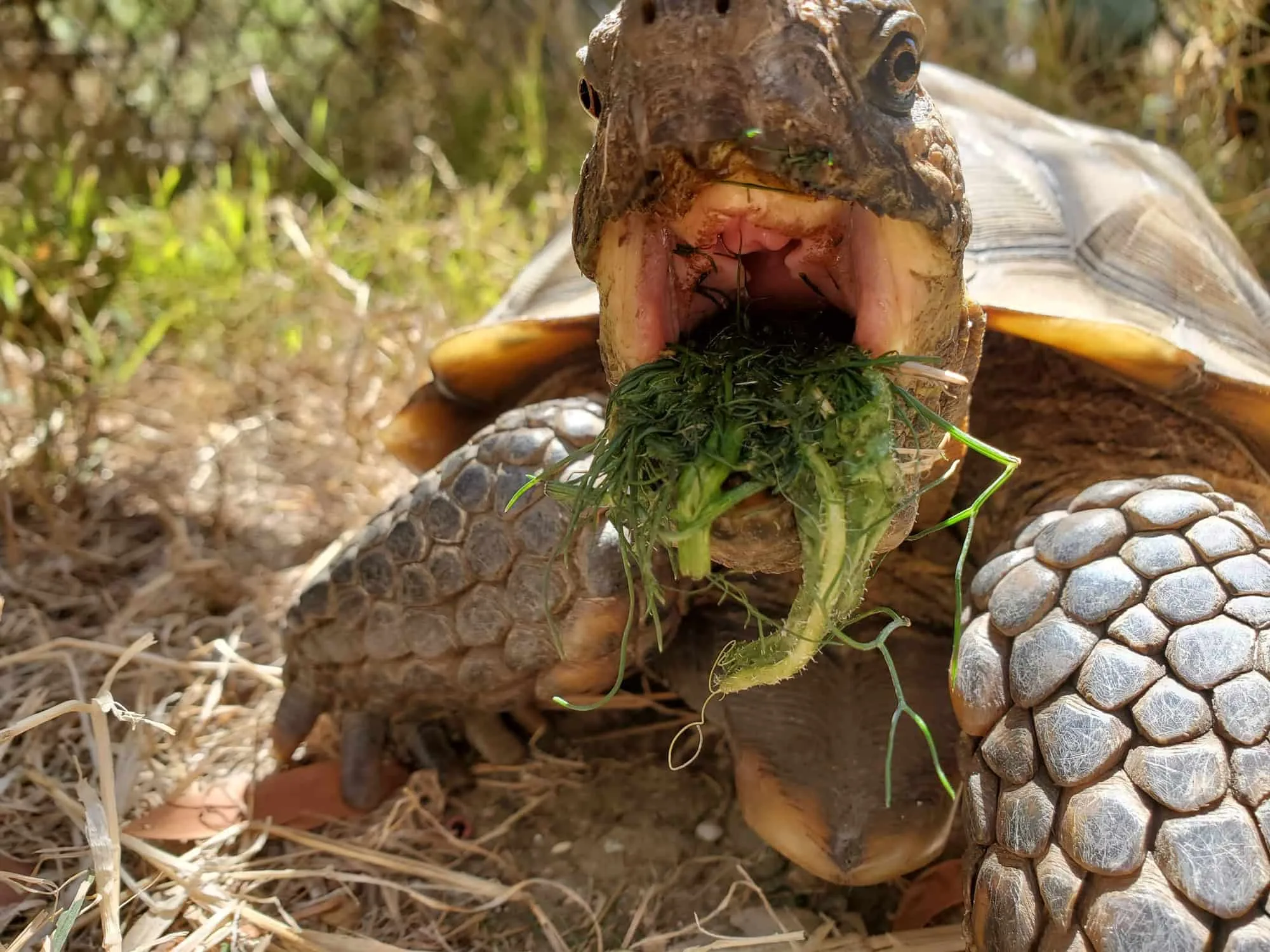
Desert tortoises are herbivorous and usually feed on low-growing plants and fallen leaves. Their diet includes grasses, wildflowers, cactus pads, and wild fruit. They are particularly attracted to bright colors as they are usually indicative of higher value food such as flowers or fruits. Very occasionally they scavenge bits of bones from mammalian scat for extra calcium.
Water is a treasured resource in the desert, and sometimes tortoises are only able to drink once a year. Water is stored in the tortoise’s bladder to keep the tortoise hydrated. When tortoises are frightened, they run the risk of emptying their bladders and losing their year’s supply of water. This means that startling a tortoise can prove fatal.
Behavior & Reproduction
Desert tortoise activity is largely dictated by the seasons. Winter is spent deep in brumation. They usually go down around October and wake up around March, but they can spend up to 9 months of the year brumating. During this period, they don’t eat, drink, or defecate. Sometimes, desert tortoises also undergo a period of inactivity over the summer known as aestivation. Aestivation can last from June to September.
These tortoises are not particularly social. While they may share burrows on occasion, tortoises of the same sex are not very tolerable of each other. Male-male conflict is very common and loose dominance hierarchies may form. Desert tortoises will take on multiple mates throughout their lives. During breeding season, there is heavy competition between males for access to females. The males posture at each other and will even ram into each other. This is where they use their gular horns to attempt to flip each other over. The winner is able to mate with the females. They will bite, hiss, and butt the female’s flank before mounting her. Mating concludes once the female walks away.
Breeding may occur year-round, and females can store sperm in their reproductive tracts for up to 18 months. As a result, they often mate before going into brumation and then lay eggs in the spring. Desert tortoise nests appear as scraped out nests in the desert floor with 3 to 5 eggs laid in them. Females will urinate over the nest before and after laying their eggs. Reasons for why are uncertain, though it may be to ward off predators or provide moisture during incubation. Incubation lasts 90 to 135 days, usually hatching in September or October.
50-80 years
March-October
3-5
1+ years
Conservation
The Mojave desert tortoise is listed as Critically Endangered on the IUCN Red List. They were last assessed in 2020 and found to have a decreasing population.
One of the largest threats to desert tortoise populations is the drastic increase in raven populations. Ravens adjust exceptionally to human expansion and will even seek out human-populated areas for food. As we encroach on animals’ native habitats, such as deserts, we bring ravens with us. Ravens pose a huge threat to young tortoises because they will peck right through their soft shells.
Another threat that desert tortoises face is the spread of disease. Released pets and human handling can spread Upper Respiratory Tract Disease. This deadly disease is on the rise. Additionally, it is not uncommon for desert tortoises to be taken from the wild illegally for the pet trade. Because of the risk of infecting tortoises with Upper Respiratory Tract Disease, these tortoises can never be returned to the wild.
Fascinating Facts
- The average speed that desert tortoises move at is 0.2 mph.
- Tortoises are most vulnerable before they turn 5 because their shells are still soft. The only predator capable of cracking an adult tortoise shell is the mountain lion.
- Water stored in the desert tortoise’s bladder can account for up to 40% of their body weight!
About Our Animals
There are two desert tortoises that call Oakland Zoo their home, Pokey and Nemo. Pokey and Nemo are both members of our animal ambassador program and live behind the scenes. Because they are both males, we house them separately as they would prefer to be apart. Pokey is the oldest animal in the animal ambassador program. He was hatched in 1956, making him 69 years old. Pokey is the most independent of the tortoises, but if you sit around his enclosure long enough, he will approach for snacks or scratches. Nemo on the other hand hatched in 1985 and is about 40 years old. He is much more affectionate and seeks out company from his handlers. Both Pokey and Nemo were raised in managed care and used to be household pets. However, they were likely taken from the wild which is incredibly damaging to wild desert tortoise populations. Once removed from their homes, they can never be returned. If you encounter a tortoise in the wild, it is best to leave them alone as they are likely to empty their bladders as a fear response and lose their entire year’s supply of water.
You can meet Pokey and Nemo during special Zoomobile, Wildlife Assembly, or ZooCamp programs. During these programs, kids can learn more about these animals and the habitats, adaptations, or other features that make them special. You might also get lucky on your next visit to the zoo and encounter them on a serendipitous Pathway Encounter or Wildlife Theater show.
Our Role
The Oakland Zoo is committed to educating the general public about our native California wildlife. By showcasing native endangered species, such as the desert tortoise, we hope to promote empathy for our animal neighbors and foster a deeper appreciation for the wildlife that lives in our community.