Oakland Zoo Helps Rescue 32nd Mountain Lion Cub in Critical Condition From El Dorado County
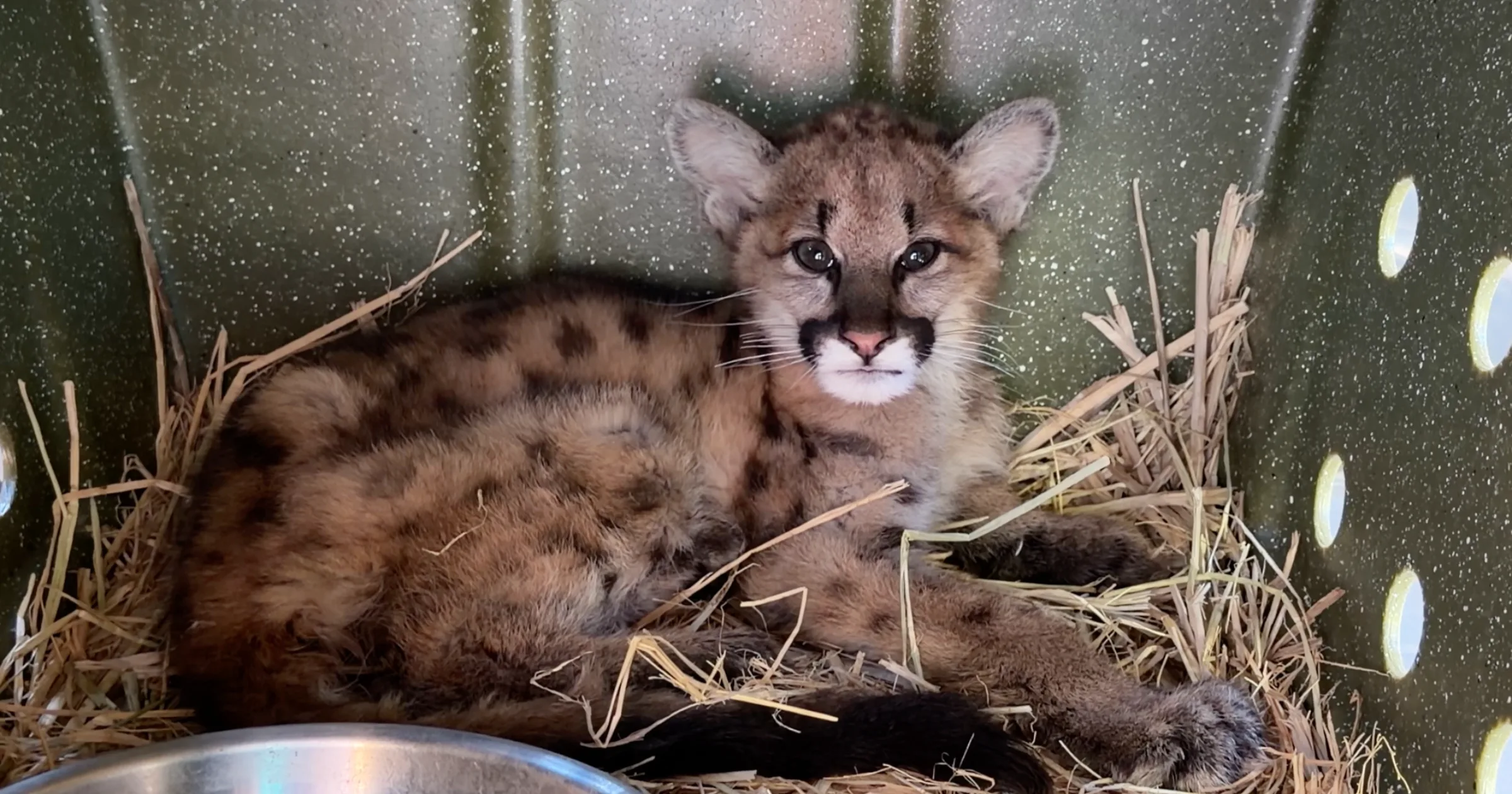
Last Friday, Oakland Zoo helped rescue a female mountain lion cub from El Dorado County. California Department of Fish and Wildlife (CDFW) veterinarians performed an initial comprehensive exam, noting she was severely emaciated, weighing less than half of her ideal weight, weak, and infested with ticks. The assessment also showed gastrointestinal issues, but there were no signs of trauma. After treating her for dehydration and tick infestation, the cub was taken to Oakland Zoo’s Veterinary Hospital for further care. There, she was confirmed to be in a critically fragile state, highlighting the importance of quick rescue and intervention
“Oakland Zoo has made major advances in medical care and treatment of critically ill orphaned mountain lion cubs,” said Dr. Deana Clifford, CDFW Senior Wildlife Veterinarian. “We are grateful for the continued partnership with Oakland Zoo that can give these cubs a better chance at survival.”
The mountain lion cub, now named Clover, was moved to the ICU at the Oakland Zoo Veterinary Hospital due to her critical condition and has been receiving around-the-clock intensive care from the Veterinary Hospital and Animal Care staff for the past few days.
On Monday morning, her condition started to worsen, and Oakland Zoo Veterinary and Animal Care staff administered life-saving care, including a blood transfusion using blood from one of our resident mountain lions, Briar. Briar was rescued in August 2024 in El Dorado County and has remained a resident of the California Trail habitat at Oakland Zoo, along with fellow rescues Coloma and Silverado.
Although Clover is doing better today after 24 hours of care, she remains in critical condition and will be closely monitored by Oakland Zoo’s Veterinary and Animal Care staff.
“This is a journey we are always committed to undertaking. Our teams dedicate their hearts, skills, and resources to every rescue we handle. Regardless of the outcome, we remain here to assist and aim to leave a lasting positive impact on their lives,” says Dr. Lauren Pudenz, Associate Veterinarian at Oakland Zoo.
Clover is the Zoo’s 32nd mountain lion cub rescue as part of the Rescue and Recovery program and a member of the Bay Area Cougar Action Team.
Oakland Zoo emphasizes the importance of quickly reaching out to CDFW or permitted wildlife rehabilitators when you see injured or sick wildlife like Clover in the wild. Acting swiftly with professional help greatly increases these animals' chances of survival. When you encounter injured or ill wildlife, it is essential to contact CDFW or a permitted rehabilitator right away, stay at a safe distance to avoid causing additional harm to yourself or the animal, and refrain from feeding or trying to rehabilitate the animal yourself. This helps prevent the spread of disease, reduces the risk of harm, and helps stop wildlife from entering human-populated areas, which can cause them to be displaced.
For more information about Clover, please review our FAQ below…
How old is Clover?
She is about three months old based on her coat coloration and tooth development.
What happened to Clover’s mom?
The first priority when CDFW finds a puma kitten is to assess whether the area is safe — away from roads and other dangers — and whether the kitten appears relatively healthy. If so, CDFW will leave the cub in place and monitor it with a camera to see if the mother returns. They have also attempted reunions before. They generally avoid removing a wild kitten if its mother is nearby. Unfortunately, Clover was found near a road, and given how emaciated she was, it was clear she hadn’t been cared for in some time, making her mother's presence very unlikely. Regional staff checked reports of mountain lion hits in the area but didn't find any, so CDFW simply doesn't know who her mother was. Residents are encouraged to report any additional sightings.
Why did Clover need a transfusion, and how do you get a blood donor for a mountain lion?
Oakland Zoo Veterinary and Animal Care staff conduct voluntary training with all animal residents to showcase different behaviors, helping staff better care for them. Briar has been participating in voluntary training to prepare for his own care, and sometimes this training can be used for life-saving procedures, like this blood transfusion for Clover. Severely emaciated animals are often anemic due to their bodies lacking enough nutrients to make red blood cells and other critical blood components. Often this is compounded by additional disease processes such as parasites or infections, which these debilitated cubs have a hard time handling.
What conservation challenges do mountain lions face in the wild?
Mountain lions encounter numerous conservation challenges in the wild. Their habitats are increasingly fragmented as new communities encroach, slicing through mountain lion territories and blocking essential movement pathways with highways and buildings. Human expansion increases the risk of fatal car strikes; when a mother mountain lion is hit, her cubs often cannot survive without her for food and guidance. Additionally, like many other wild animals in California, mountain lions are threatened by wildfires driven by climate change.
Will Clover be released to the wild?
In the wild, mountain lion cubs need about two years with their mother to learn survival skills. Because Clover is so young, she lacks those skills and cannot be released back into the wild.
What is the Bay Area Cougar Action Team (BACAT)?
In 2012, the Oakland Zoo participated in a training session focused on resolving conflicts between humans and wildlife. This training led to the formation of BACAT (Bay Area Cougar Action Team). The alliance brings together various agencies, non-profit organizations, local parks, and mountain lion researchers. With a shared message and a team-based approach, BACAT aims to create a support system that serves as a model for other regions in California and beyond. Through BACAT, Oakland Zoo has rescued and rehabilitated over 30 mountain lions, most of whom were victims of human-wildlife conflicts or wildfires. More information about the partnership is here.
How much does it cost Oakland Zoo to care for mountain lion cubs?
Cubs come to Oakland Zoo with varying medical needs and symptoms; some stay only a matter of weeks, while others may stay for many months. On average, mountain lion cubs spend 8.5 days in the Intensive Care Unit at the Wayne and Gladys Valley Veterinary Hospital, which requires constant staff care. The average cub costs roughly $18,000 per month for veterinary and animal care. These efforts are supported by community donations.
How can you help support Oakland Zoo and its Mountain Lion Rescue and Recovery program?
Oakland Zoo relies on community philanthropic support to fund our conservation and animal welfare programs, including our mountain lion rescue and recovery work. You can make a donation to Oakland Zoo online at www.oaklandzoo.org/give or reach our Development team at impact@oaklandzoo.org.