African Lion
Vulnerable
Grassland
Central to South Africa, mostly East Africa.
Crepuscular
Carnivorous
African Savanna
Characteristics
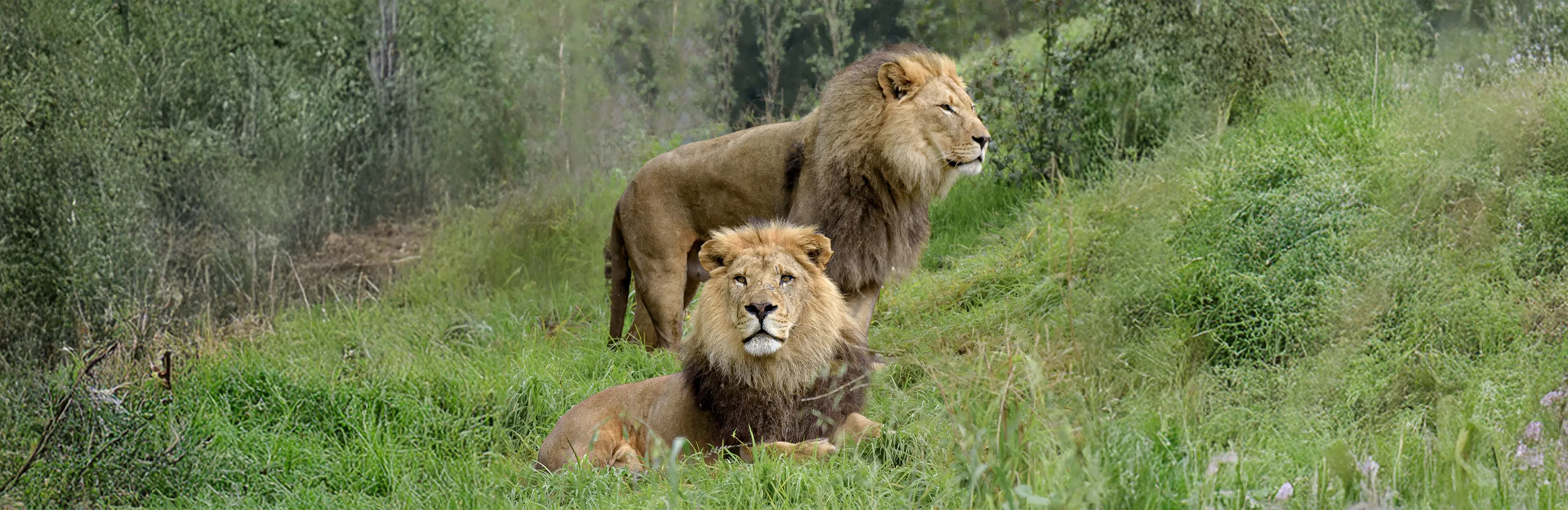
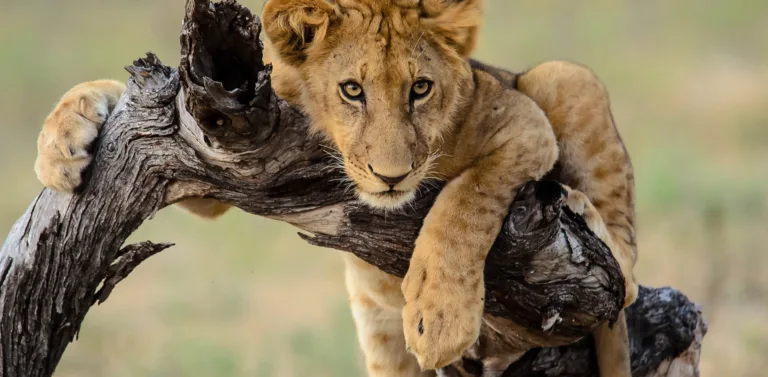
Adult lions commonly have a plain, unspotted coat that is light brown to dark ochre in color. Cubs are marked with spots that sometimes persist onto the legs and belly until they are fully grown. Male lions have a brown mane, which tends to grow darker and fuller as the animal ages. The tail has a black tuft at the end.
Lions are 3-4 feet high and 5-8 feet long. Females weigh an average of 280 pounds, while males weigh an average of 415 pounds. The largest recorded wild lion was 600 pounds!
Habitat & Ecology
Lions live in grassy plains, savanna, and open woodland. African ions are found from Senegal to Somalia, Angola, North Namibia, and from Kalahari east to Mozambique and north to Natal. Historically, African lions were very widespread across most of the continent; however, in present day, the population is fragmented into smaller ranges that are separated from each other. The Serengeti prides defend home ranges of 8-160 square miles.
As the apex, or top, predators in their habitats, lions play a critical role in keeping populations of their prey in control. Without them, animals that graze would over-consume grasses, putting their savanna habitat at risk of drying out and transforming into a desert.
Diet
Lions are carnivores and feed on a variety of large and medium-size prey. They prefer wildebeest (or gnu) above all others when the annual migration brings the vast herds through the pride's range. Otherwise, they eat buffalo, zebra, antelope, giraffes, and warthogs. Lions also steal kill and carrion from other predators.
When the pride hunts as a group, they employ an ambush that forces large prey into the waiting paws of the males. Females have the speed but lack the body weight to knock down large "family size" prey such as wildebeest. For this reason, the females are the ones that chase down the prey, and the male is the one that finishes the job. Despite their tremendous power and adaptive efficiency, lions are more likely to fail than succeed in their attempts to kill.
Behavior & Reproduction
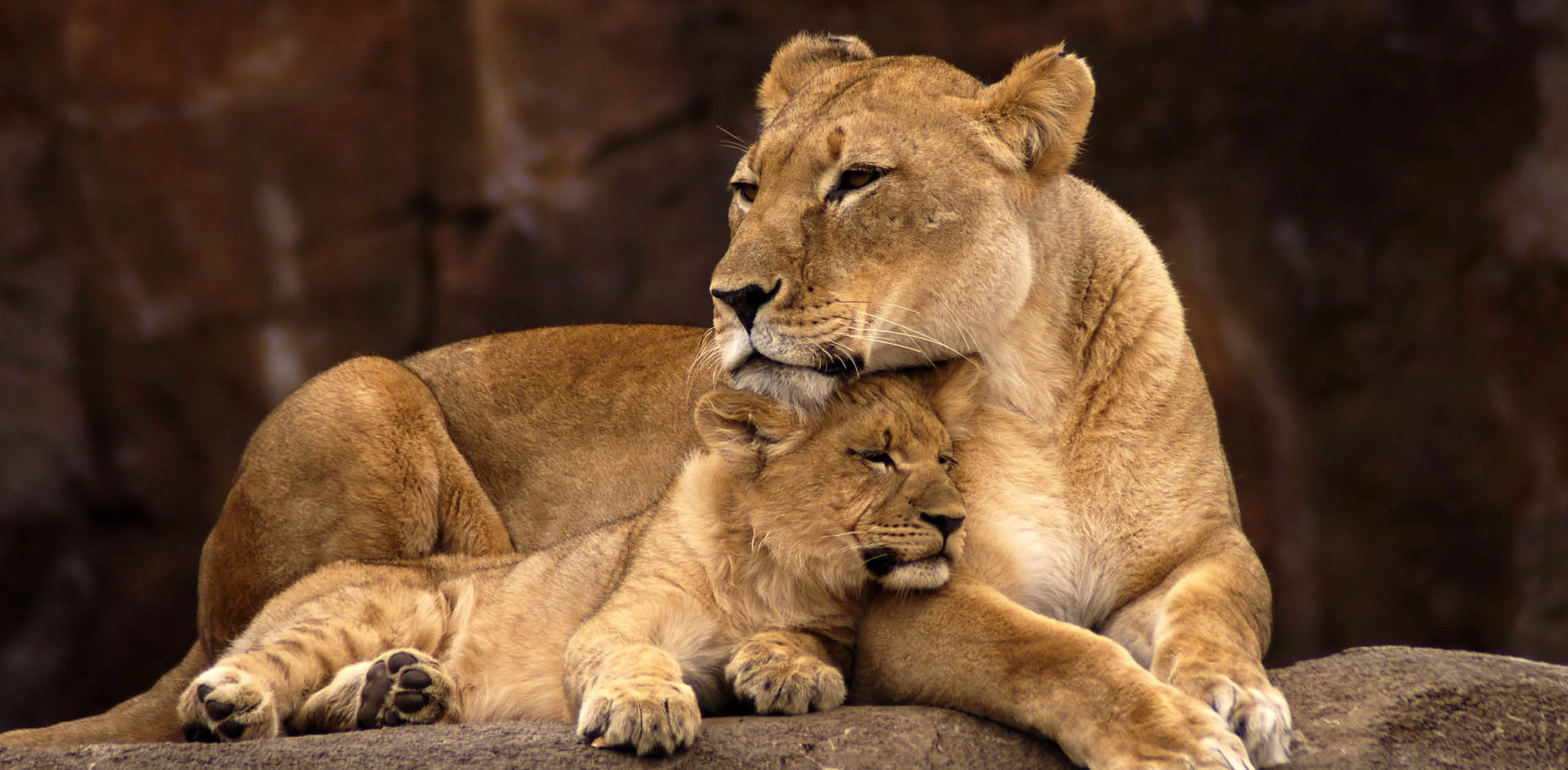
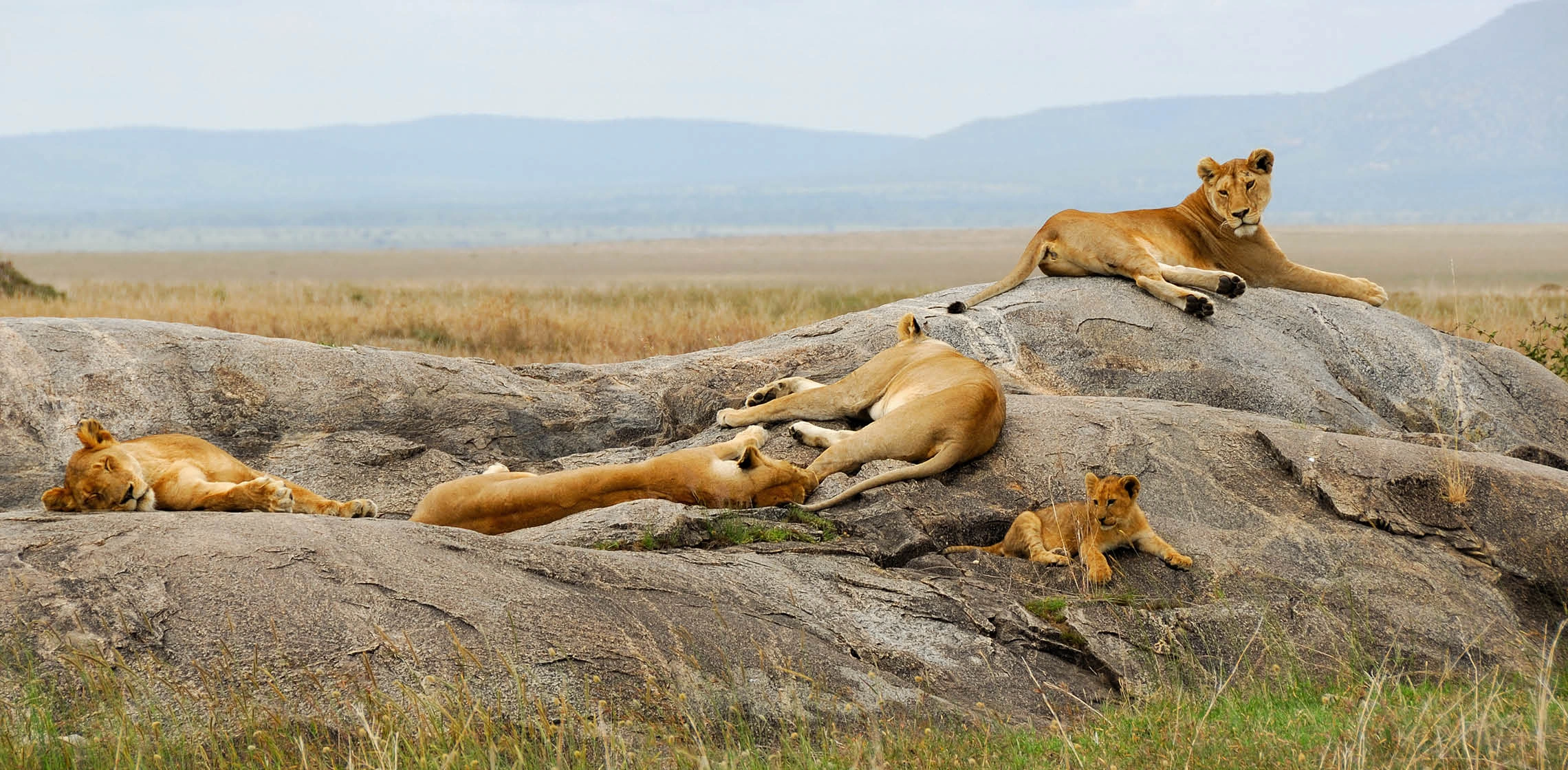
While most cat species are solitary, lions are the only cats that primarily live in large family groups. Each pride differs in size and formation, but a typical pride can consist of up to three males, up to a dozen females, and a variable number of cubs. Females are usually sisters and/or cousins that have grown up together.
Male lions reach maturity at 3-4 years. However, these subadult males are driven out before reaching maturity at 2 ½ to 3 years of age. At this point, the immature males either become nomads or live in a group of males, called a coalition. Starting at the age of 5, they become old enough to attempt to take over a pride of their own.
Females mature in about 2 years. All big cats are induced ovulators, so the release of the ovum is brought about by the act of mating. This means that lions don’t have a seasonal “breeding period”. The period of gestation for the lioness is between 105 and 118 days and usually produces 3-4 cubs. Only one in five will survive the first year.
15-18 years, Protected care: 20+ yea
Widely Variable
3-4
1-2 years
Conservation
The latest IUCN assessment of African lion populations found them to be at a vulnerable status, with roughly 23,000 individuals in Africa and 670 in India. Unfortunately, regional extinction is found to have occurred in several countries across Africa and Asia, meaning the current population of lions is only a fraction of what it once was.
The largest threat to African lions is habitat loss. This not only has a direct effect on where the lions can live, but it indirectly affects them through prey loss as well. The poaching and bushmeat trade are also largely to blame for decreasing lion populations.
Programs, such as the Uganda Carnivore Program (UCP), are dedicated to restoring lion populations. Contact the Uganda Carnivore Program to learn how you can organize a lion fundraiser or establish a pen-pal program between your school and one of the village schools in Uganda that UCP works with.
Fascinating Facts
- The famous lion’s roar is made possible by the cartilage in their throat having ossified into bone (referred to as the Hyoid structure). This is true of all the big cat or "roaring" species. Small cats have a softer throat structure and can only meow.
- Similar to domestic cats, but on a much larger scale, backward-curved horny papillae cover the upper surface of a lion's tongue. This rough surface is useful both in holding onto meat and removing parasites during grooming.
- Lions are crepuscular (most active around twilight) and sleep 18-20 hours a day.
About Our Animals
The Oakland Zoo is home to two male African lions, Gandia and Mandla. Our band of brothers arrived in 2016 from the Woodland Park Zoo in Washington, and have lived with us most of their lives. Mandla is our larger lion and has a longer mane than his brother. He is a problem-solver and enjoys interacting with complicated food puzzles mixed in with their regular enrichment. Gandia is the smaller of the two lions and has a less prominent mane. Despite his size, he is known as the more assertive brother and isn’t afraid to push for what he wants.
Our Role
The Oakland Zoo has a partnership with the Uganda Carnivore Program, which is dedicated to the research and conservation of lions, leopards and hyenas in the northern sector of Queen Elizabeth National Park. In addition to scientific research and monitoring activities, an important component of the conservation activities involves working closely with local communities to improve human-wildlife coexistence.