Ring-Tailed Lemur
Endangered
Forest
Madagascar
Diurnal
Herbivorous
Children’s Zoo
Characteristics
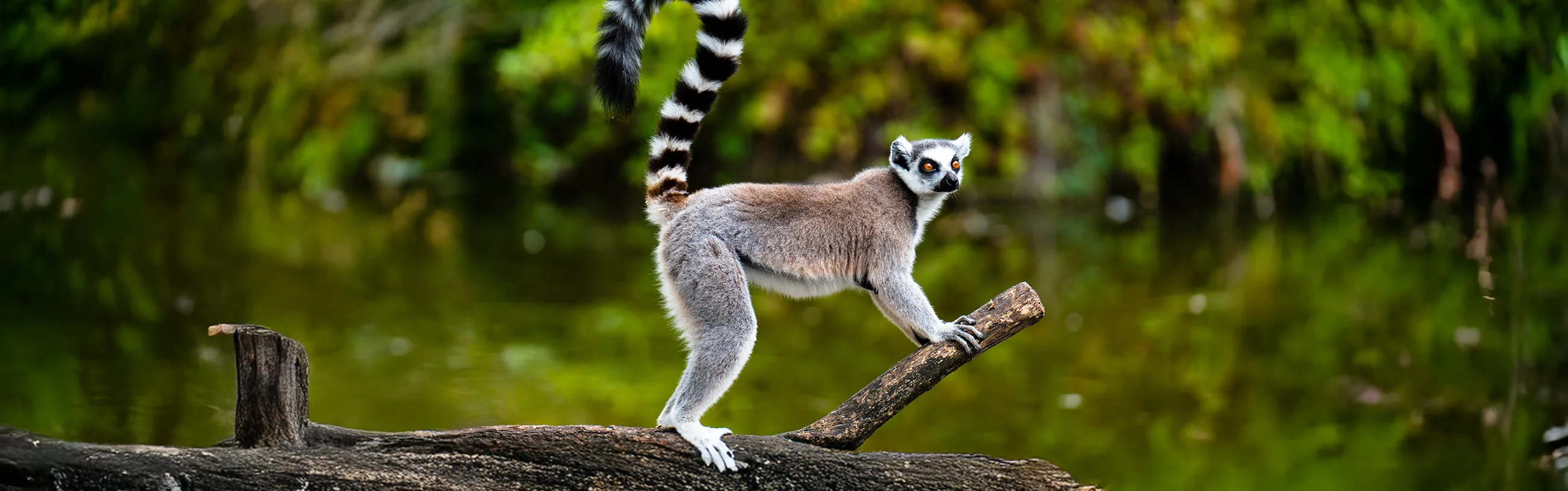
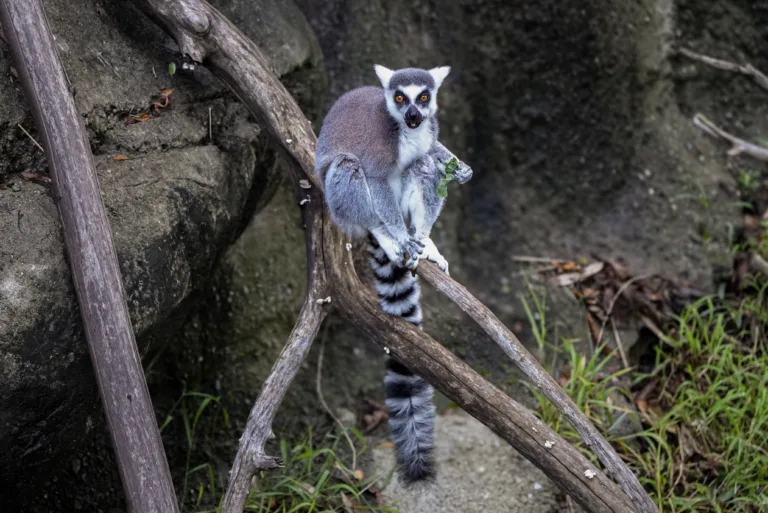
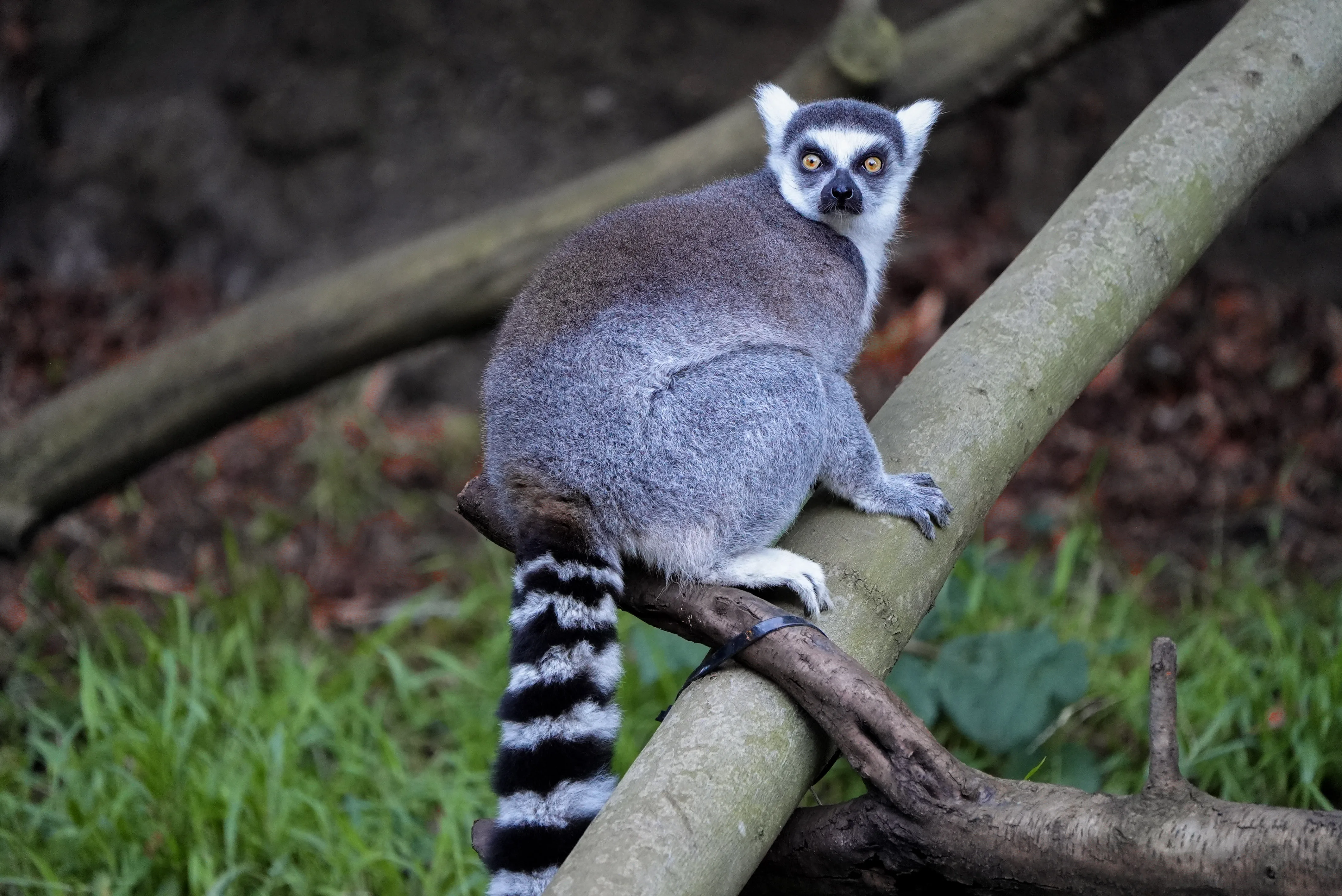
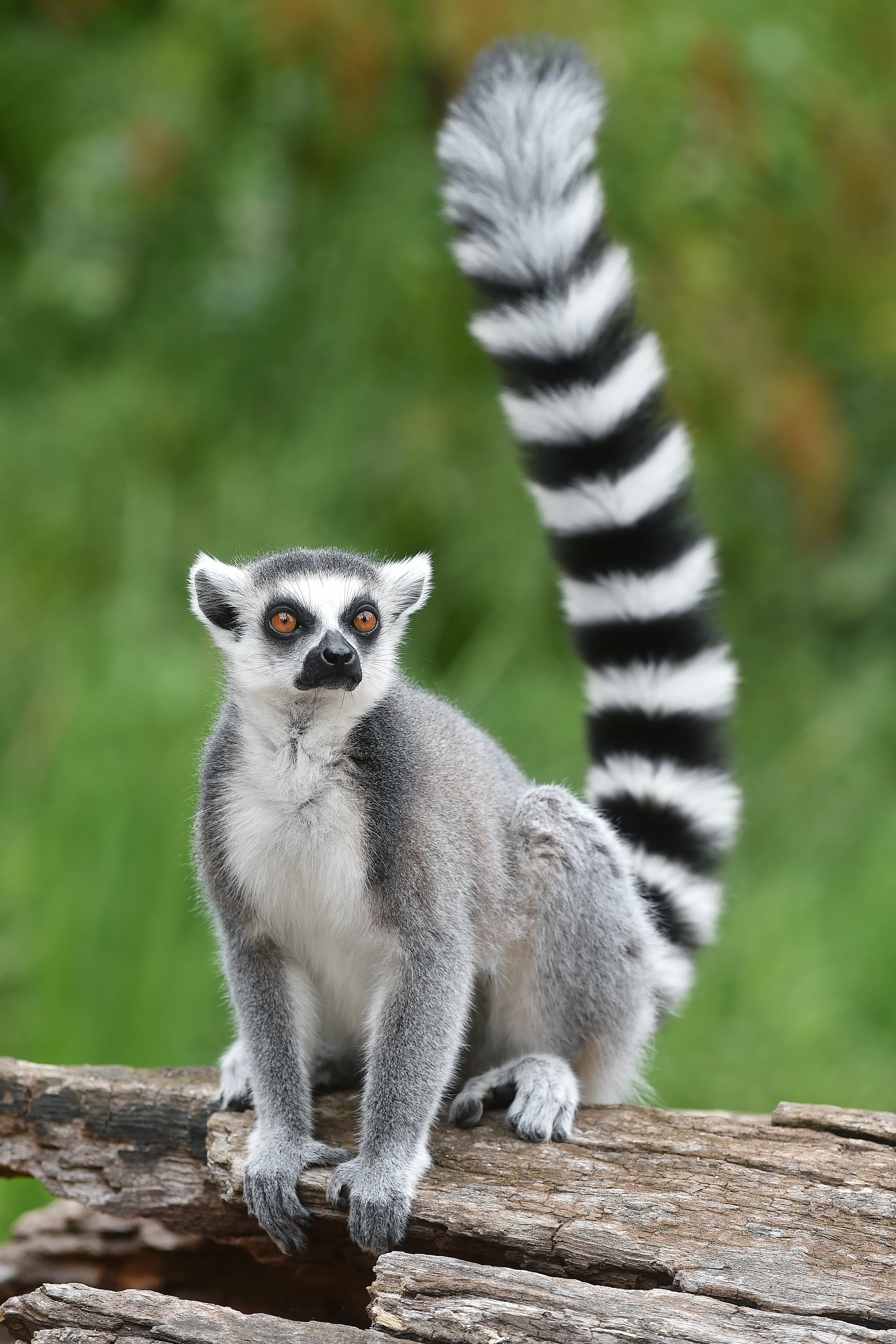
Ring-tailed lemurs are classified as prosimians, a type of smaller, leaping primate. Ring-tailed lemurs are light gray in color, with a white underside that comes up their face and ear, helping to create a dark gray mask over their eyes. They have piercing orange-yellow eyes and a longer, black nose. Ring-tailed lemurs are named after their long and distinctive black and white ringed tail.
Habitat & Ecology
Ring-tailed lemurs are only found in south and southwestern Madagascar. A single, isolated population is found on the eastern coast of Madagascar in the Andringitra National Park, in a rocky plateau. Ring-tailed lemurs generally live in dry forests, gallery forests, or spiny brush. This species of lemur is more terrestrial than other species and is therefore less reliant on trees. However, they do still have the ability to leap from tree to tree and climb easily.
Diet
Ring-tailed lemurs are herbivores. They eat a variety of vegetation including fruit, leaves, bark, and even sap. Because of the harsh climate of their native habitat, they have adapted to eating a wide variety of vegetation, including over 100 documented species of plant. On occasion, a ring-tailed lemur can eat the occasional invertebrate. One of their most important diet items is the Tamarind, a type of legume that ring-taileds enjoy eating the seeds and leaves of. As a foliage eating primate, these lemurs have also been found to consume soil. It is hypothesized that the soil helps to increase their sodium intake.
Ring-tailed lemurs play an important role as seed dispersers. Because they mainly feed on vegetation, seeds are often left in their droppings, providing compost for the seed to sprout and grow. This is essential to regrowing their habitat and food sources!
Behavior & Reproduction
Ring-tailed lemurs are diurnal, but prefer to rest during midday. They are social animals, forming groups, or troops, of 15-25 individuals. These troops are matriarchies, where all females are dominant to all males and there is one female that is dominant over all the others. Females stay with their troops for their entire lives, while males disperse upon reaching maturity to join another group.
Ring-taileds spend most of their day foraging on the forest floor. These lemurs use their long, fluffy tail for balance as well as communication. An upright tail acts as a flag when traveling through their home range. Like a tour guide, these lemurs use this signal so that everyone in the group can keep them in sight and stay together. Ring-taileds will also communicate with a variety of vocal calls and scent marking.
Ring-tailed lemurs have synchronized reproductive cycles that align with seasons of food abundance. Females in a troop will often give birth within days of each other. All ring-tailed lemurs are born between August and September. Newborn lemurs will cling to their mothers back for the first 3-4 weeks, before taking their first steps, and will begin sampling solid food after their first week. These lemurs are fully weaned at 5-6 months of age.
Wild: 15 years, Protected Care: 25 years
April-May
1-2
1 year
Conservation
Ring-tailed lemurs are currently listed as Endangered by the IUCN. This is due, in large part, to them being hunted for food or captured to be kept as pets by humans. Along with these threats, much of the forests they inhabit are being converted to farmlands or are harvested for charcoal production. Fortunately, ring-tailed lemurs are protected in several parts of southern Madagascar, but their protection levels vary. Mostly, their protection comes as refuges in untouched forests.
Fascinating Facts
- The name 'lemur' comes from the Latin word for 'ghost' or 'spirit.'
- Ring tailed lemurs have two tongues! One smaller tongue sits below the main tongue and is used exclusively for grooming.
About Our Animals
Oakland Zoo has a troop of four ring-tailed lemurs. Amy is our oldest lemur, she was born in 1997 and is 27 years old! Her two daughters, Jennifer and Kristina live with her as well and they frequently spend time together grooming or sunbathing. Our fourth lemur, Jaegar, was born in 1999 and is about 25 years old. He is very eager to engage with the animal keepers and is the least picky eater of the four. He enjoys tamarinds, raisins, and craisins the most!
Our four ring-tailed lemurs live with our two crowned lemurs. While these two species would not overlap in the wild, lemur species are gregarious (social), and these two species occupy different levels of the forest. They live here at the Oakland Zoo to act as ambassadors for their species.
Our Role
While lemurs look cute and many people express their want for having them as pets, lemurs are endangered and illegal to keep in most states, including California. They have complex social structures that cannot be replicated in a home environment. Take Action for Wildlife by saying “no” to the illegal wildlife trade, which has caused many animals, including lemurs, to become endangered.