Aldabra Tortoise
Vulnerable
Wetlands
Aldabra
Crepuscular
Herbivorous
Children’s Zoo
Characteristics
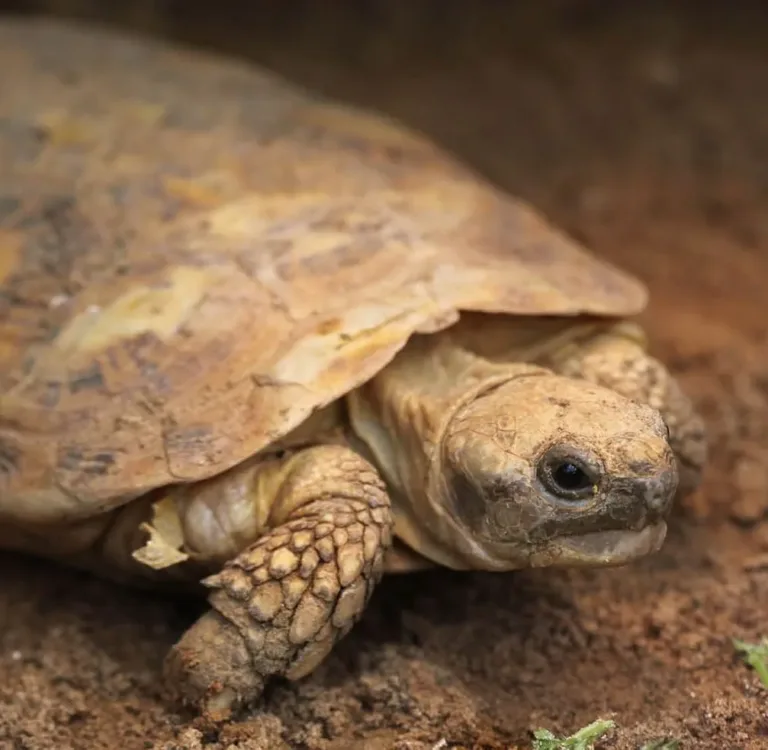
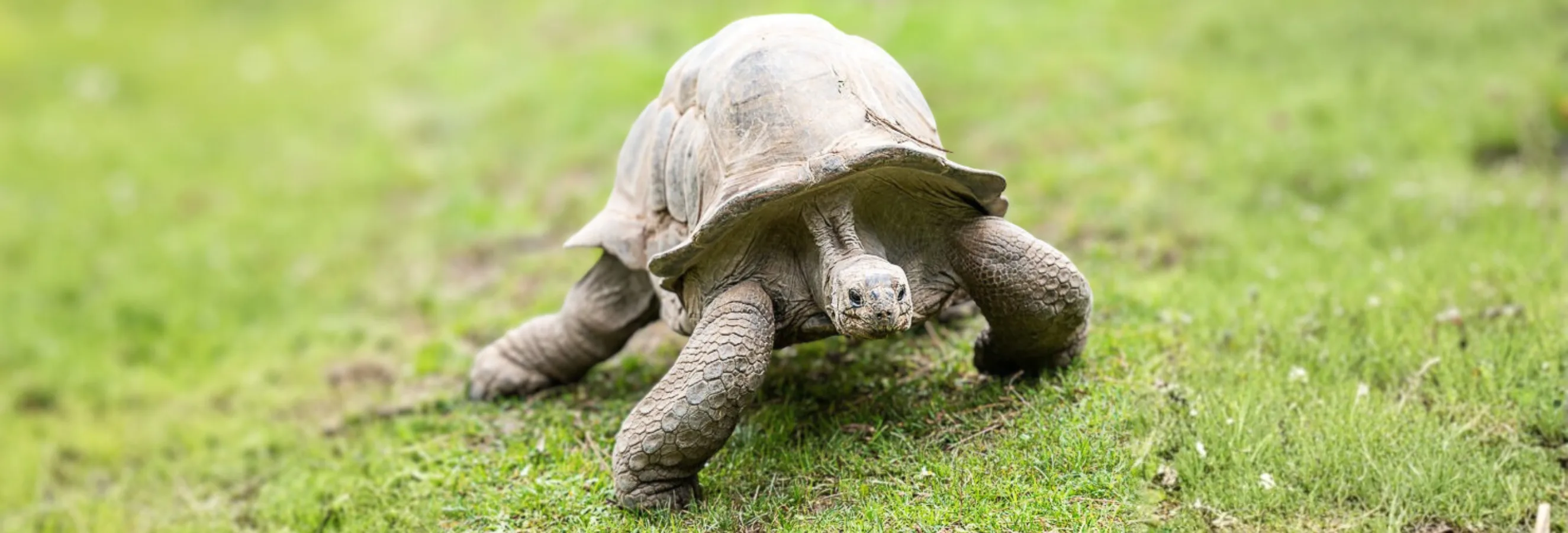
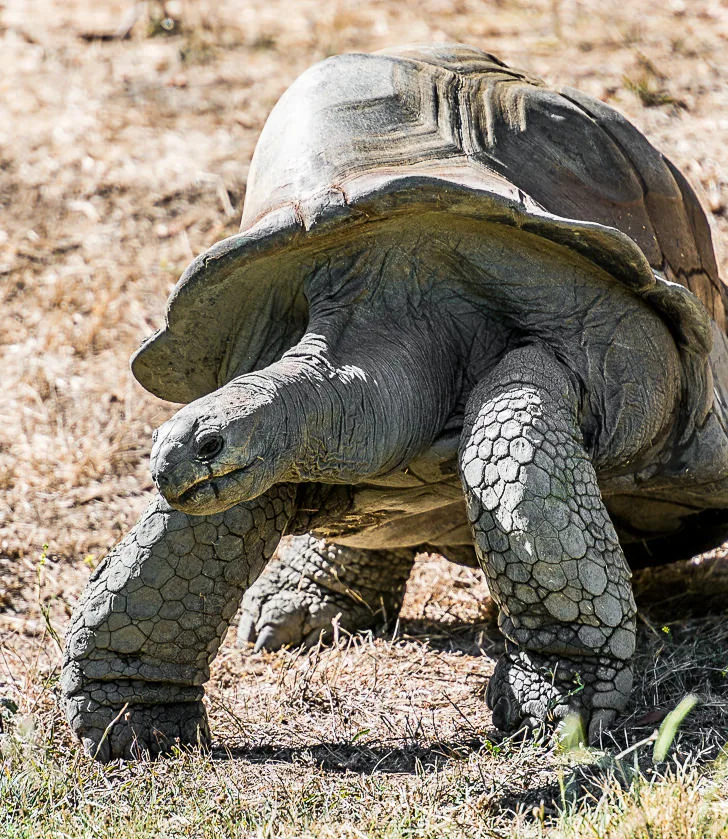
Aldabra tortoises are a dark gray to almost black color. With a domed, thick carapace (upper shell), these armored reptiles can reach sizes of 550 lbs. Aldabra tortoises have a long neck with a smaller head to aid them in gathering food. Their legs are thick and cylindrical, notably resembling those of an elephant.
Habitat & Ecology
Wild Aldabra tortoises are found exclusively in the Aldabra atoll. An atoll is a ring-shaped coral reef island, where the center of a traditional island has fallen below sea level creating a large lagoon over the course of many thousands of years. The Aldabra atoll is found off the east coast of Africa and north of Madagascar. This land belongs to the Republic of Seychelles, which consists of many islands in the same region. Aldabra tortoises are found throughout the Aldabra atoll, including in mangrove swamps, scrub forests, and coastal dunes.
Aldabra tortoises are important to the survival of their island. They feed mainly on vegetation, helping to keep plant populations in control. They are also known to knock over small trees and shrubs to obtain food and nutritious leaves, contributing to the topography of the atoll. Because of their herbivorous diet Aldabra tortoises spread seeds through their droppings, in turn helping to provide sources of shelter and food for other species as well as preventing erosion by propagating vegetation throughout their habitat.
Diet
Aldabra tortoises are primarily herbivorous. They will feed on a wide variety of vegetation like grasses, leaves, woody plant stems, and other herbs and sedges. Aldabra tortoises are also opportunistic eaters, occasionally eating small invertebrates or scavenging on carrion. Little freshwater is available in their habitat, so they must obtain water from the food they eat. This species can go without food or water for long periods of time when necessary.
Behavior & Reproduction
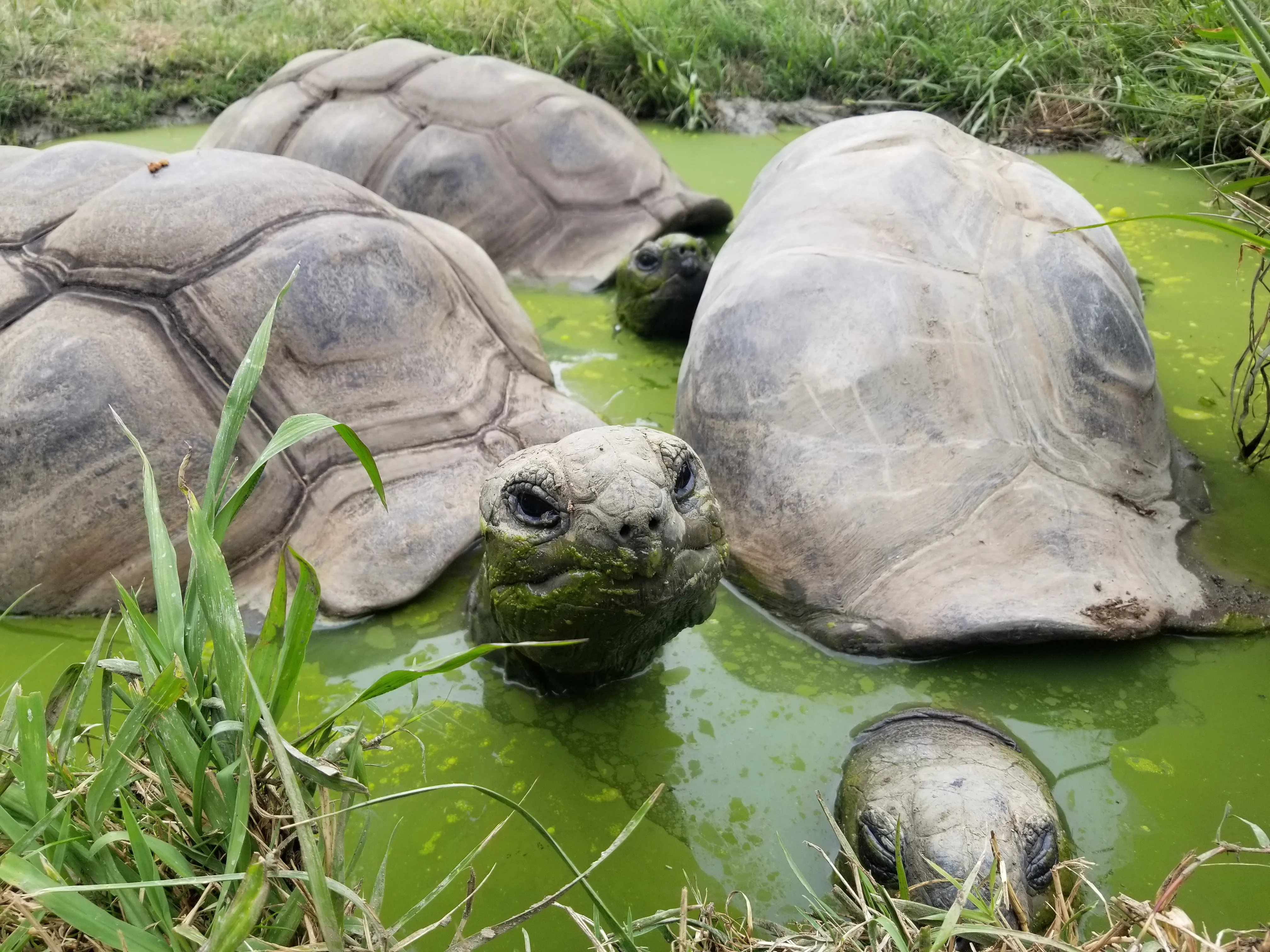
Aldabra tortoises are crepuscular, meaning they are active at dawn and dusk. Aldabra tortoises will spend up to 16 hours a day sitting in mud wallows when they are available. This species can be solitary, but in areas where resources are plentiful they can also be found in small herds. Aldabra tortoises aren’t known for physical contact aside from mating.
During mating season a male will ram against the female several times before mounting her. A female aldabra tortoise will carry eggs for 10 weeks before laying and burying them. While she can lay up to 25 eggs at a time there are usually only 3-5 viable young per clutch. In areas with a low population of tortoises a female may nest twice in one season and may lay a larger quantity of eggs. Conversely, in high density population areas a female may go up to 3 years without laying any eggs, and only laying a small handful at a time.
150 years
Feb-May
9-25
1–3 years
Conservation
Aldabra tortoises are currently listed as vulnerable by the IUCN, however their population status has not been reevaluated since 1996. This vulnerability is largely due to habitat loss and illegal poaching.
Fascinating Facts
- Aldabra Tortoises are the second largest species of tortoise to exist in the world! Second only to the Galapagos tortoise.
- Aldabra tortoises can actually float! It is believed that they can actually swim and that is how their ancestors made it to their respective islands.