American Alligator
Least Concern
Wetland
North America
Cathemeral
Carnivorous
Children’s Zoo
Characteristics
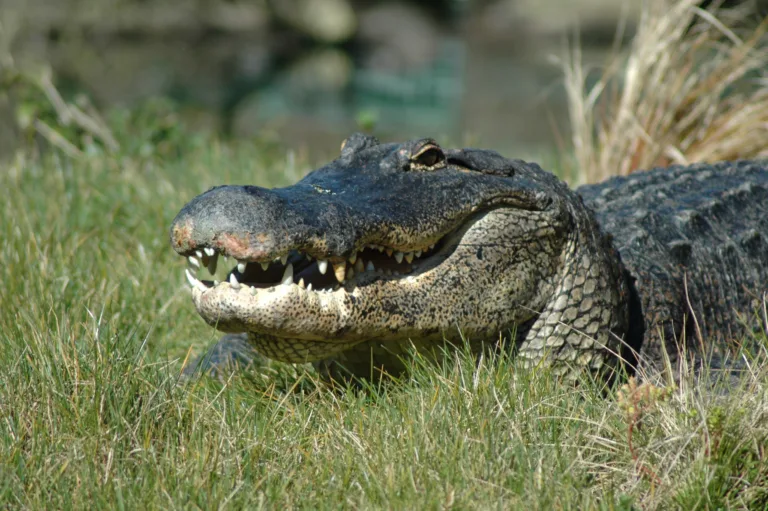
American alligators are the largest reptile in North America, with adult females reaching an average of 8ft long and 200lbs and adult males an average of 11ft long and 790lbs. In adulthood this species is typically dark olive in color, with juveniles presenting with dark green and yellow cross bands. This species have relatively short limbs compared to their body size - these shorter limbs help them swim and walk on land in a distinctive gait called a “high walk.”
While American alligators are visually similar to crocodiles there are several key differences distinguishing the two. American alligators have a broad and more rounded “U-shaped” jaw, with only their top teeth visible when their mouth is closed. The nuchal scales, found on the back of the neck above the shoulders, are in three rows of two (2-2-2) on the American alligator. In contrast, crocodiles have a narrower “V-shaped” jaw with both top and bottom teeth visible and nuchal scales in just two rows, with 4 scales above and two scales below (4-2).
Habitat & Ecology
American alligators have a low tolerance for salt and typically inhabit freshwater wetlands along their range in the southern United States. While they are occasionally found in brackish water, alligators mostly occupy freshwater marshes, swamps, and ponds. American alligators are known to create small ponds commonly called “alligator holes” by digging and excavating the landscape around them. These ponds provide shelter and refuge, particularly for newly hatched juveniles, and are a notable feature of the regions in which this species lives.
As large predators known to hunt and consume a wide variety of other animals, American alligators naturally regulate the population size of their prey. Prey species with unregulated population size can cause major problems like overgrazing, where prey animals like deer or rabbits are so abundant they consume a huge amount of available vegetation. Overgrazing can fundamentally change an ecosystem, leading to a lack of available food and shelter for other animals and even causing issues like erosion, desertification, and the endangerment or extinction of certain plant species. Predators like the American alligator are vitally important to their ecosystems.
Diet
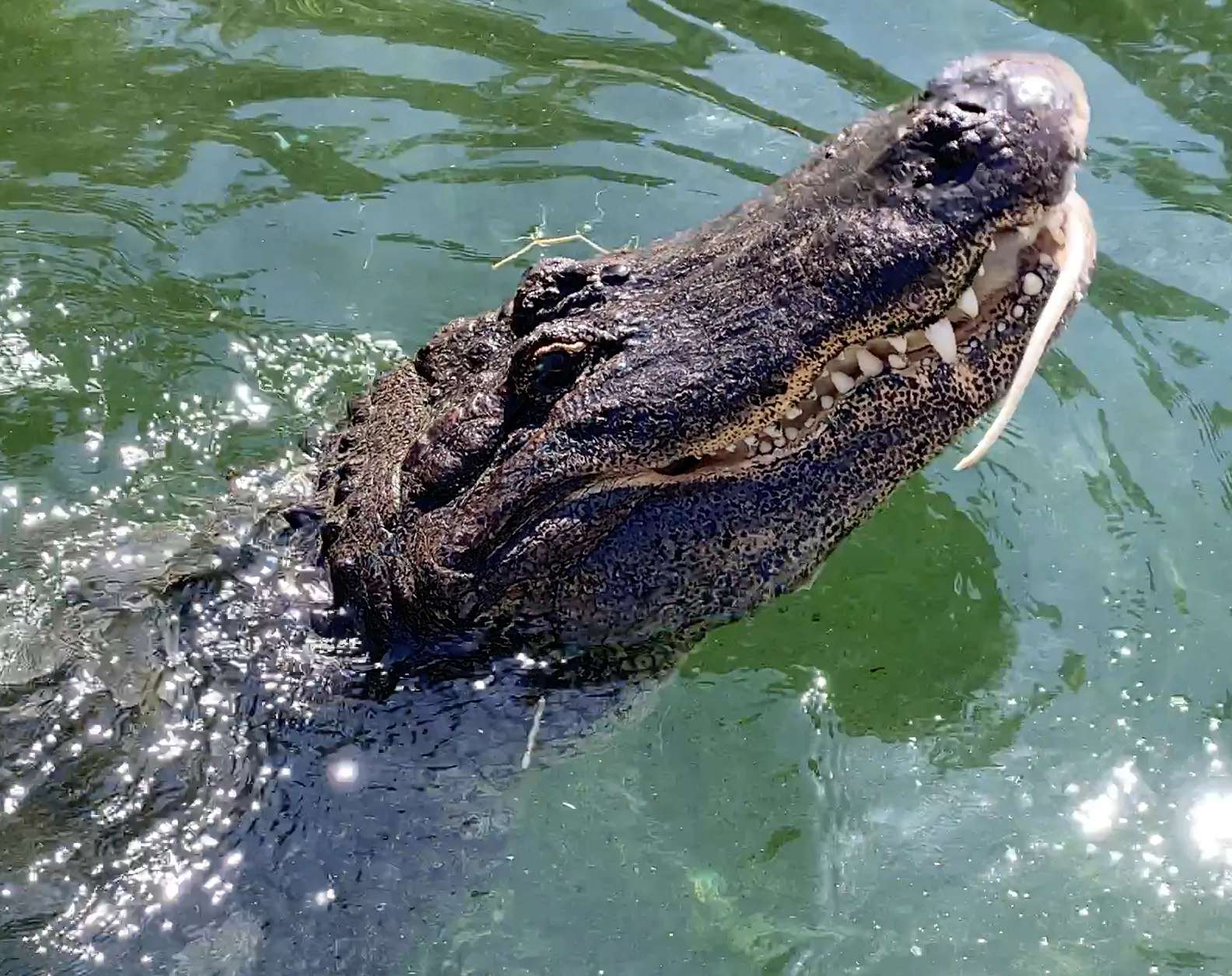
American alligators are carnivores and will opportunistically hunt and eat a wide variety of other animals including invertebrates, amphibians, fish, mammals, birds, and even other reptiles. The specific diet for each individual will vary based on size and development, with larger individuals eating larger prey and smaller individuals eating smaller prey. Juveniles of the species almost exclusively eat small fish, amphibians, and aquatic invertebrates.
Behavior & Reproduction
American alligators are social animals and typically live in groups. This is particularly true for recently hatched juveniles, who are thought to group together as a defense against potential predators.
This species is neither strictly nocturnal nor strictly diurnal but instead follow an activity pattern called cathemeral, meaning their wakefulness and activity fluctuates between the day and night depending on time of year and food availability. Because they are cold blooded, or ectothermic, American alligators rely on the sun and the temperature of the air around them to regulate their body temperature. They will bask in the sun in the morning and early afternoon, gaining the energy they need to sustain themselves through the rest of the day. Like many reptiles American alligators go through a period of inactivity during the colder, darker months of the year - this period of inactivity is called brumation. Similar to hibernation, brumation slows down metabolism and other body systems. Depending on air and water temperatures some alligators may choose to brumate in the water, but most will dig a den in the earth along the water's edge.
Sexual maturity is not measured by years in American alligators, but rather by reaching a length of 1.83 meters (around 6 feet). It usually takes females 10 to 20 years to reach this length and males 10 to 18 years. American alligators use pheromones to indicate when they are ready to mate. In addition to releasing pheromones, male American alligators will make a loud vocalization called “bellowing”; displacing the water around their bodies with the vibrational force of the noise. This vocalization is thought to disperse other males crowding the area.
Once eggs are laid, female American alligators are known to provide natal care. The female will stay near her nest, though not directly on top of the delicate eggs, to defend it from predators. Female American alligators will spend up to two years protecting their young after they hatch.
20-30 years in the wild; up to 50 in protected care
Spring
40
Yearly
Conservation
American alligators are currently listed as least concerned by the IUCN. They still maintain much of their historic range, and their population is stable, even growing.
Fascinating Facts
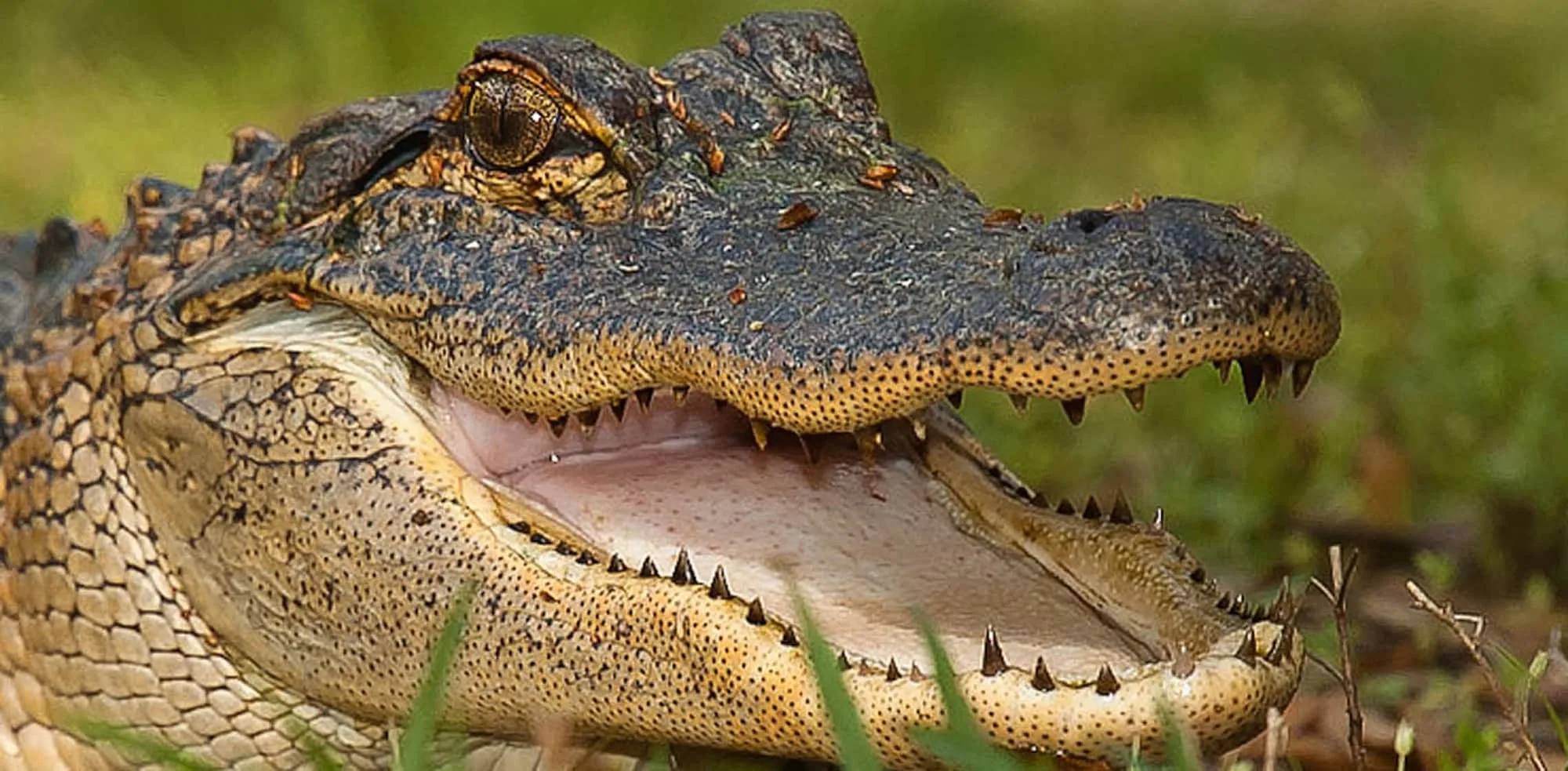
- Similar to sharks, when an alligator tooth wears out or even falls out, they will just grow a new one! They will continue this for their entire life and can go through thousands of teeth!
- Like cats, an alligator has a tapetum lucidum at the back of each eye (a structure that reflects light). The color of eyeshine differs from species to species. In alligators, it glows red. That’s one good way to locate alligators on a dark night.
- The sex of an alligator is temperature dependent. About a month after eggs have been laid, if the temperature is 31°C (88°F) or below, they will be females. At 33°C (91°F) or above they will be males. Anything 32°C (89°F) will be an even mix.