Brown Bear
Least Concern
Forest and Tundra
Northern Hemisphere
Crepuscular
Omnivorous
California Trail

Characteristics
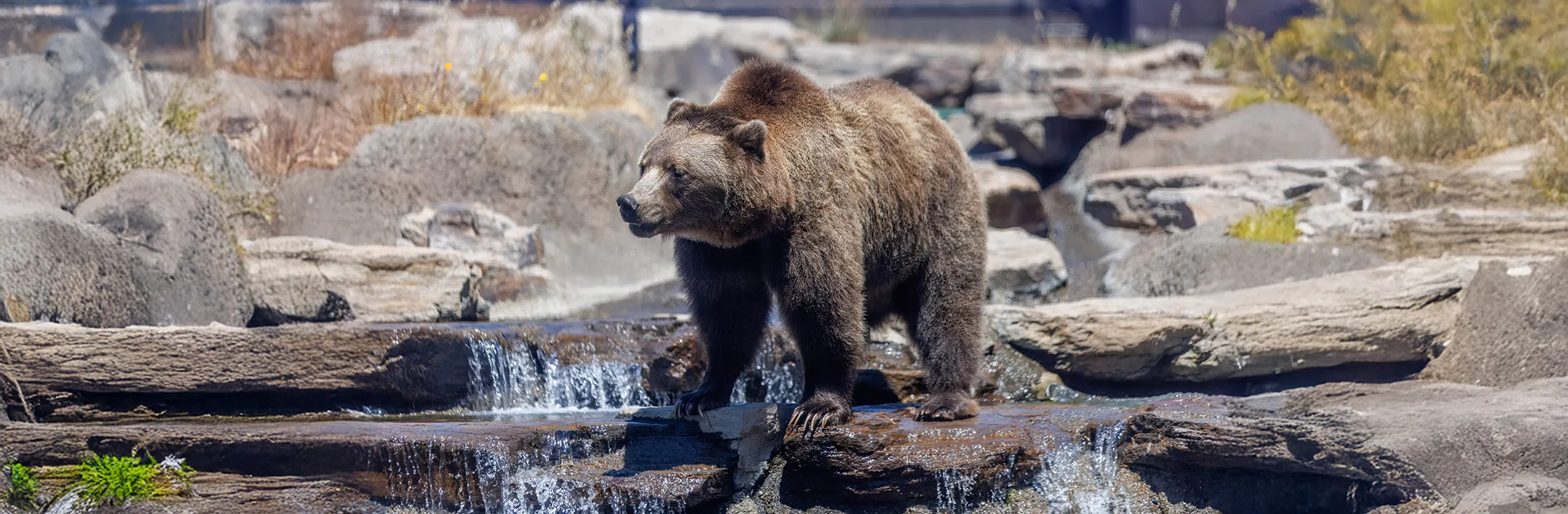
Standing as tall as 5 feet at the shoulder and weighing upwards of 1,000 pounds, brown bears are the one of the largest terrestrial carnivores in North America.
Grizzly bears (U. a. horribilis) are considered a subspecies of brown bear. However, it can be difficult to distinguish grizzlies from other subspecies. In North America, brown bears have access to coastal food resources like salmon. Grizzly bears live further inland and typically do not have access to marine-derived food resources, leading to a slight difference in size. Large brown bears can routinely weigh over 1,000 pounds in the fall, while grizzly bears weigh an average of 100-200 pounds less.
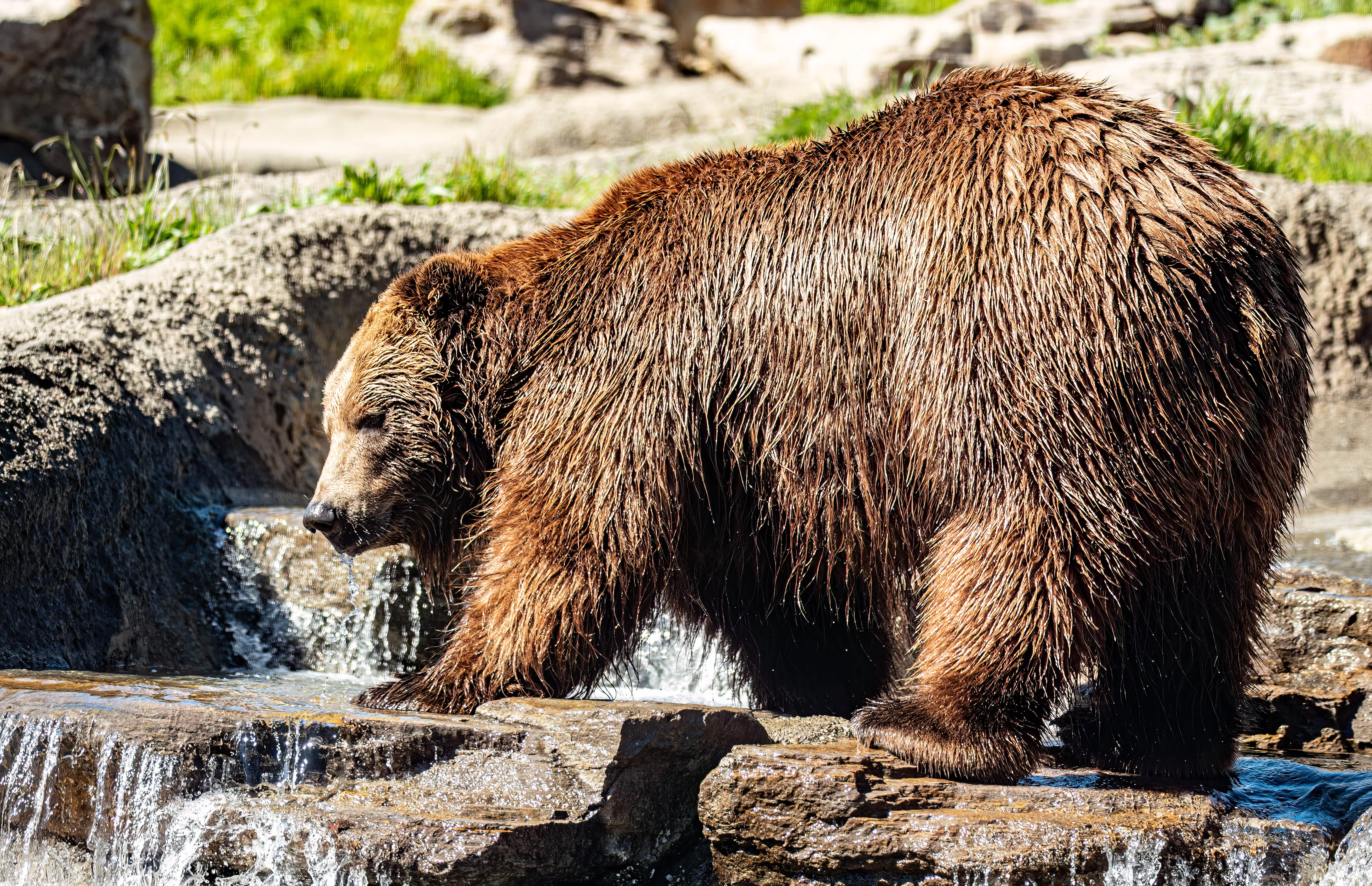
All subspecies of brown bear have the same distinctive body shape. Brown bears have thick fur that can range from dark brown to blonde. They have a distinctive muscular shoulder hump and long, straight claws on their front paws that are designed for digging. When looking at their profile, their muzzle is slightly dish shaped, or concave. This is unlike the straight, or convex, muzzle of the American black bear.
Habitat & Ecology
Brown bears once ranged throughout northern and central Europe, Asia, the Atlas mountains, and in western North America as far south as Mexico. Their North American populations in Alaska and western Canada are fairly stable; however, many populations in the U.S. have been extirpated. Brown bears can occupy a variety of habitats, with the main requirement being areas with dense cover in which they can shelter during the day. In North America, they seem to prefer open areas such as tundra, alpine meadows, prairies, and coastlines, often preferring riparian areas along rivers and streams.
While brown bears can be found on three continents, grizzly bears are limited to North America. They once roamed throughout the entire western United States and into Mexico, however, populations have now been extirpated from 98% of their original habitat.
Brown bears will dig their own dens and make a bed out of dry vegetation that can be used repeatedly. These burrows are usually located on a sheltered slope, either under a large stone or among the roots of a mature tree.
Diet
Brown bear diets can vary wildly depending on their range and the seasons. While some are more carnivorous, others might survive primarily on plants and eat meat opportunistically. In the spring and summer, brown bears will eat tubers, sedges, and clams exposed by the low tides. Salmon are abundant from July to December, and, after the run ends, the bears focus back on berries, seeds, tubers, and grasses.
Grizzly bear diets are very similar, with more reliance on carrion (dead and decaying animal matter) or hunted ungulates (hooved mammals) than fish. Though inland grizzly bears follow a seasonal diet mainly consisting of vegetation, Yellowstone grizzlies are an exception. Up to 95% of their energy intake is from meat, because fruit in the park is rare while ungulates are abundant (hoofstock).
Behavior & Reproduction
Brown bears are mainly crepuscular, meaning they are most active during dusk and dawn, but can be more active during the day depending on the season. They begin their extended period of inactivity, called torpor, from October to December and resume activity in March to May. These exact time frames will depend on their location, weather, and each individual bear. During torpor, the bears enter a deep sleep, and their body temperature drops by a few degrees. This process is not considered true hibernation since bears can generally be roused readily from their winter sleep.
Brown bears communicate primarily through smells and sounds. They scratch and rub on trees or other landmarks to communicate territorial boundaries or interest in mating. They have an excellent sense of smell, which allows them to follow the scent of a rotting carcass more than 2 miles away!
Mating takes place from May to July, with females mating with multiple males during the season. Interestingly, while mating occurs in the summer, brown bears can delay egg implantation and hold off their pregnancy until the fall, in October and November. This is dependent on the female having enough fat stores for pregnancy. Cubs are then born during torpor, between January and February.
Females breed every three years because they spend 2-3 years caring for their cub(s). Social bonds are normally only formed between mothers and cub(s), however, if resources are plentiful, bears will be more social and can even engage in play with one another. During the salmon run, it is not uncommon to see multiple bears together. They can form temporary social hierarchies where the bigger males are the most dominant.

Brown Bear Cam
Watch our brown bears live on cam as they roam, rest, and play in their habitat.
Wild: 15-20 years, Protected care: 20-25+ years
May-July
1-3
3 years
Conservation
Brown bears are currently listed as Least Concern by the IUCN. However, Grizzly bears in the lower-48 states are protected as a threatened species.
Grizzly bears have a long, troubled history in the United States. Once plentiful across California, grizzlies were targeted by hunters for their pelts, this behavior was only reinforced by the U.S Animal Damage Control Program which rewarded up to $120 for a single pelt. By the 1930s, grizzlies had been reduced to only 2% of their former range in the lower-48 states. By 1975, grizzly bear populations in the lower-48 states had been reduced to only 700-800individuals and restricted largely to the confines of National Parks and wilderness areas in Washington, Idaho, Montana, and Wyoming.
Brown bears are considered apex, or top, predators and help keep prey populations at a healthy level. They also act as scavengers and help remove disease from the ecosystem. When digging for roots or other food items in the spring, they churn up the forest soil, spread seeds, and return nutrients to the soil. Brown bears are an umbrella species, meaning that by helping to protect them we also help protect many other species that share the same habitat.
While grizzly bears have long been considered the most dangerous animals in North America, the risk of an attack is often exaggerated. In general, these bears would rather avoid human contact. However, they occasionally will be attracted to human areas by following their nose to our garbage and other items we leave outside.
Fascinating Facts
- Brown bears are so diverse and widespread that they were once divided into 232 living and 39 fossil species and subspecies (though they are all now considered a single species).
- When laying down to rest, Alaskan brown bears will dig “belly holes” to accommodate their food-filled bellies. The bigger the belly, the bigger the hole!
- Bears are the only mammals that don’t urinate or defecate for the entirety of their winter sleep!
- Californians have long admired the power and intelligence of grizzlies, as the species became a permanent part of the California state flag in 1911. Sadly, this beautiful animal was hunted to extinction. The last California grizzly was seen over 100 years ago in 1924.
About Our Animals
The Oakland Zoo has four brown bears: two coastal brown bears and two grizzly bears. In 2018, the Alaska Department of Fish and Game rescued two sets of brown bear brothers. Originally orphaned and at risk of being euthanized, these brothers all found their forever home at the Oakland Zoo. Rubicon and Kenai are our two coastal brown bear brothers that came from Anchorage, and Truckee and Tulare are our two grizzly bear brothers that came from North Slope.
Rubicon, the largest of our brown bears, tends to be light brown in the summer and a darker brown in the winter. He uses his size to get what he wants from his roommates, like extra food or a favorite enrichment item. Though he comes off as large and in charge, he is actually a big softy and enjoys playing with the others. Especially grizzly bear Truckee, whom he seems to be particularly bonded to.
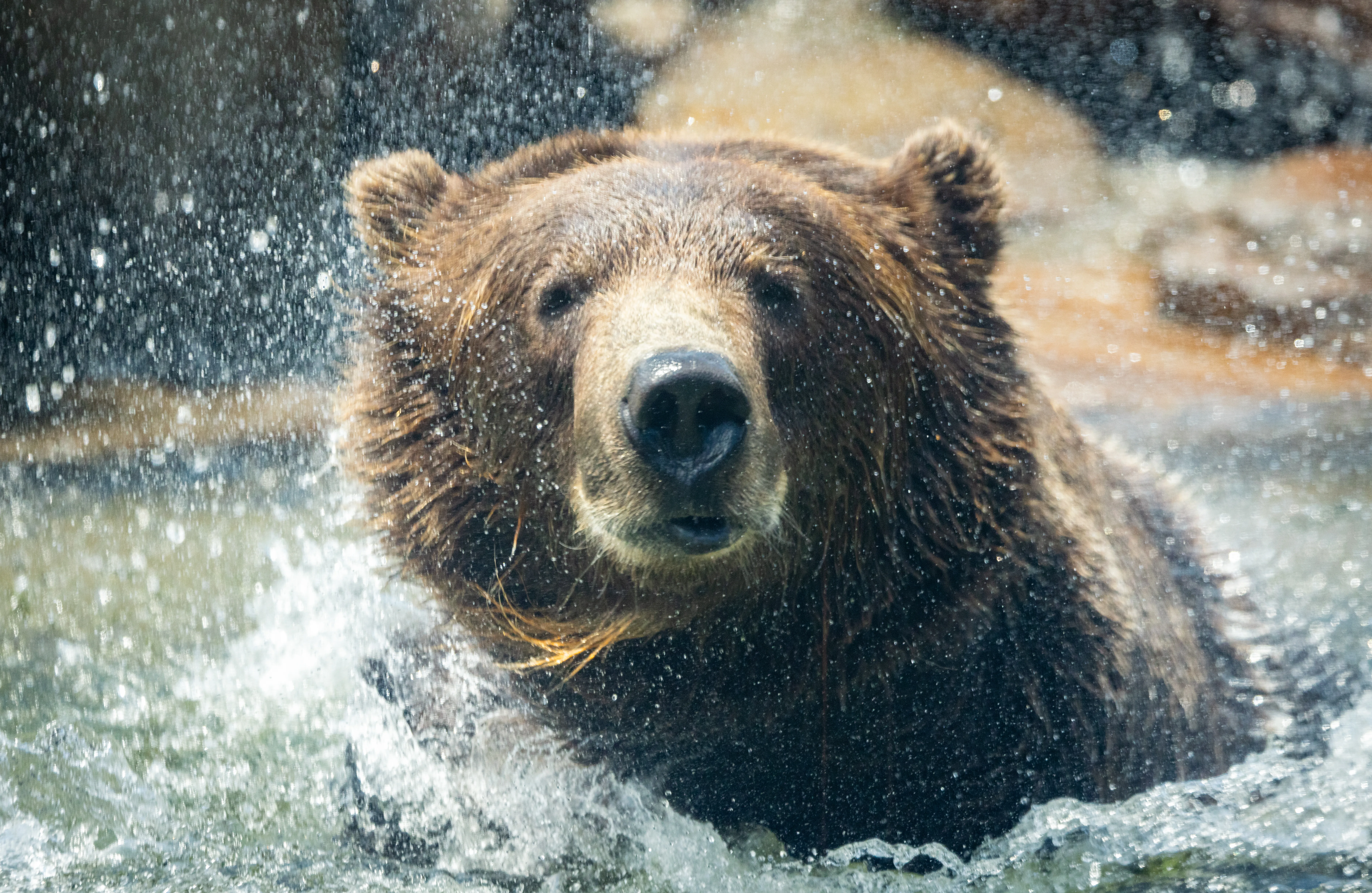
Kenai is Rubicon’s brother and loves the water. If you see a lone bear playing in the pool, a puddle, or a sprinkler it’s probably him. He is also the darkest of our brown bears and maintains his darker coloration throughout the year. He enjoys all kinds of enrichment and puzzles. When he thinks something is too difficult, he quickly lets us know by breaking it to get to the treats inside!
Tulare is the smallest of our brown bears who enjoys climbing, practicing his balance, and participating in his training. He always is eager to learn new behaviors and puzzle through his enrichment.
Truckee, Tulare’s brother, has the most compact appearance of the four and the most grizzled fur. Though not as small as his brother, he is significantly smaller than the two coastal brown bears. He is protective of his brother and often will break up any roughhousing that gets a little too rowdy.
Our Role
Glacier National Park and Oakland Zoo have joined the Zoo-Park Partnership for America’s Keystone Wildlife Project. This unique initiative involves zoos and aquariums working with National Parks, National Wildlife Refuges, and National Forests and Grasslands in restoring sustainable habitats and wildlife populations across the country.
This partnership brings together Glacier National Park’s work to conserve and protect grizzlies, and the mission of Oakland Zoo’s conservation program.
To learn more about how we are working to protect grizzly bears, click here.