Florida Red-bellied Turtle
Least Concern
Wetland
Florida and Georgia
Diurnal
Omnivorous
Children’s Zoo
Characteristics
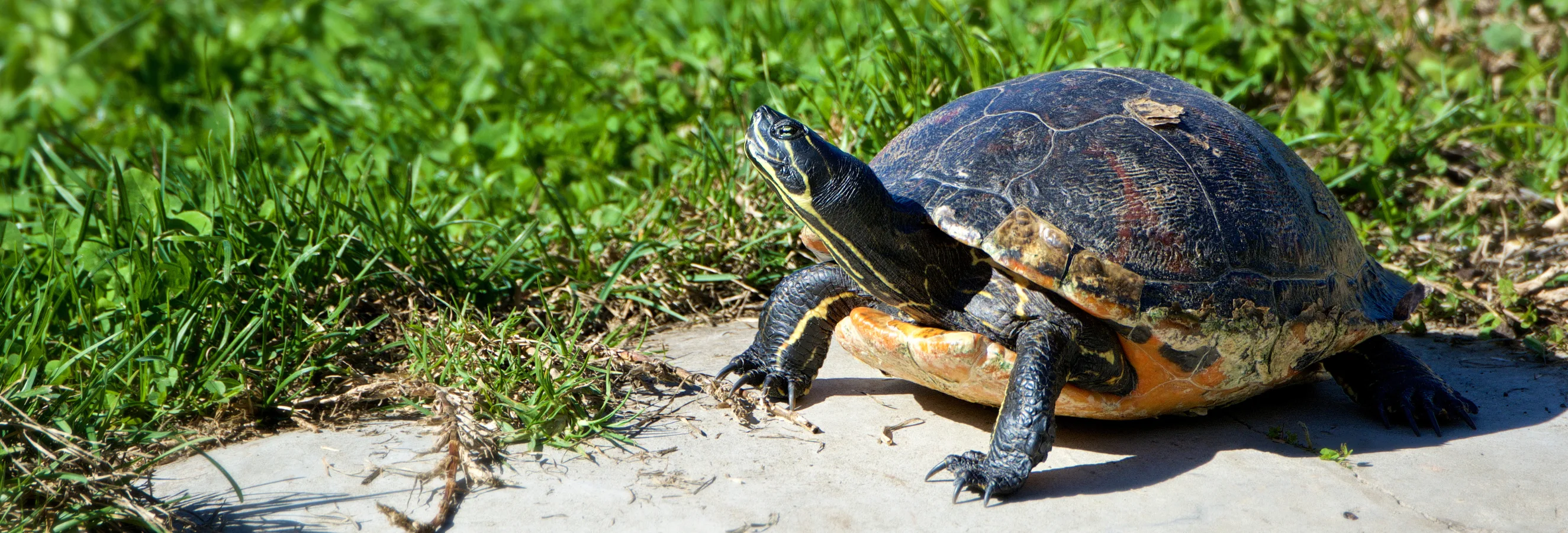
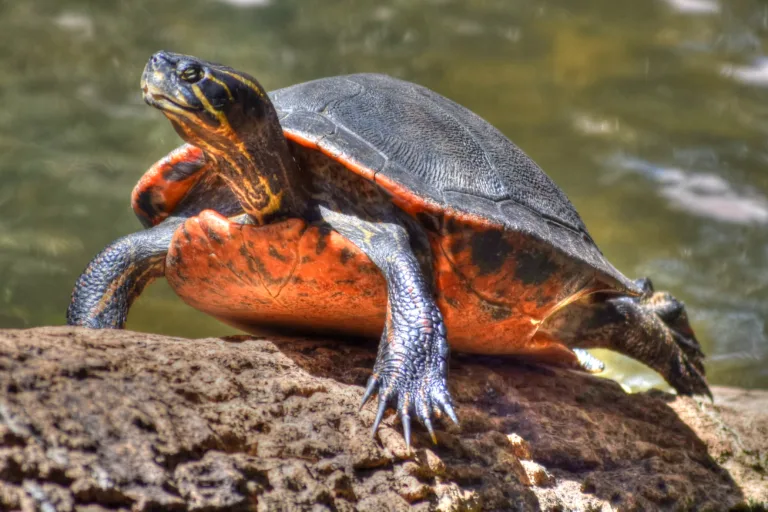
Florida red-bellied turtles are medium-large sized turtles belonging to the genus Pseudemys, also known as cooters. Males weigh 3.7 pounds, while females can weigh as much as 8.8 pounds. Their name comes from the red color on the ventral side of their shells. This red tint tends to fade with age and becomes less distinct. The back of their shell remains a dark brown for their whole lives and has a red swipe or “Y” shape on the first 3 costal scutes. These turtles also have bright yellow stripes on their heads, legs, and tails. They have webbed feet and claws that help them navigate through the water and slippery surfaces.
Habitat & Ecology
As their name implies, Florida red-bellied turtles are native to Florida. They are common across most of the state, including an isolated population in the Florida panhandle. They are also native to southern Georgia. Introduced populations have been reported in Texas and the British Virgin Islands.
These freshwater turtles inhabit a variety of wetland habitats such as ditches, marshes, ponds, lakes, creeks, and streams. Rarely, they will also inhabit brackish water.
Diet
Florida red-bellied turtles are classified as omnivorous because their dietary preference changes with age. Juveniles are primarily carnivorous and feed almost exclusively on small insects. As they age, their diet begins to shift to become more plant-based. Adult diets consist primarily of aquatic vegetation.
Behavior & Reproduction
Florida red-bellied turtles spend the majority of their day basking on logs with other turtles. These groups can either be with other red-bellied turtles, or they can include mixed species. Throughout the day, they forage independently in the same body of water that they bask and sleep. In the evening, they start to slow down and nap.
All turtles are oviparous and lay their eggs on land. Florida red-bellied turtles breed from April to July. Though they don’t invest in any parental care themselves, they have found another way to protect their eggs instead. Females lay their eggs in the nests of American alligators so that the female alligator will protect and defend the turtle eggs along with her own.
It can take anywhere from 45 to 80 days for the eggs to hatch. The offspring are temperature sex dependent as many turtles are. If the temperature during incubation is above 83.3°F, more females will be born. Lower temperatures result in more males being born.
Up to 40 years
April-July
7-26
3-6x a year
Conservation
Florida red-bellied turtles are listed as Least Concern on the IUCN Red List. They were last evaluated in 2010 and found to have a stable population. Part of their stability is thanks to the large, protected areas that are found in the natural range, including Everglades National Park, Okefenokee NWR, and several State or local protected areas. Their biggest threat is losses of wetland habitats due to urban development.
Fascinating Facts
- Many freshwater turtles have the amazing ability to “breathe” with their butts! This is due to a special organ called the cloacal bursae that takes in water from the cloaca (a.k.a. a turtle’s butt) and exchanges gases to obtain oxygen.
About Our Animals
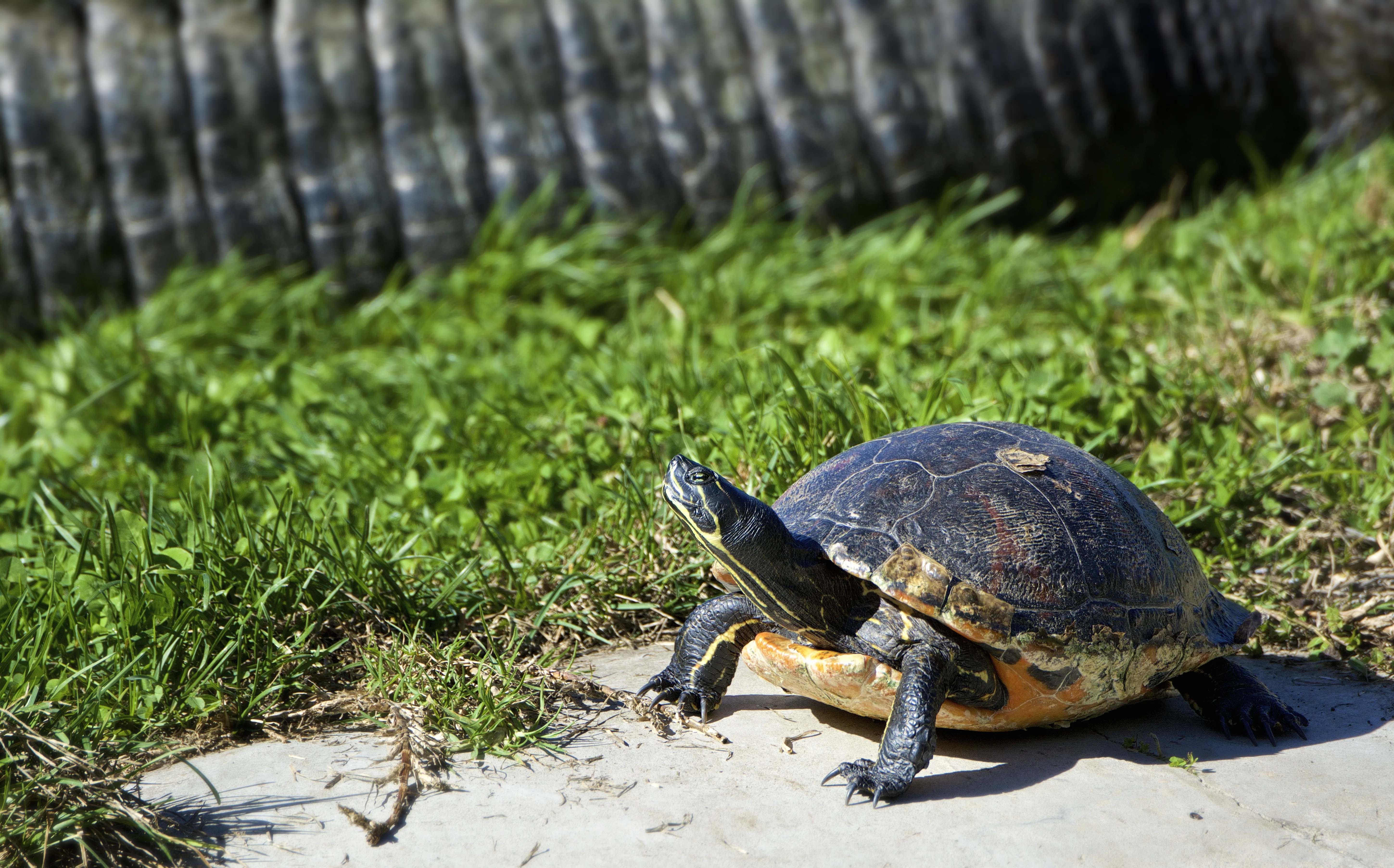
The Oakland Zoo is home to three female Florida red-bellied turtles. Our red-bellied turtles are housed with our American alligators. Since they have a commensalist symbiotic relationship in the wild, Florida red-bellied turtles are used to living in close quarters with alligators and have tough carapaces that they can’t bite through. In fact, our turtles can sometimes be spotted basking on top of the gators’ backs!