Gray Wolf
Endangered (in the U.S.)
Forest, Tundra, Plains
North America, Europe, Asia, Middle East
Crepuscular
Omnivorous
California Trail
Characteristics
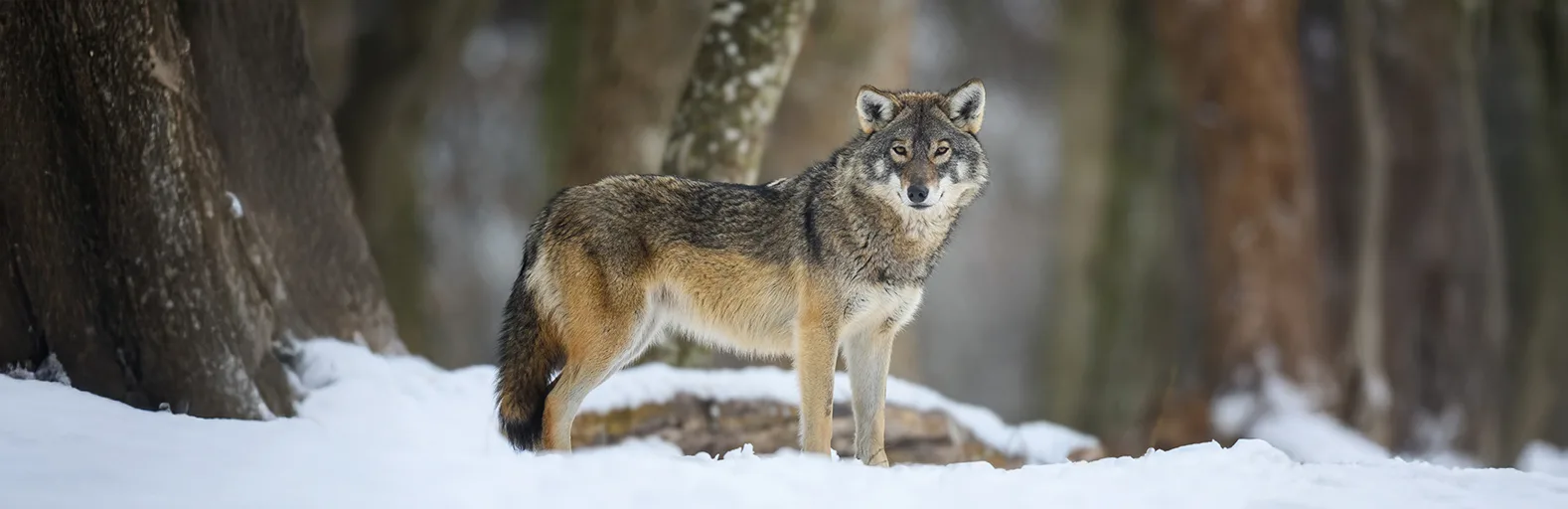
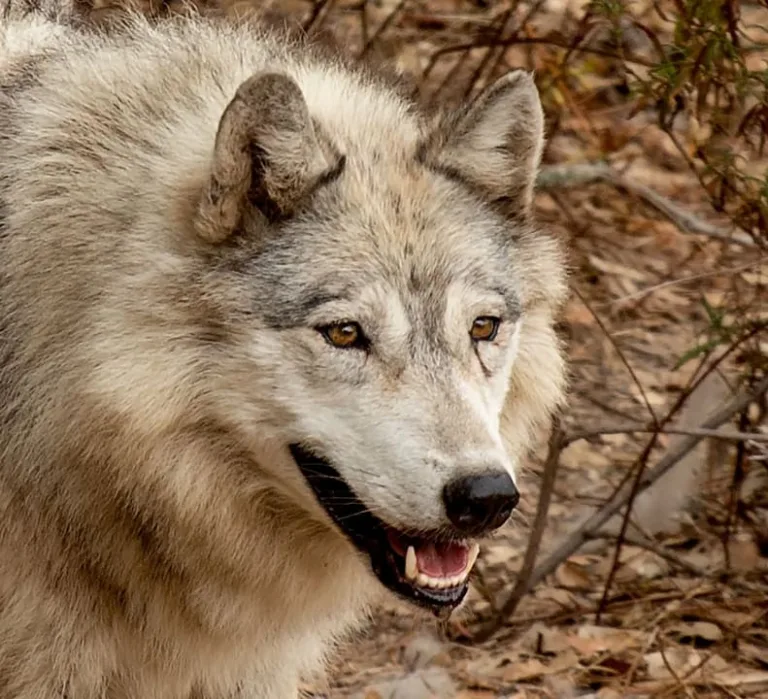
As their name suggests, gray wolves are usually gray in color, but they can also range from white, cinnamon, and black. Their snout is usually a lighter shade than the rest of their body. Gray wolves have a longer and shaggier “mane” of hair around their neck and shoulders. With thick fur and longer guard hairs to keep out moisture, gray wolves are insulated for any weather. They have seasonal coats that help them stay warm in the winter and cool in the summer. They have long legs and are usually about 3 feet tall and 5 feet long. Males can weigh up to 150 pounds, and females up to 100 pounds.
Habitat & Ecology
Gray wolves were once the world’s most widely distributed mammal. Their range spanned from the forests and tundra of North America, all the way to the mountains and deserts of Europe, the Middle East, and Asia. Throughout their expansive range, gray wolves are believed to have as many as 32 different subspecies, each specially adapted to their own habitat.
As one of the largest predators in the world, wolves are important for keeping prey populations low and ridding habitats of disease. Gray wolves specialize in preying on the weak and sick animals and will even scavenge pre-killed carcasses.
Diet
Gray wolves are omnivores. They rely on both plant and meat-based diets. They generally feed on large hoofstock like elk, bison, and deer, but have been known to reach for smaller mammals, birds, and fish when available. The vegetation they eat is usually grasses, but they will eat certain fruits on occasion.
Wolf packs work together in packs to take down large prey animals. They tend to gorge on large meals whenever possible. A single individual is capable of devouring 20 pounds of meat in one sitting.
Behavior & Reproduction
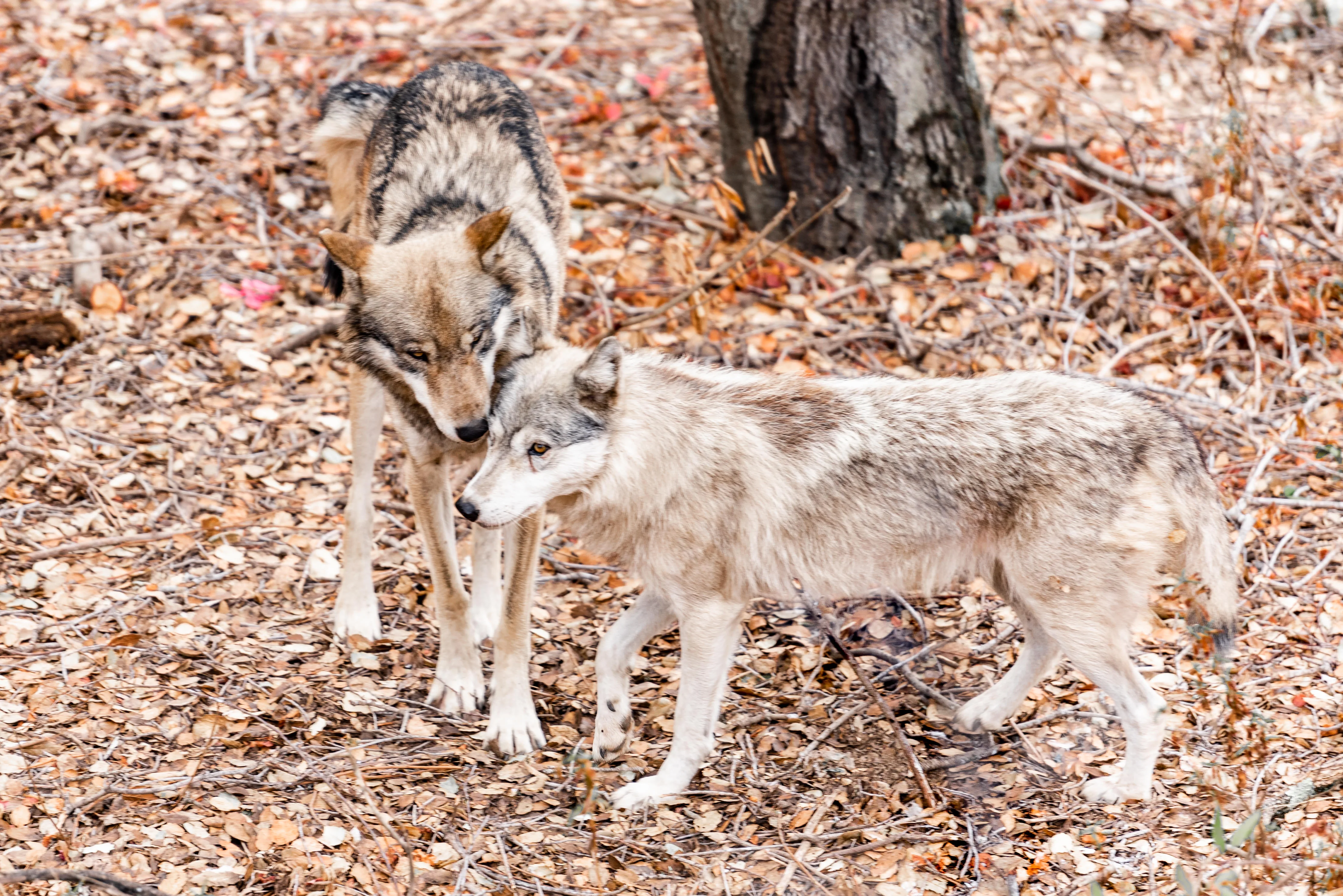
Gray wolves are perhaps most known for their highly social nature. Wolf packs usually comprise a family unit. Breeding pairs live with their offspring, with sometimes as many as two generations of offspring living together. They rely on body and facial language to communicate with each other. Howls and scent markings are to establish territory. Pack sizes typically range from 2-12 members, but as many as 36 have been documented living together in Alaska. Usually, only the breeding pair reproduces, but in some rare cases other members of the pack reproduce as well. Breeding takes place in the winter months and is a joint effort. All the members of the pack typically help care for the young and someone always stays behind while the rest of the pack goes out hunting.
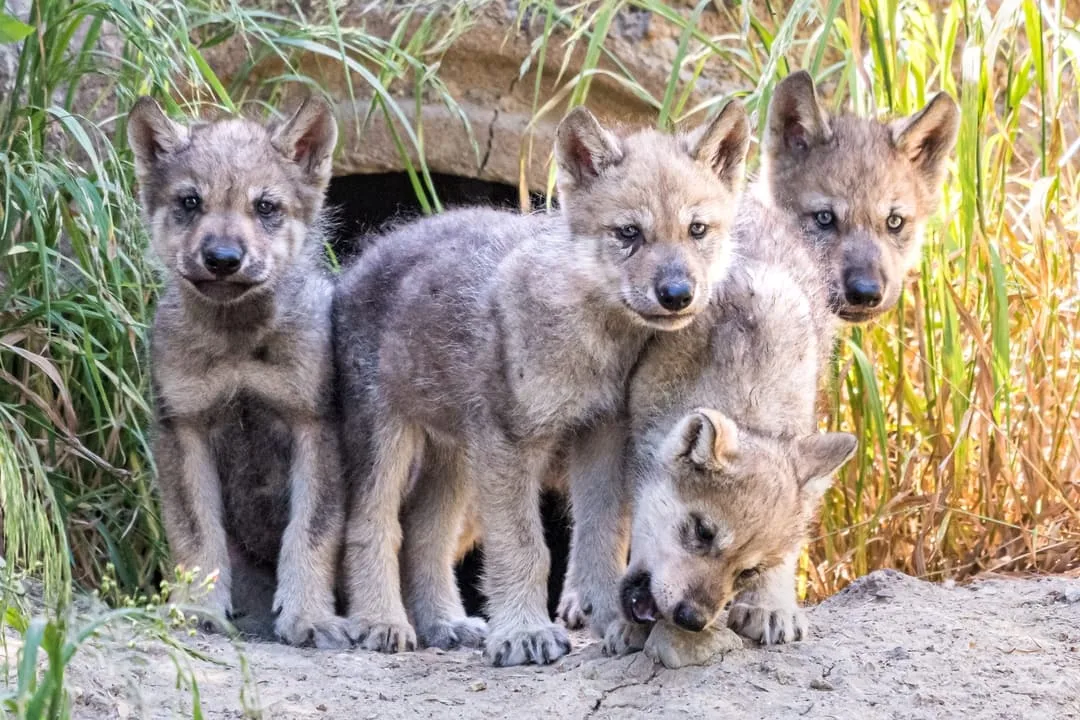
Generally, litter sizes range from 4-6 pups, but litter size correlates directly to food availability. Pups are born deaf and blind and will be cared for exclusively by their mother for three weeks. When pups get a little older, they are cared for by all the members of the pack. Wolves can leave their natal pack after 1-3 years, but don’t always choose to.
Pack size and territory is entirely dependent on food availability and seasonality. In the summer when food is abundant, packs are smaller. In the winter when food is scarce, wolves band together in larger packs to take down prey. This applies to territory size as well. In very productive environments, such as Yellowstone National Park, packs only need a 50-200 square mile territory. In less productive environments, such as the Arctic, packs may utilize a territory of 20,000 square miles or more.
Wild: 8 years, Protected Care: 17 years
January-April
4-6
1 year
Conservation
Globally, the gray wolf population is stable. However, in North America, specifically the USA, gray wolves are considered endangered and are listed under the Endangered Species Act. With increasing human populations, people began encroaching on wolf habitats more and more. By the early 1900s, wolves had lost most of their U.S. range.
Habitat loss was not their only threat, wolves have also been subject to extermination programs. Wolves, naturally timid, usually keep their distance and rarely pose a threat to human safety. However, they are still considered pests and vermin by many people. Unfortunately, because of these beliefs, they still face human threats to this day.
Fascinating Facts
- Wolves are the largest canines in the world.
- While many people still fear wolves, they have undeniably had a positive impact by attracting tourists, generating revenue for parks and reserves.
- Thousands of years ago, wolves were the very first domesticated animal. Domestic dogs are considered descendants of wolves, though their lineages diverged many, many years ago.
About Our Animals
Oakland Zoo used to be home to a family pack of six gray wolves. Mom, Siskiyou, and dad, Sequoia arrived to their new homes at the zoo in 2017. In 2019 Siskiyou gave birth to four pups on Mother’s Day. Together with their offspring, males Arroyo and Lassen and females Anza and Sonora, they formed a pack. Unfortunately, mother Siskiyou passed away in 2023 due to age and health complications. Now the family pack of four live together on the California Trail and serve as ambassadors of their species.
Our Role
Oakland Zoo strives to create a positive connection between people and wildlife. When you visit the Zoo and shop at the gift shop, say YES to Round Up for Wolves. All contributions go to organizations helping wolves in the wild.
Oakland Zoo partners with the Working Circle. Working Circle is a non-profit that is dedicated to ensuring that humans, wolves, and livestock can coexist peacefully. They work with ranchers on nonlethal methods of sharing land with wolves.