Guinea Forest Hog
Not Applicable via IUCN
Grasslands
United States
Diurnal
Omnivorous
Children’s Zoo
Characteristics
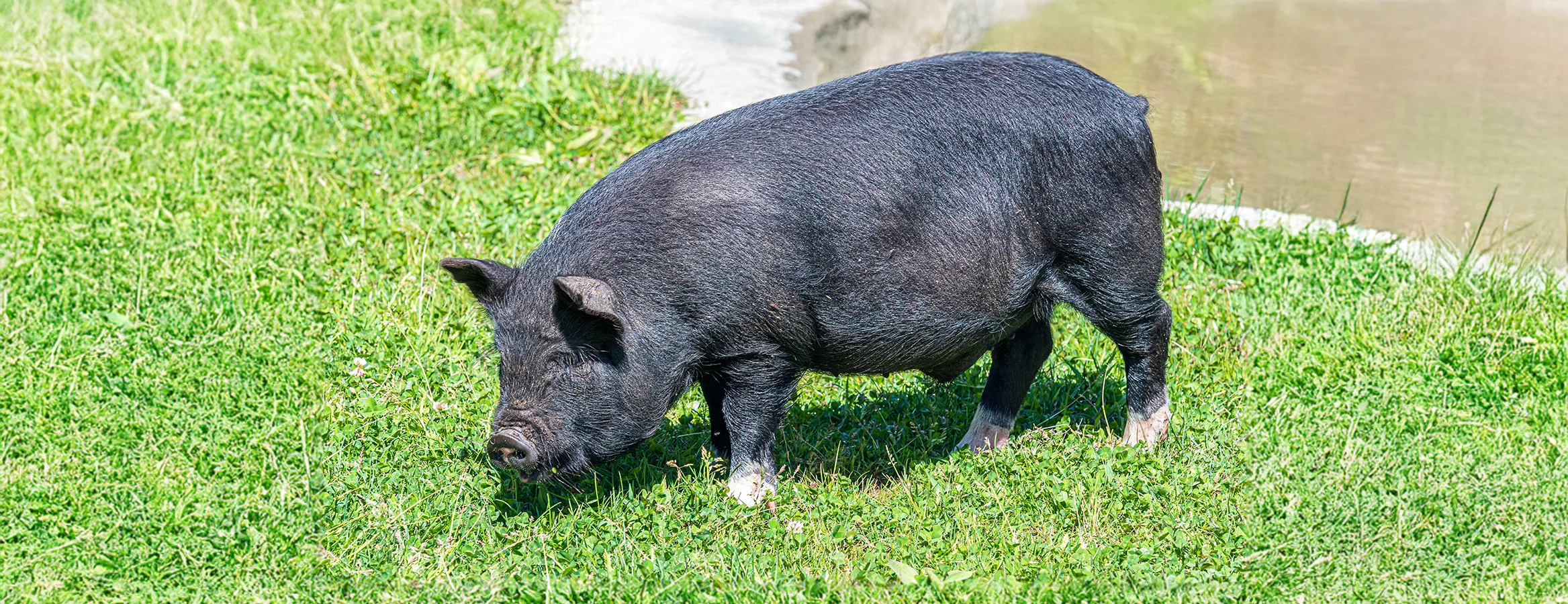
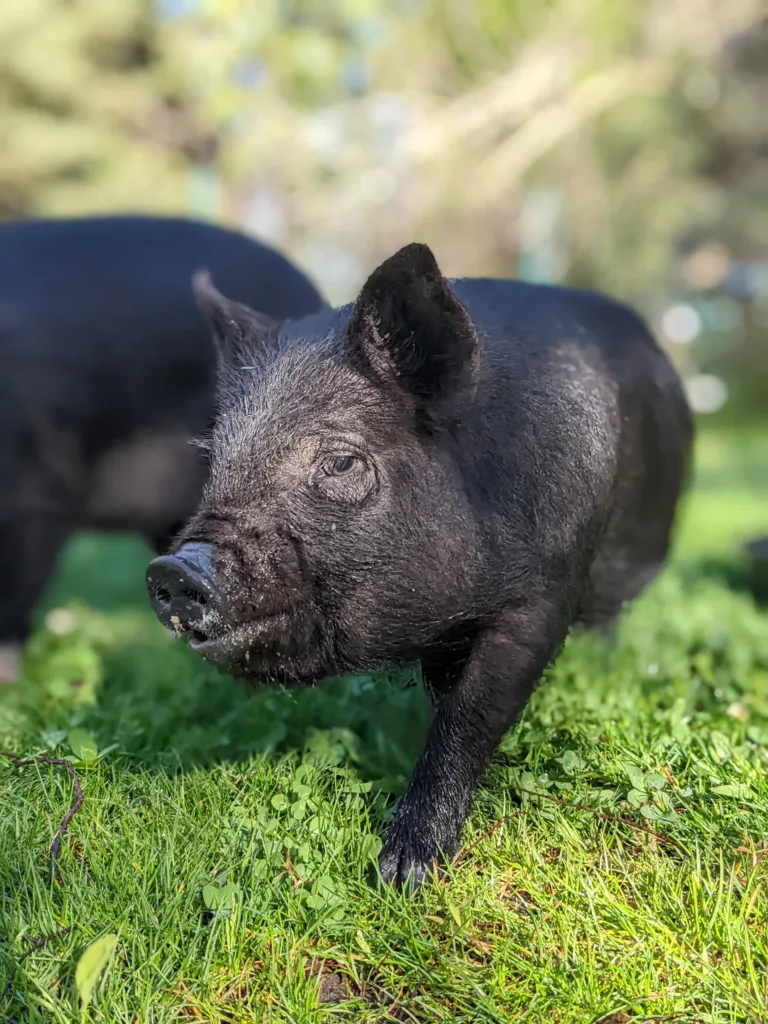
Guinea forest hogs are relatively small breed of domestic hog. They are considered an American heritage breed, meaning that they have been bred for hundreds of years. They are oftentimes referred to as American Guinea hogs, and have been tested to show genetic differences, making them their own distinct breed from other heritage hogs. They have upright ears that typically fold slightly in adulthood. They have large, slightly concave faces with a medium to long snout. Their tails are long and slightly curved.
Guinea forest hogs are solid black in color. However, there is a recessive gene that presents as minimal white spots on their feet, nose, and even forehead. Their hair is long and coarse. Guinea forest hogs do grow tusks, but they are usually small enough that they don’t stick out of their mouth. There is some sexual dimorphism as males have longer tusks than females. Males also weigh 200-375 pounds, while females only weigh 120-350 pounds.
Habitat & Ecology
Guinea hogs are a domestic species that are descendent from wild hogs in West Africa. Guinea forest hogs in the wild would generally be found in wet forests and woodlands. They specifically prefer oak forests where seeds are abundant. Because most guinea forest hogs have been domesticated, they can be found on farmlands and pastures— generally anywhere there are opportunities for grazing and rooting.
Because of their rooting nature, hogs are known to be destructive to habitats by either over grazing or uprooting of multiple plants and even small trees. This can lead to erosion and soil deterioration, but also can be useful to remove weeds and aerate the soil.
Diet
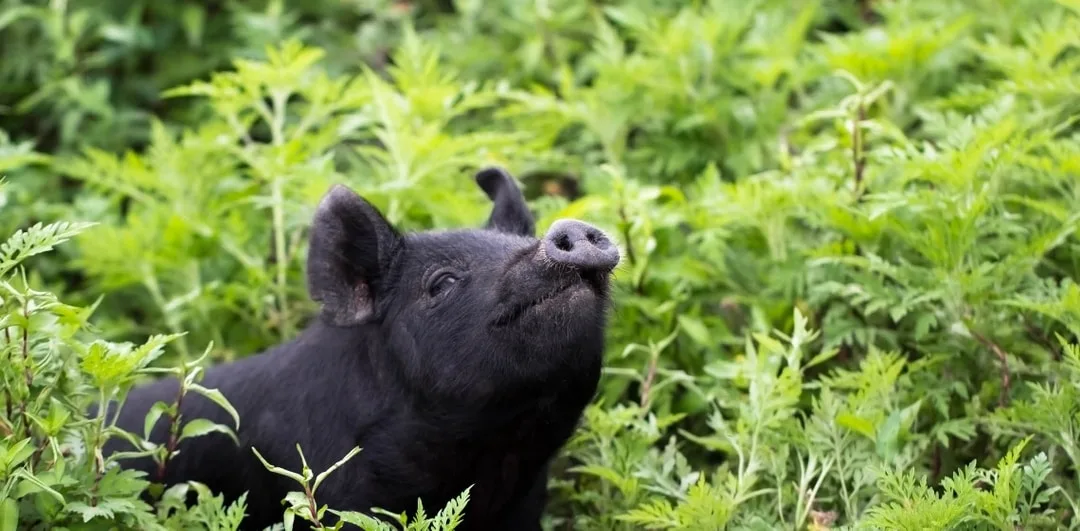
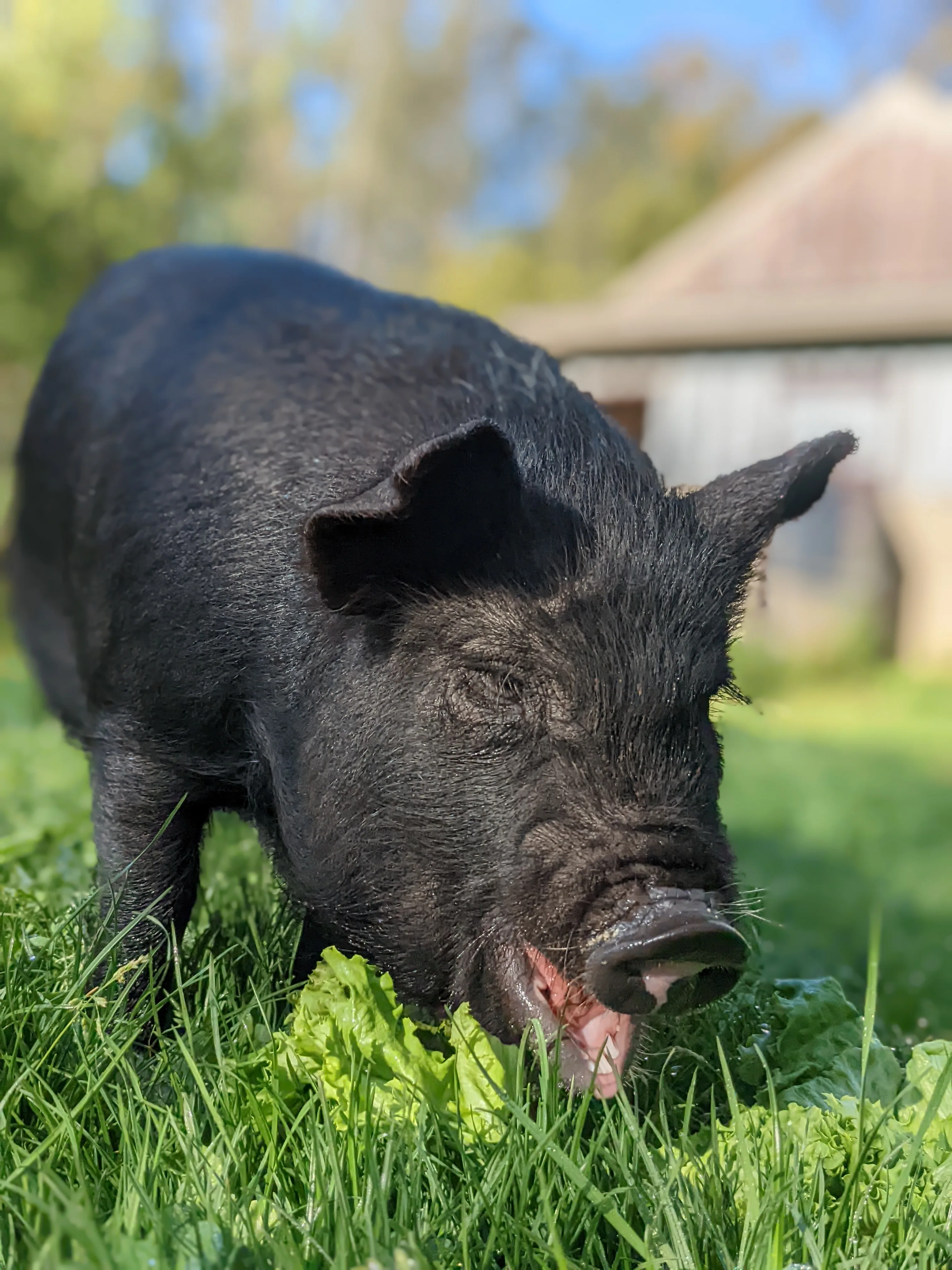
Guinea forest hogs are omnivores. They can eat almost anything. They will consume rodents, snakes, fish, and invertebrates when the opportunity arises. However, a larger part of their diet is grasses, nuts, fruit and roots. Guinea forest hogs are considered rooters. They use their snout to dig up plants by the root to eat.
Behavior & Reproduction
This breed of hog is known for their intelligence. They are incredibly smart and have a generally calm temperament. They are gregarious (social) animals and live in large groups. Hogs are unable to sweat, so they roll in mud as a way of cooling themselves down. Mud can also act as a natural sunscreen, protecting them from the harsh sun.
Guinea hogs reach sexual maturity at the very young age of 3-5 months, but generally only breed when they are closer to a year old. Female guinea hogs can have two litters per year, with newborn piglets being just one pound at birth. They have an average of 8 piglets per litter. These piglets will continue to grow for the first 2 to 3 years of their life.
10-15 years
Year round
6-10
2x a year
Conservation
Guinea Forest Hogs are not currently evaluated by the IUCN, an internationally recognized intergovernmental animal conservation organization, because they are not wild animals. According to the Domestic Animal Diversity Information System (DAD-IS), guinea forest hogs are listed as Endangered, as of February of 2018, with only a bit over 1,000 registered individuals. The American Livestock Breeds Conservancy (ALBC) currently lists guinea forest hogs as Threatened, and that has not changed since 2016. Threatened status in ALBC means that there are less than 1,000 registered individuals. These two organizations use different categories. Ultimately, they both mean that there are low population numbers for guinea forest hogs.
Fascinating Facts
- The longest living American Guinea Hog lived for 22 years in a zoological setting!
- The name Guinea hogs is a bit of a mystery. For many years it was thought that the name originated from Guinea, a region in Africa. But now it is thought that the name Guinea comes from its meaning of “smaller than normal,” which this breed of hog is.
About Our Animals
Oakland Zoo currently has two Guinea Forest Hogs, brother and sister: Huckleberry and Juniper. They are not a part of a breeding program as they have recessive traits that leave them with white spots. They live at the Oakland Zoo to act as educational ambassadors and aid in more research about their species.