Island Flying Fox
Near Threatened
Forests
South East Asia
Nocturnal
Frugivorous
Children’s Zoo
Characteristics
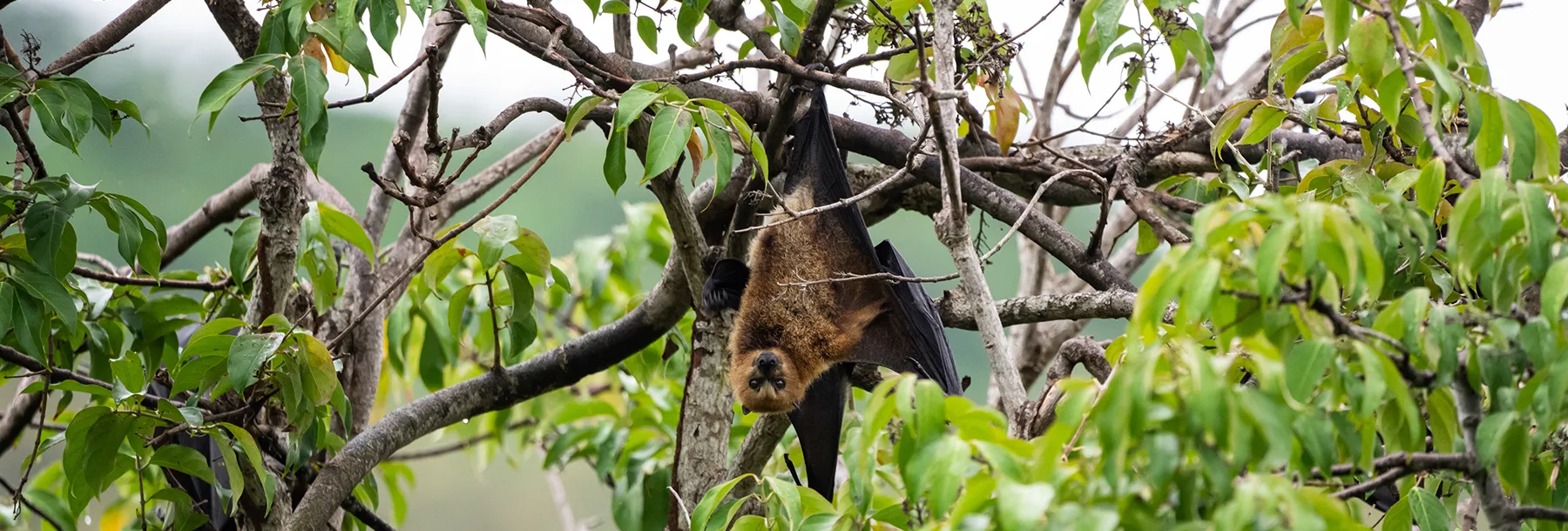
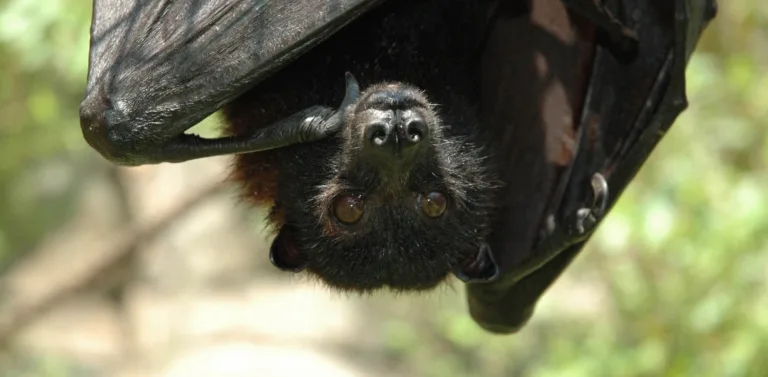
Island Flying Foxes, commonly referred to as small flying foxes, are not foxes at all! Instead, these small mammals are bats belonging to the family Pteropodidae, also known as the mega bats or fruit bats. These bats are typically herbivorous and feed on fruit, nectar or pollen. As such, they do not use echolocation and have much smaller ears. Their snouts are usually more pointed, and they have larger eyes since they rely on their vision to orient themselves.
There are nearly 60 species of flying fox. One thing that distinguishes the Island Flying Fox is that they don’t have hair on the back of their knees. They weigh about a pound and are only around 10 inches tall. Their large, leathery wings can stretch up to 4 feet long. Their fur is commonly dark brown, ranging into a light yellowish shade of brown.
Habitat & Ecology
Flying foxes are all native to the Old World, meaning Africa, Europe, and Asia. As their name implies, island flying foxes live on the islands of southeastern Asia. They inhabit broadleaf forests, coconut groves, and orchards. They are reliant on the presence of trees as this is where they often choose to roost during the day as they hang upside down.
Occasionally, these bats are seen as pests, since they feed on the fruits planted on cultivated orchards. However, they serve an important role as seed dispersers and pollinators.
Diet
Island flying foxes feed on fruits from native and introduced trees of the forests they inhabit. They also consume flowers, nectar, pollen, seeds, grains, and nuts as well. This makes them pollinators. Because of their differing diets, the “mega bats” do not echolocate like many of our local “micro bat” species. Instead, flying foxes use a keen sense of smell and their large eyes to locate food at night.
Behavior & Reproduction
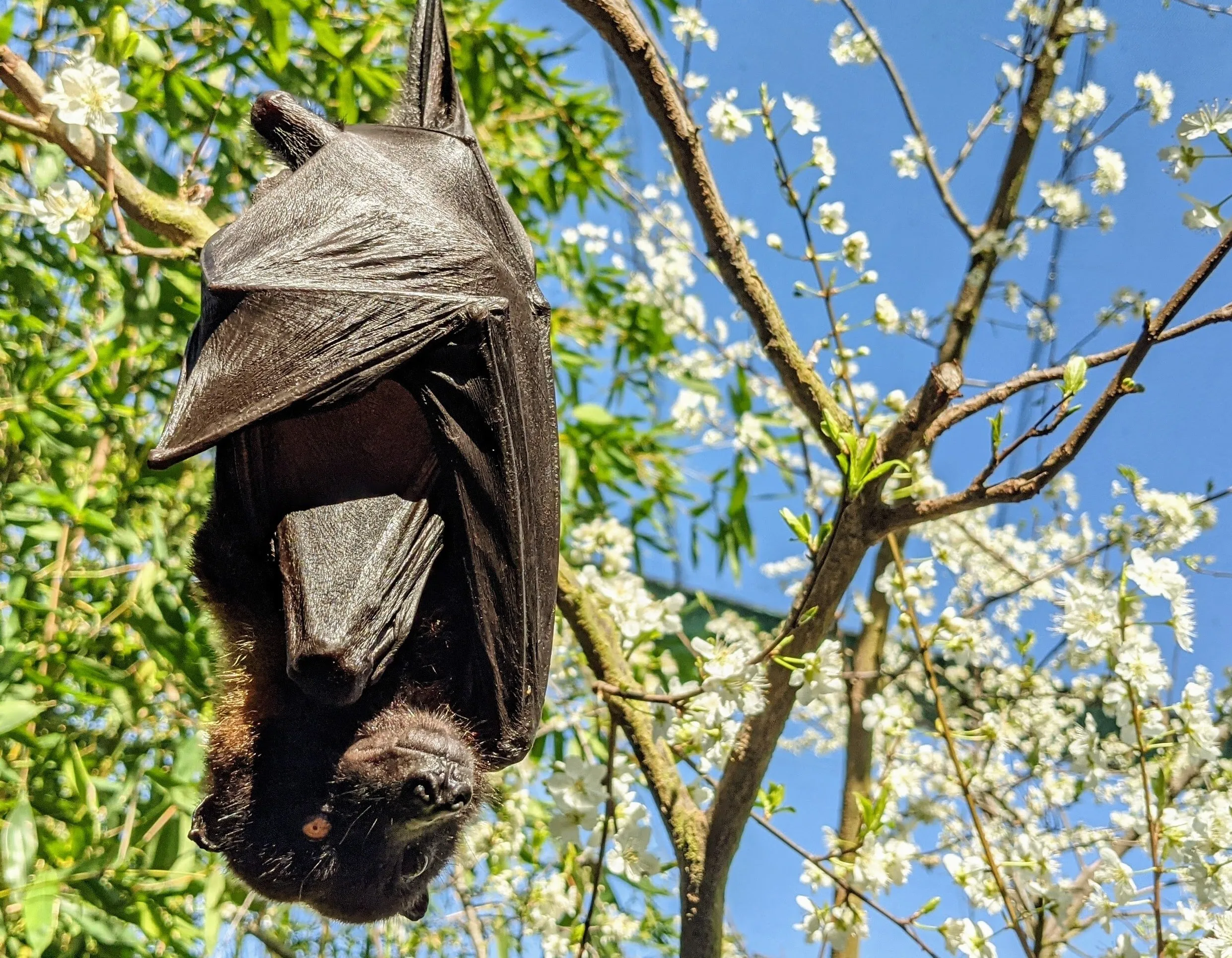
Island flying foxes congregate in small colonies that can number into the thousands. Flying foxes are nocturnal, and during the day you will often see them resting by hanging upside down from tree branches. This species of flying foxes has also been observed during crepuscular hours, seeking out food during dawn and dusk. In cold weather, flying foxes will wrap themselves up with their wings, and during hot weather they will cool down by flapping their wings.
Island flying foxes are polygynous, meaning they have different breeding partners every year. Mothers give birth to one pup at a time and care for them for 4-6 months. For the first 2-3 weeks, she will even carry her pup on her back while flying. When they start to weigh too much to be carried, they get left behind at the colony while the mother forages.
Wild: 8 years, Protected Care: 20+ years
February-April
1
1 year
Conservation
Island Flying Foxes are listed as near threatened by the IUCN, with population size decreasing. It is estimated that their global population has declined by 25% in the last 24 years. Their biggest threat is agricultural developments that infringe on their natural habitats. Additionally, they face many challenges due to climate change such as droughts.
Fascinating Facts
- Flying foxes don’t echolocate, instead they have incredible binocular vision.
- The scientific name "Pteropus" means "wing-footed", originating from the Greek words pteron meaning "wing, feather, or fin" and pous meaning "foot".
- Bats are the second most diverse group of mammals, coming in right after rodents. There are approximately 925 species of bat, which makes up 20% of all mammal species.