Klipspringer

Least Concern
Rocky Outcrops
Africa
Crepuscular
Herbivorous
African Savanna
Characteristics
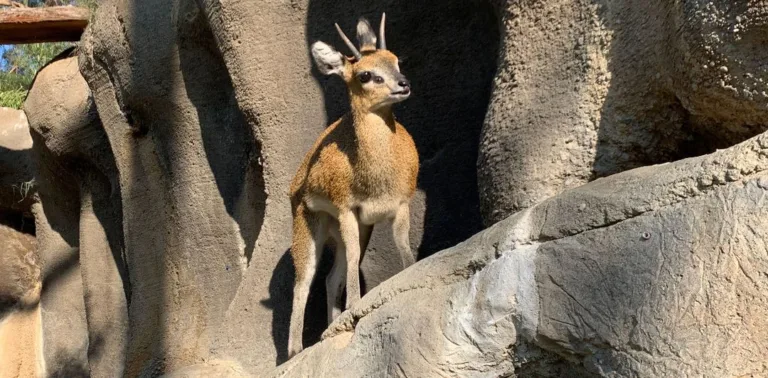
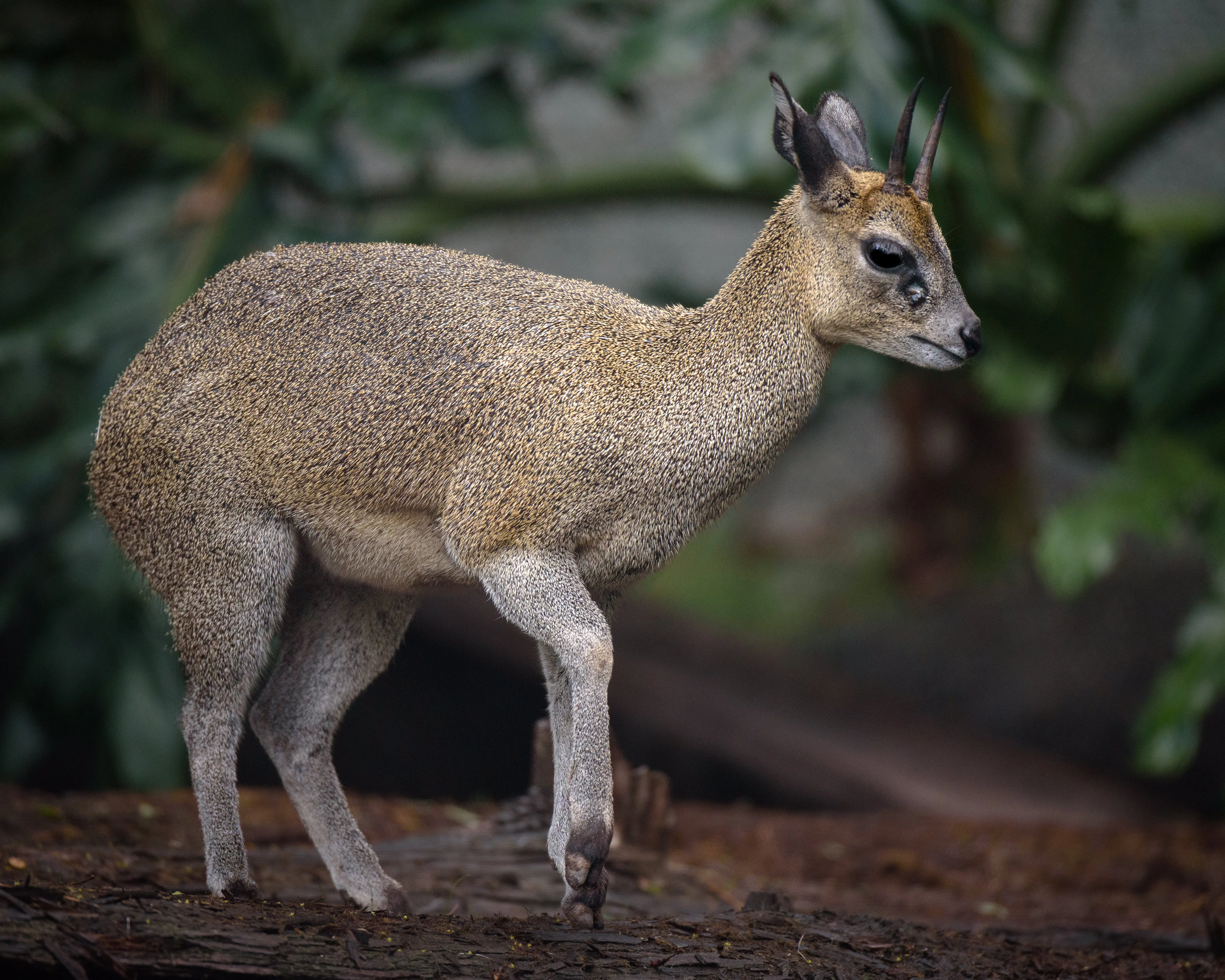
Klipspringers are a small species of antelope. They stand at just about 2 feet at the shoulder and weigh between 20-40 lbs. Their fur is an overall tan-yellow color, with speckled strands of hair ranging from gray, brown, and even olive-green. Their underside and corners of their mouth are a lighter shade of cream or white. The fur is thick and hard, and the hairs are hollow. The fur reflects heat and provides insulation for extreme temperatures, reduces moisture loss, and protects them from injuries.
These antelopes are known for their dark, almost black, preorbital gland just below the front corner of their eyes. These glands can produce gooey globules to scent mark their territory. Klipspringers also have hooves so small that they can fit on a dime, which give them the appearance of standing on their tiptoes. Their ears are rounded, and they have small spiky horns that grow straight up, around 6 inches tall.
Habitat & Ecology
Klipspringers are native to Africa, found in the southern and eastern regions. They can be found from Sudan all the way to the tip of South Africa. There are also isolated populations in Nigeria, Cameroon, and the Central African Republic.
Klipspringers prefer rocky outcrops, as that is what their hooves are adapted for. This can include rocky hills, kopjes, and river gorges. They are usually found in mountainous areas of up to 13,000 ft. These highly specific habitat requirements are a big reason for their patchy distribution.
Klipspringers are territorial, and their home range depends upon the amount of rainfall. More rainfall indicates a greater abundance of food and results in less space needed for foraging and a smaller home range. Less rainfall results in less food abundance, more time spent foraging, and larger home ranges. Home ranges can be as large as 0.15 square kilometers.
Diet
Klipspringers are herbivores. They eat a variety of vegetation but are selective on the browse (tree clippings) that they do eat. They look for plants with high nutritional value because of their small size and metabolic rate. A minimum of two thirds of their diet consists of fruits and flowers. They will also consume succulents and lichen; rarely will they eat grasses.
Behavior & Reproduction
Living in the heat of Africa, these animals have adapted to being crepuscular. They are most active and awake during dawn and dusk, the cooler parts of the day. They will use this time to feed, and when temperatures rise, klipspringers will find an area to settle down and rest. Klipspringers will form long-lasting pair bonds, usually with a mate, and can be incredibly territorial. Other than their mate and any offspring, klipspringers are not social. During feeding, one klipspringer, usually the male, will stand guard and watch for predators while the other forages.
Klipspringers reach sexual maturity at the age of 7 months. Around this time is when they will leave their parents and find their own new territory. A female offspring may stay with the family group for an additional three months. When born, a klipspringer may weigh just over two lbs. They are born in rocky alcoves during the summer, and remain hidden for the first 2-3 months of their life for protection. The mother occasionally visits to feed them but otherwise chooses to draw attention away from the hiding spot.
12-18 years
August-September
1
16 months
Conservation
Klipspringers are currently listed as Least Concerned with populations stable by the IUCN as of 2016. There are an estimated 40,000 individuals that exist in their range, and approximately 25% of their range is on protected land. Historically, klipspringers were hunted for their fur and meat. While that has subsided for the most part, it is still around today. Today, their biggest threat is habitat loss and fragmentation in isolated areas.
Fascinating Facts
- The name klipspringer comes from the Afrikaans language describing the gazelle’s ability to jump from rock to rock.
- Klipspringers can jump 10-12 feet in the air.
- Klipspringers can jump from and land on spaces as small as 1.5 inches wide. The center of their hooves has a rubbery texture for gripping.
About Our Animals
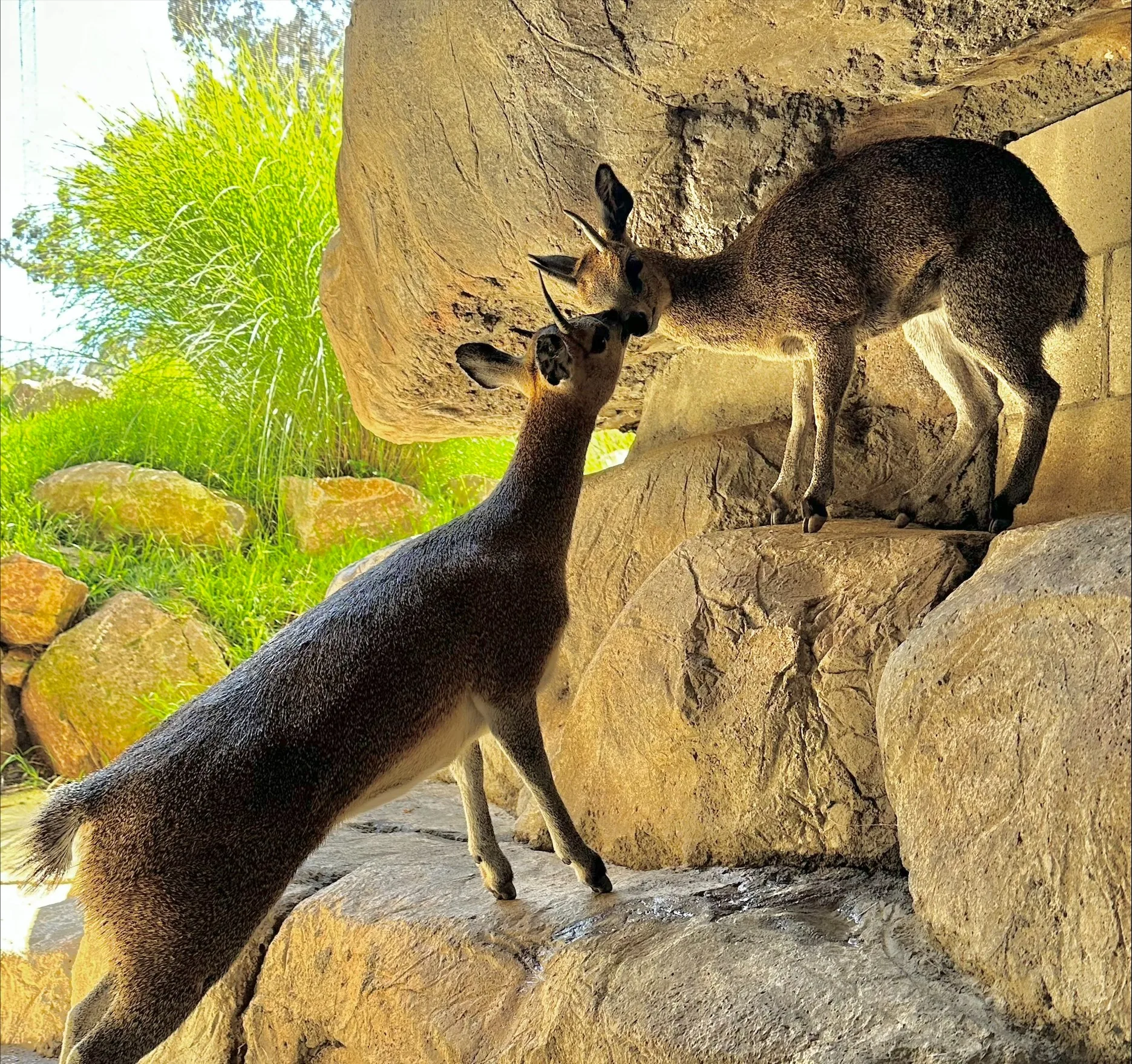
The Oakland Zoo’s two klipspringers are Matawi and Zeelie. Zeelie was born in 2020 and came to live with us in 2021. Matawi is a new addition that arrived at the Oakland Zoo in summer 2024 at less than a year old. After initial interactions, Matawi and Zeelie have become inseparable. They can be seen in their enclosure displaying natural behaviors such as scent marking sticks and resting under the trees.