North American River Otter
Least Concern
Wetlands
North America
Cathemeral
Carnivorous
Children's Zoo
Characteristics
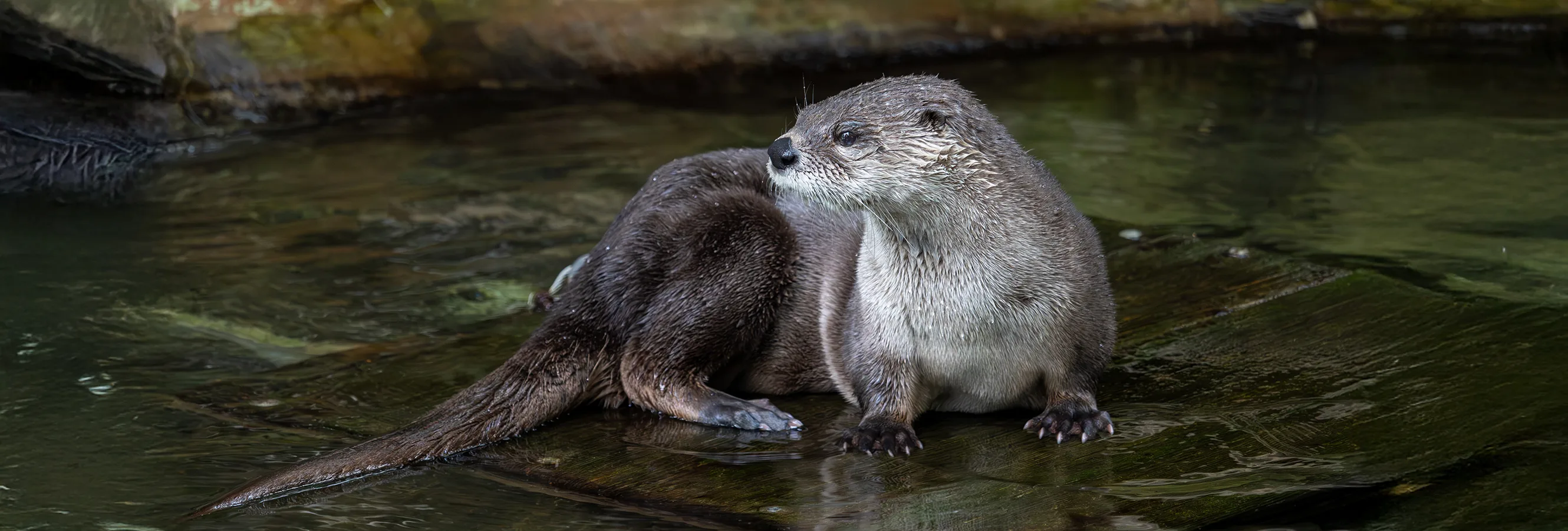
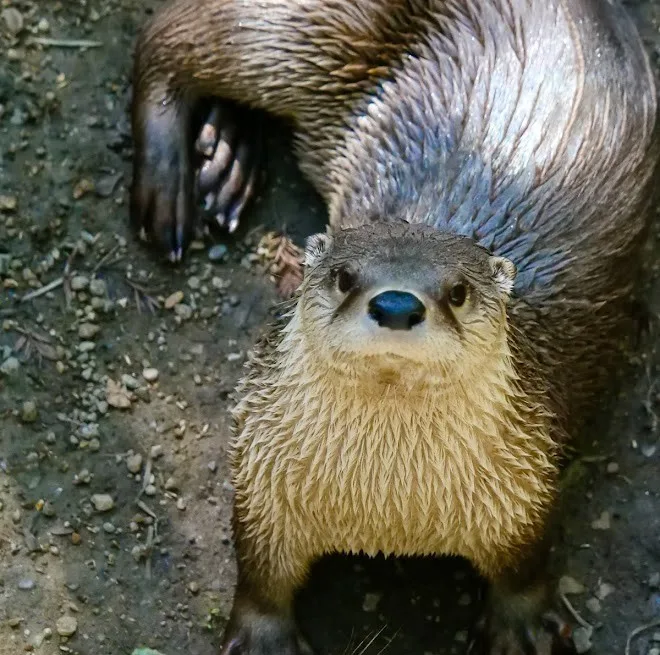
North American river otters have elongated, streamlined bodies, with long paddle-like tails. Their heads are round, with small ears. They have long white whiskers and a big nose for smelling, with nostrils that can close underwater. With short legs, webbed feet, and a small sharp claw on each digit, these mammals were built for swimming. North American river otters come in dark and golden-brown colors. Their thick, waterproof fur helps keep them warm in cold waters.
Habitat & Ecology
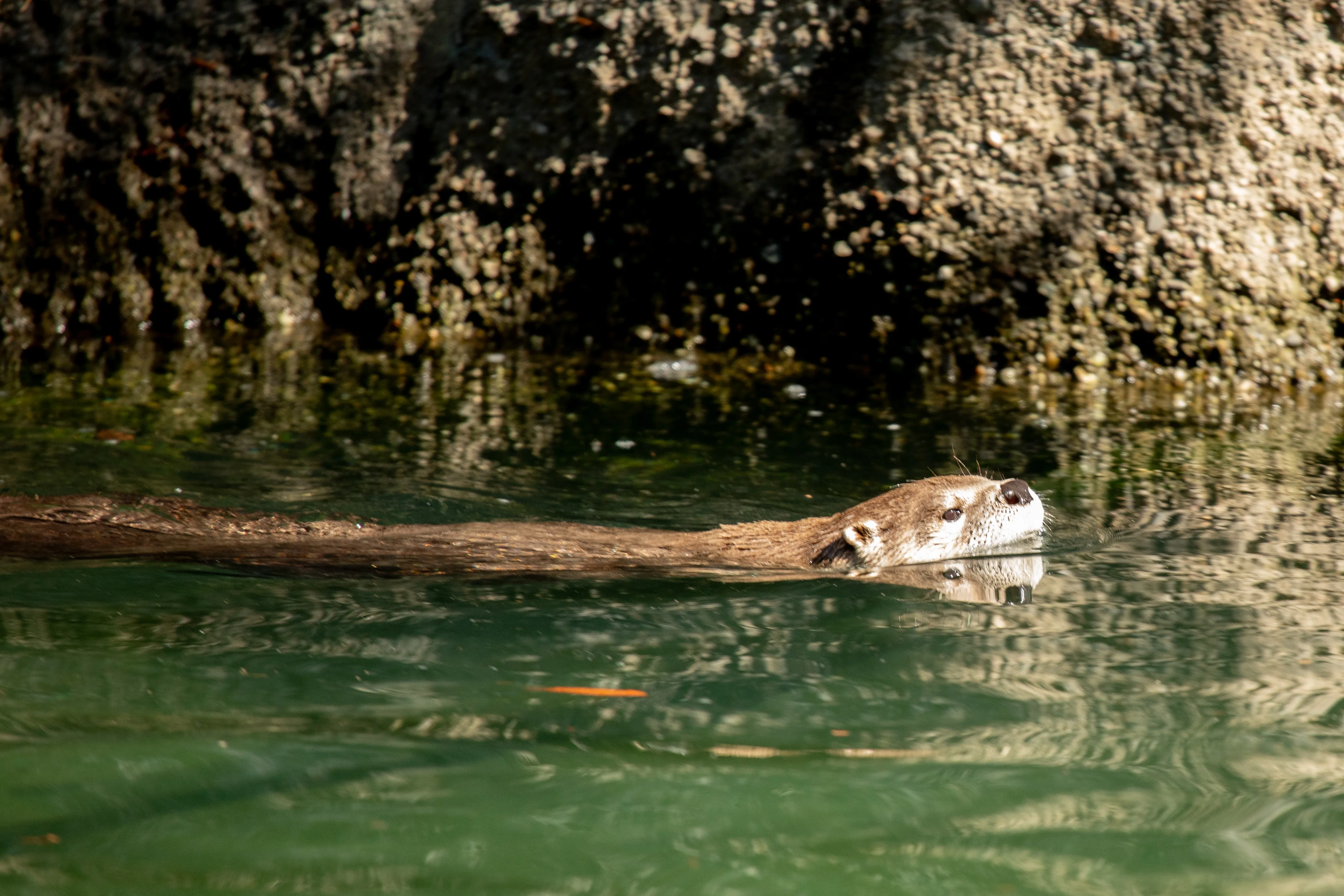
North American river otters, as their name states, live all throughout North America. They can live in many types of wetlands, but always need access to freshwater. This can lead them to live in rivers, marshes, swamps and estuaries. While they can live in just about any body of water, they are incredibly sensitive to pollution. N.A. river otters will be noticeably absent from polluted waters.
Diet
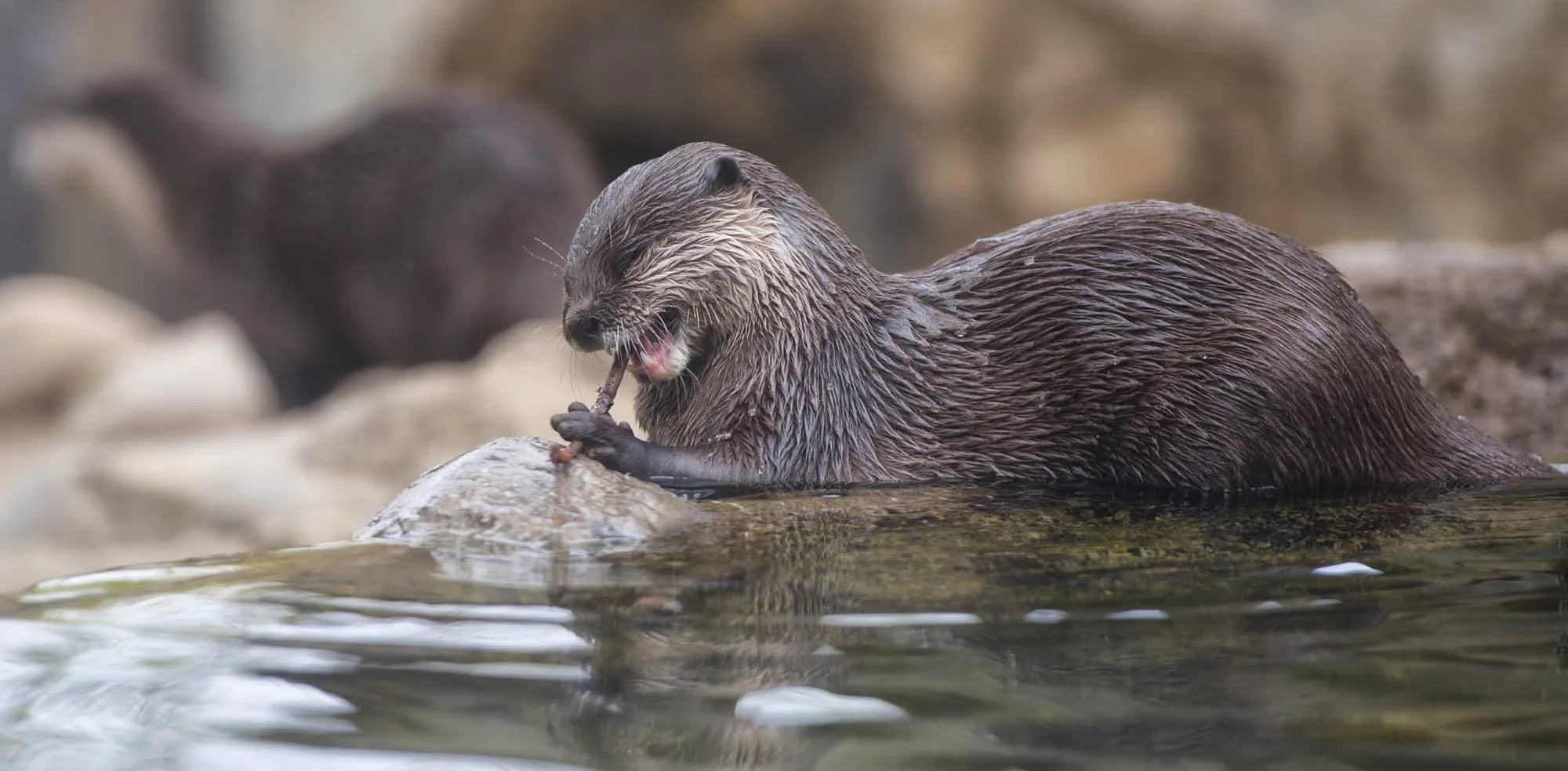
North American river otters are carnivorous eaters, feeding mainly on aquatic life. Their diet includes amphibians, fish, crustaceans, turtles, and even land-dwelling animals like eggs, rats, mice, and other small mammals. They always eat their food after capture. If the prey is small enough, they eat while treading water. With larger prey items, they drag the food to shore to eat.
Behavior & Reproduction
North American river otters are usually social animals, but may occasionally lean towards solidarity. They can live in small family groups consisting of a mother and her pups, or bachelor groups of 2-17 individual males. They have an incredibly fast metabolism, which expresses itself as intense energy. This energy shows itself in a seemingly “playful” manner and otters are frequently seen sliding in shallow water, burrowing through the mud, or engaging in other waterplay activities. To keep up with this energy, River otters need to consume 15-20% of their body weight per day. This leads to them being active at different periods throughout the day and night, making them cathemeral.
River otters will breed between late winter and early spring. Female river otters are able to delay egg implantation, meaning that the birthing period for otters ranges widely, even up to a year after mating. Offspring are born naked and with their eyes closed. After one month they open their eyes, after two months they can learn how to swim, and by six months they are ready to leave their mother.
Wild: 8-9 years, Protected Care: 20 years
November-May
2-3
1 year
Conservation
North American river tters are currently listed as Least Concerned by the IUCN. They were last evaluated in 2020 and found to have a stable population. Their biggest threats are the destruction of wetland habitats for urban, commercial, and agricultural development.
Fascinating Facts
- After defecating, North American river otters perform a “poop dance” consisting of them wiggling their hips back and forth.
- Per square inch of fur, a river otter can have 100,000-450,000 hairs. Surprisingly, this is the least dense fur of the otter family.