Sudan Plated Lizard
Least Concern
Grassland and mountains
Africa
Diurnal
Omnivorous
African Savanna
Characteristics
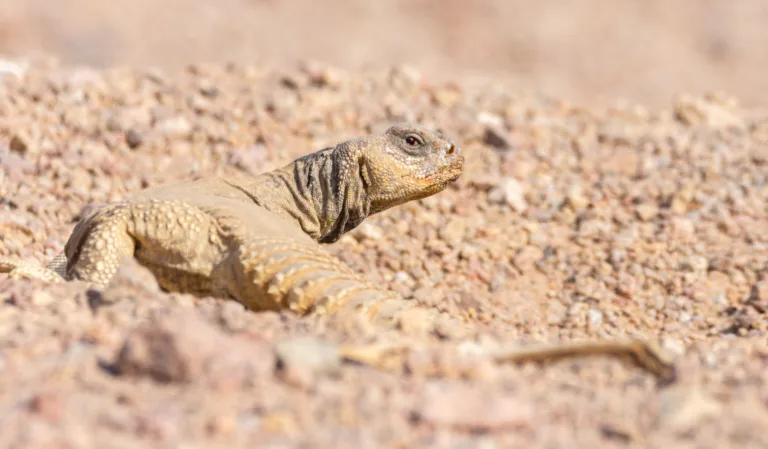
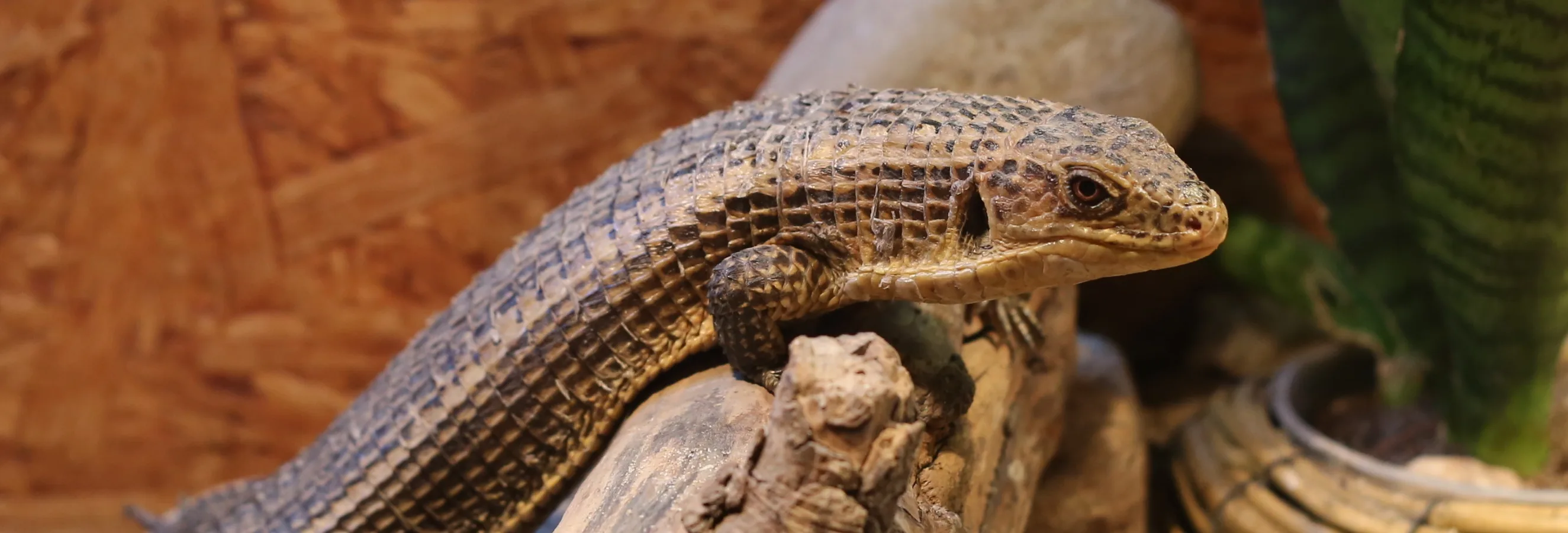
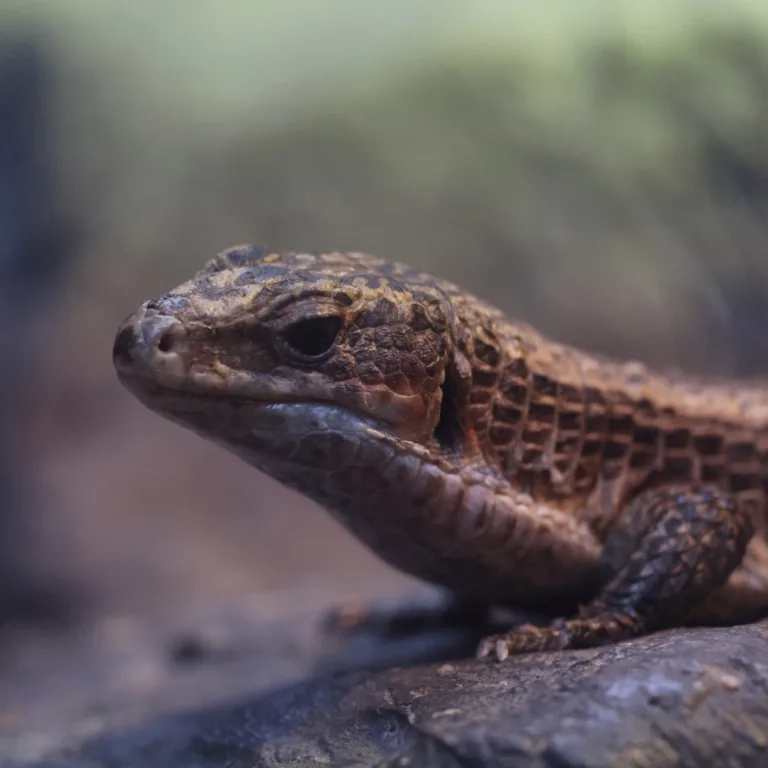
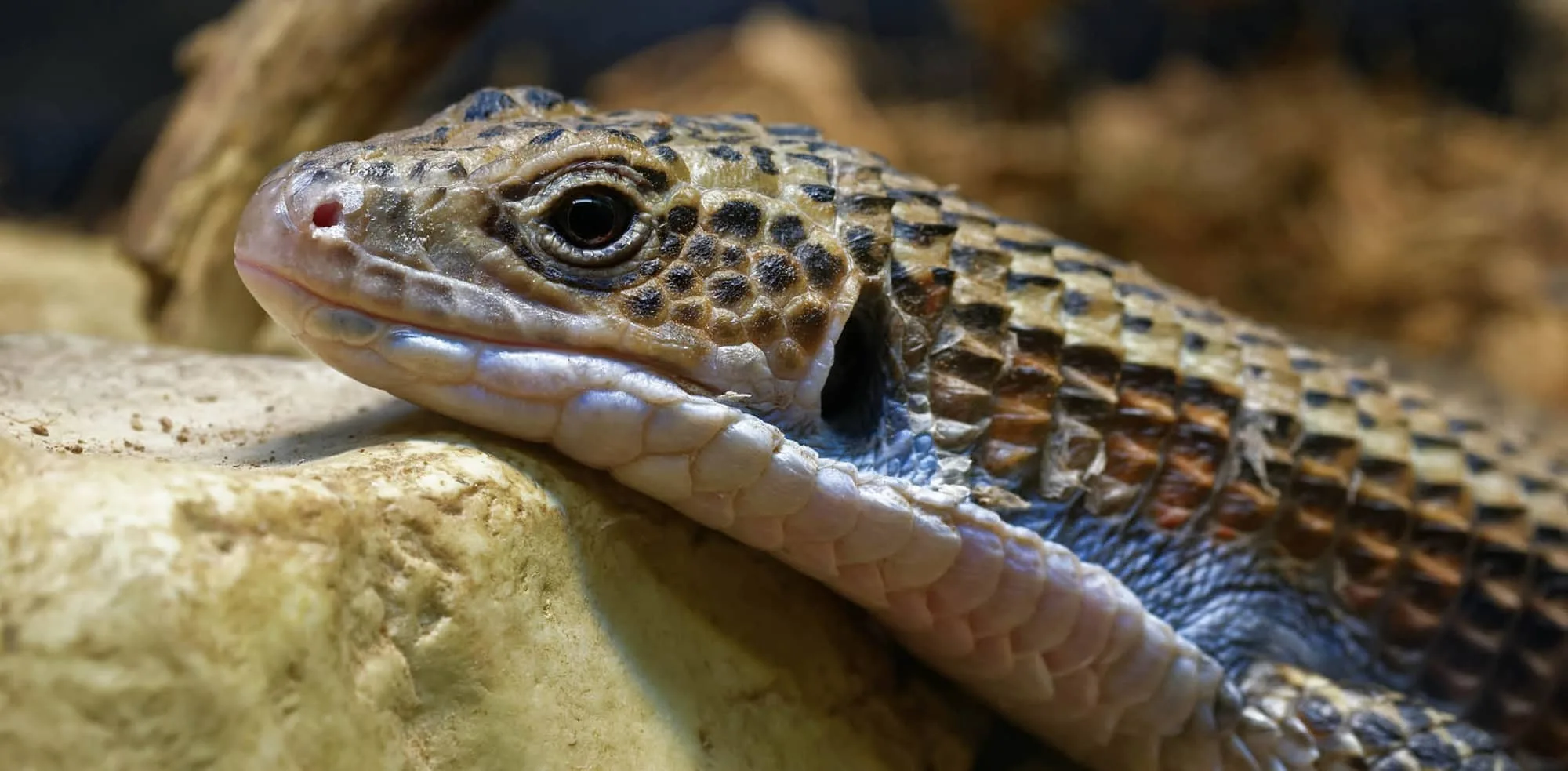
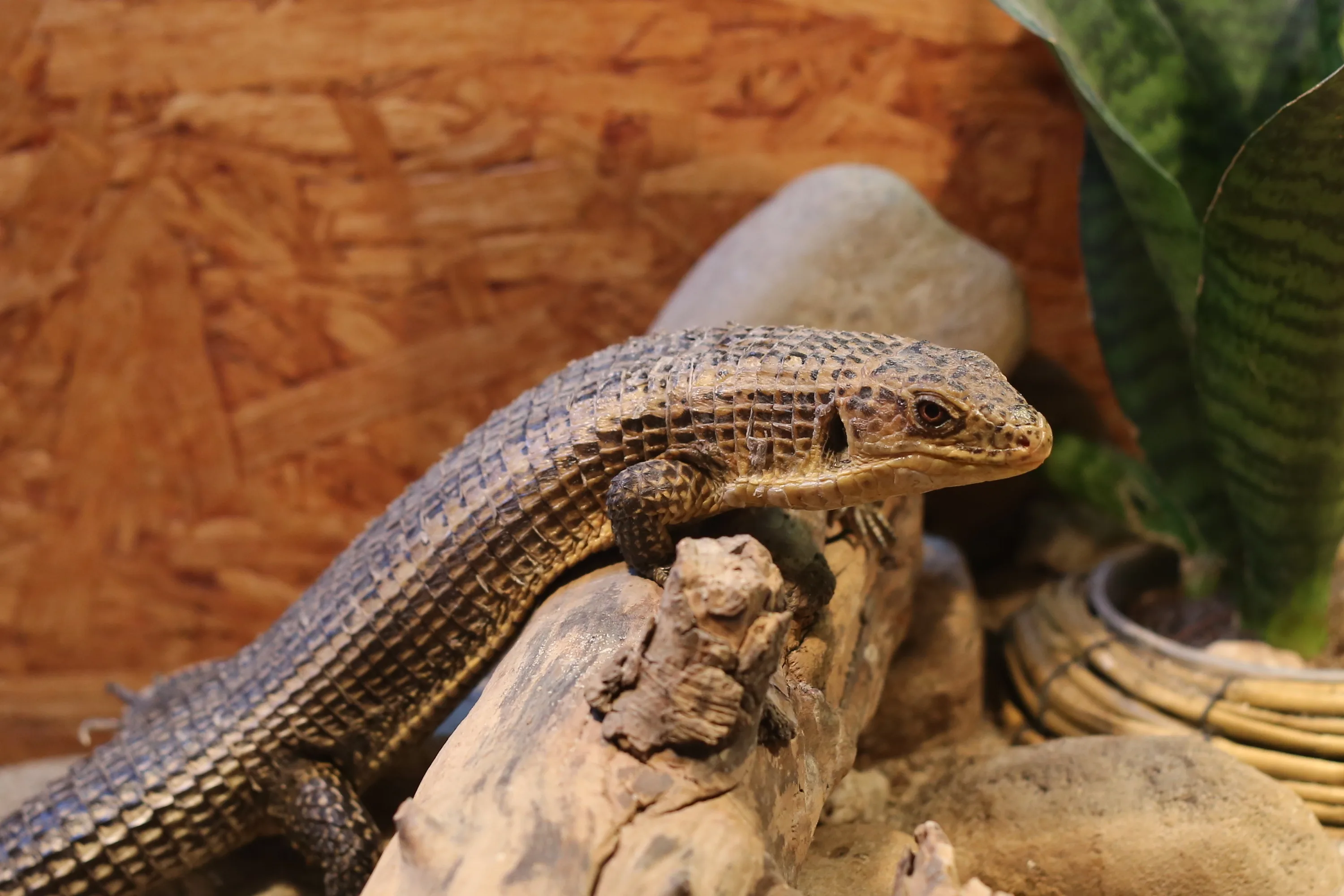
Sudan plated lizards are long stout lizards with transverse bands of squarish, plate-like, keeled scales from which they get their name. They’re dull yellow or brown on their backs, with a small dark center on each scale that creates a speckling effect. Males are larger than females and have brightly colored throats.
The Sudan plated lizard’s eyes are large, and their lower eyelid is rimmed with small scales. They have rough scales on their head and the scales on their back have pronounced keels. Even the soles of their feet are covered with slightly keeled scales. Their tail is often twice the length of their body. They are larger lizards, growing to around 1-2 feet long and weighing 1 pound.
Habitat & Ecology
This species is found mainly in eastern and southeastern Africa from Ethiopia to South Africa. They can also be found in isolated populations extending from Ethiopia to West Africa as far as Togo.
Sudan plated lizards prefer to live in savanna, cliffs, mountain peaks, and steppe areas. They take shelter in burrows or cracks in small rocky mounds. Sometimes they dig burrows or use old termite nests.
Diet
This species of lizard is omnivorous. They feed on soft fruit and flower seeds, grasshoppers, caterpillars, millipedes, and even smaller lizards. Like many lizards, their tongues are important for the capture of prey. They stick their tongues out to grab the food and quickly pull it into their mouths and snap their jaws shut.
Behavior & Reproduction
The Sudan plated lizard is not considered to be particularly social. However, they have been observed in large groups sharing the same areas. These areas tend to be ones that have good breeding and feeding potential, with a lot of water availability.
Females usually lay 2 large eggs in moist soil, but have been known to lay up to 4. The eggs hatch after gestating for 3-4 months. The young are 3.9-5.5 inches at hatching.
Wild: 5-10 years, Captivity: 20+ years
N/A
2
N/A
Conservation
Sudan plated lizards are listed as Least Concern on the IUCN Red List. This species is very widespread, adaptable to a number of forms of habitat modification, and is common in the East Africa savannah. Although this species is not listed under CITES, some criticize their handling in the pet trade. They are difficult to breed in captivity and as a result, they are often wild-caught.
Fascinating Facts
- This species is also known as the African Plated Lizard (Grzimek), Sudanese Plated Lizard (Vivarium), or Rough-Scaled Plated Lizard (Branch's Field Guide).
- They often share their burrow or termite mound with other animals including some snakes.
About Our Animals
The Oakland Zoo’s Sudan plated lizard is a male named Floyd.