Sun Bear
Vulnerable
Tropical Forests
Southeast Asia
Cathemeral
Omnivorous
Tropical Rainforest
Characteristics
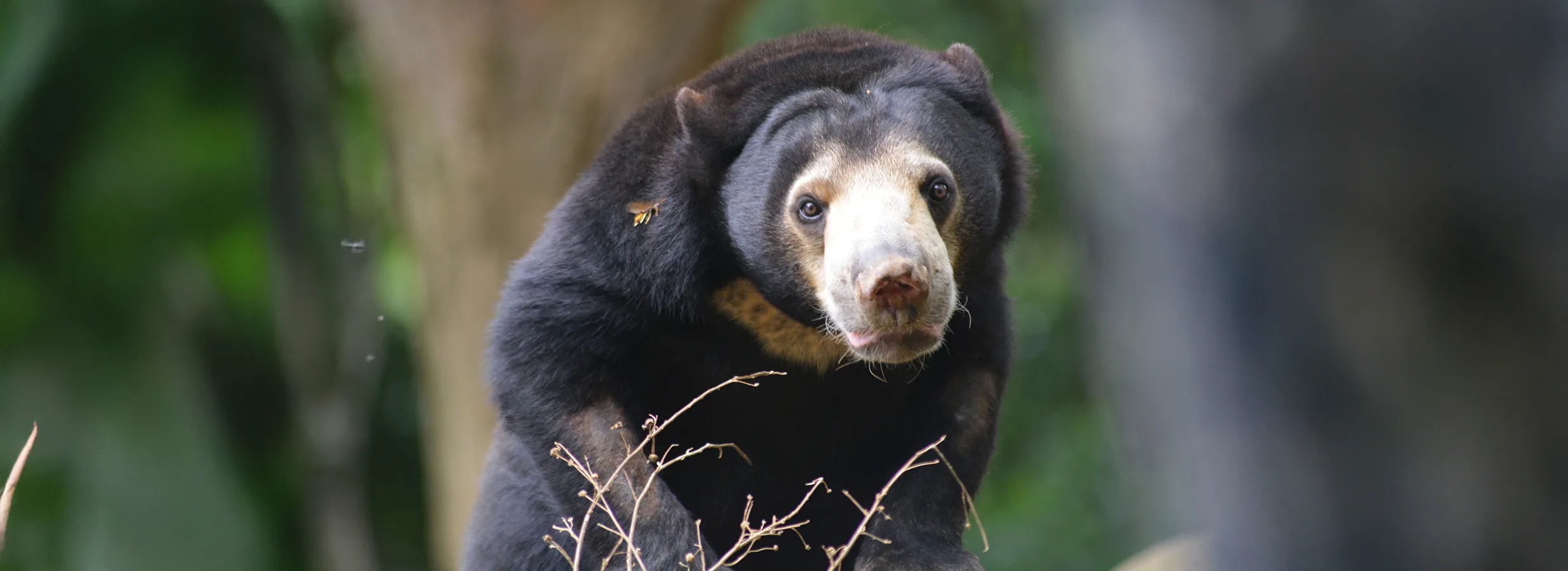
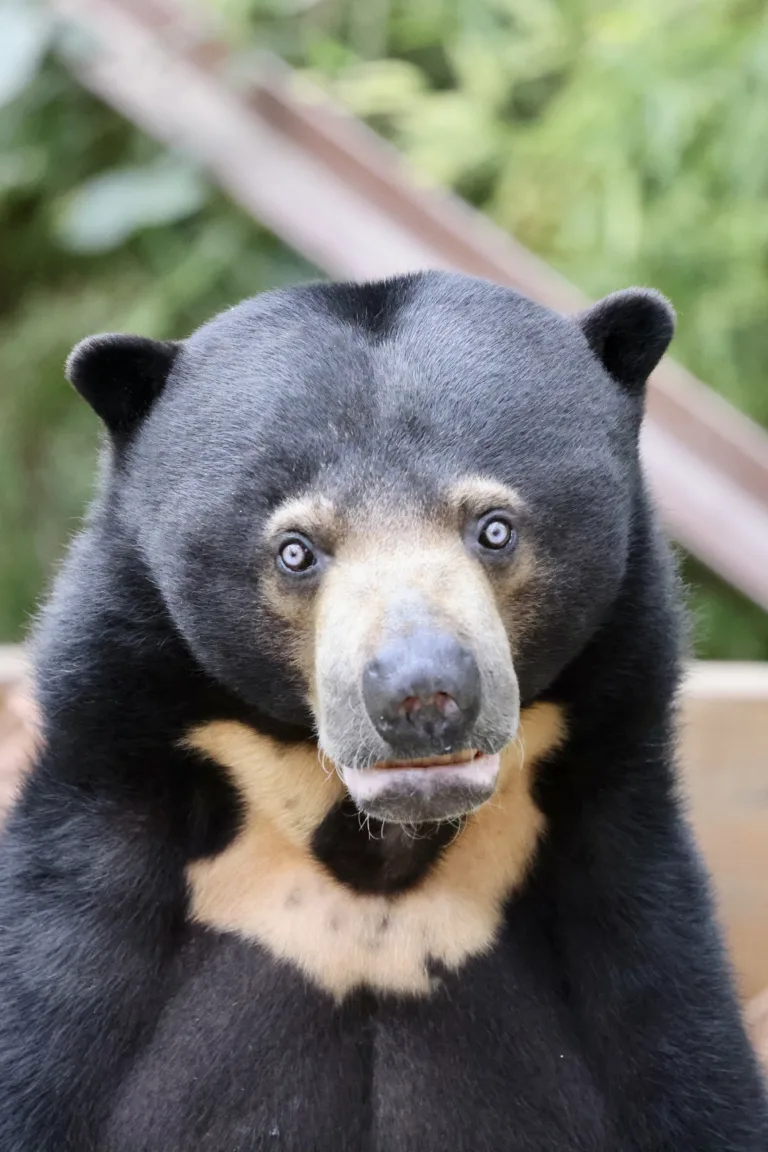
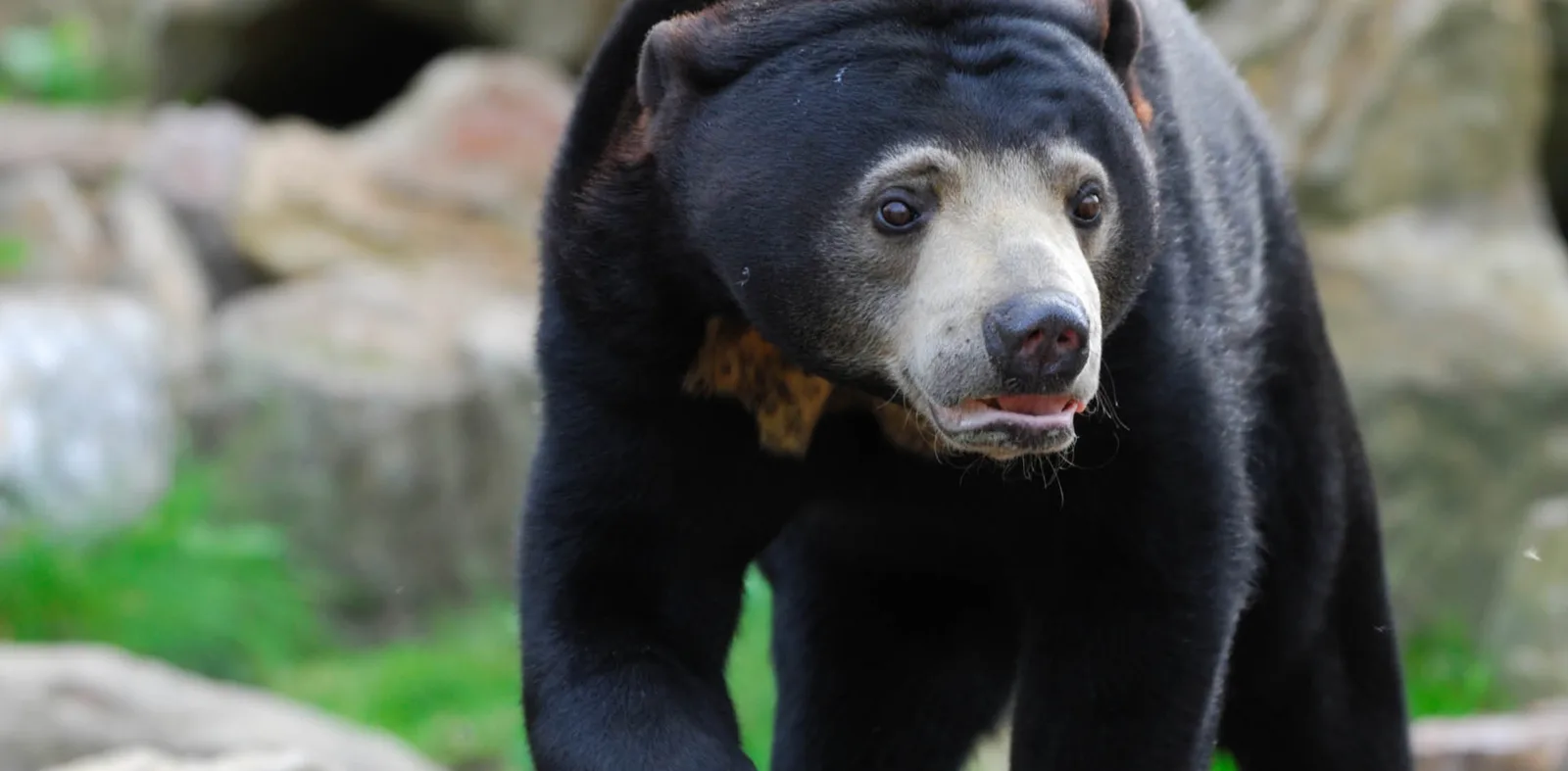
Sun bears are the smallest bear in the world. At most these bears get up to 5 feet long and weigh 150 pounds, making them half the size of the American black bear. This smaller stature makes it easier for them to live an arboreal lifestyle. They are all black in color with a tan-gray muzzle and a tan “U” shaped patch on their chest. This patch is present in most sun bears and is unique to the individual. Sun bears have short, flat heads and small rounded ears. They have large paws with long sickle-shaped claws to aid in climbing trees.
Habitat & Ecology
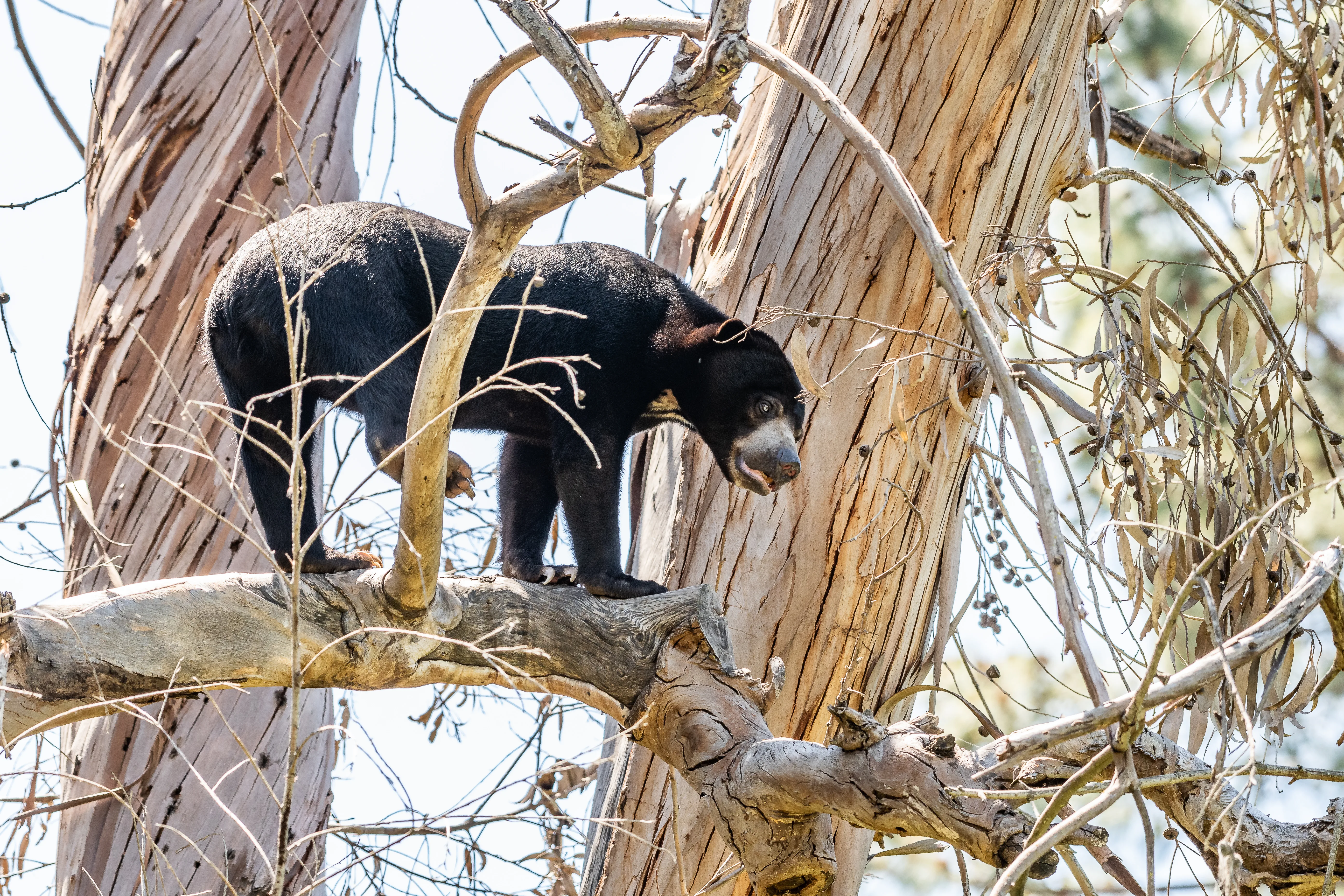
Sun bears live in dense lowland tropical forests of Southeast Asia, from as far north as Myanmar, to as far south as the two main Islands of Indonesia, Kalimantan and Sumatra. Their historic range was expansive, but in the present day they exist in more fragmented areas. Sun bears are excellent climbers, so they can be found high up in the treetops. They play a key role in the forest ecosystem as seed dispersers, helping new plant life grow.
Diet
Sun bears are opportunistic omnivores, consuming just about anything. Meat is the bulk of the sun bear diet. Their most common food sources are bees, termites, and earthworms, but they will also go after small rodents, birds and even lizards. They use their long tongues to extract insects from deep inside wooden caverns, and even honey from hives. To supplement their diet, sun bears also eat whatever fruit is most available, and normally don’t have to cover large distances in search of a meal.
Behavior & Reproduction
Sun bear activity is variable, and they commonly adjust their activity patterns to avoid humans. They can wake during the day, at night, or even during twilight hours, making them cathemeral. Sun bears spend most of their waking time foraging for food. When they are not foraging, these bears will sleep on fallen logs, tree branches, or even hidden in tree hollows. Sun bears are normally solitary but can congregate around resource-rich areas to feed. Since they live in tropical areas with abundant food year-round, they do not hibernate.
Little is known about sun bear mating behavior. In Borneo, sun bear cubs have been spotted year-round, suggesting that they don’t have a set breeding season. Most documentation has occurred in captivity, where pregnancy lasts roughly 3.5 months and results in one or two cubs. Mother sun bears will birth their offspring in the cavities of hollow trees. Cubs will stay with their mothers for at least 2 years and don’t reach sexual maturity until 3 years. In rare occurrences, female sun bears have been spotted cradling their cub in their arms while walking on hind legs.
Sun Bear Cam
Watch our sun bears live on cam as they roam, rest, and play in their habitat.
Protected Care: 20+ years
Year-round
1-2
N/A
Conservation
Sun bears are currently listed as Vulnerable on the IUCN Red List. They face many threats in their natural territory. Agricultural development and urban expansion are destroying their forest habitat and fragmenting there range. Additionally, they are frequently harvested for their valuable body parts, particularly their gallbladder, for use in traditional eastern medicine. On top of hunting and deforestation, sun bears are also taken from the wild to enter the illegal pet trade.
Fascinating Facts
- Sun bears do not hibernate like cold-weather bears, probably because their tropical habitat provides food sources year-round.
- Other common nicknames for the sun bear include “dog-face bear,” “Malay bear,” and “honey bear.”
- Bears are known for their poor senses of hearing and sight, which they make up for by their excellent smelling capabilities.
- Sun bears’ chest markings are what gives them their name. According to urban legends, this mark represents the rising sun.
About Our Animals
The Oakland Zoo is home to two sun bears, Bulan and Pagi. Born in 2006, Bulan came to Oakland Zoo in 2008, just a couple months before her younger sister Pagi was born. She has a “U” shaped crest that is covered in black spots, resembling freckles, and is known by the keepers as the curious and more mischievous of the bears. Bulan loves tearing everything apart and would much rather use strength than logic to solve the food puzzles keepers give her. Born in 2008, Pagi came to Oakland Zoo in 2010. She is easily recognizable by her completely connected donut-shaped crest, and her laid-back demeanor.
Our Role
We are partnered with the Borneo Sun Bear Conservation Centre. They house over 40 rescued sun bears at their center, some of whom are working towards release back into the wild. Here are some things you can do to help:
- Avoid palm oil! 90% of palm oil is grown in Indonesia and Malaysia and because of deforestation for palm crops, the UN estimates by 2022, 98% of Indonesia's forests will be gone. You can help by cutting out palm oil from your life and only buying sustainable palm oil. Download the Cheyenne Mountain Zoo shopping guide to find sustainable products
- Check out the Roundtable on Sustainable Palm Oil website to learn more about sustainability
- See how we are taking action for sun bears here.