Blue-Bellied Roller
Least Concern
Forest
Central Africa
Diurnal
Carnivorous
African Savanna
Characteristics
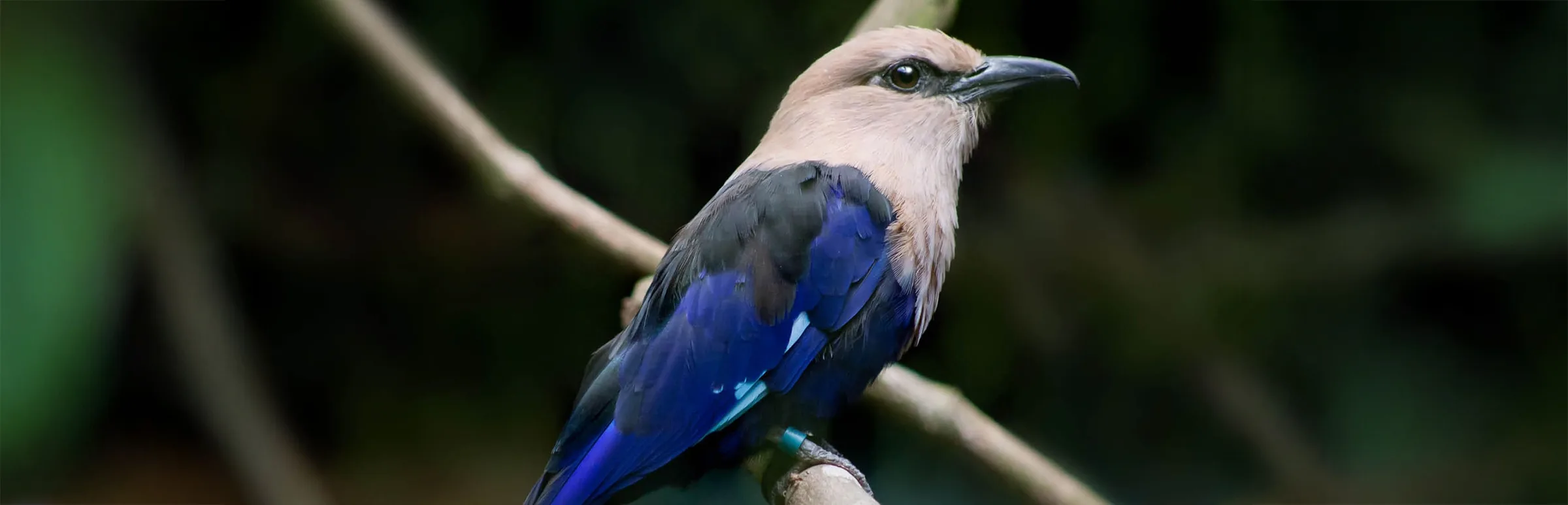
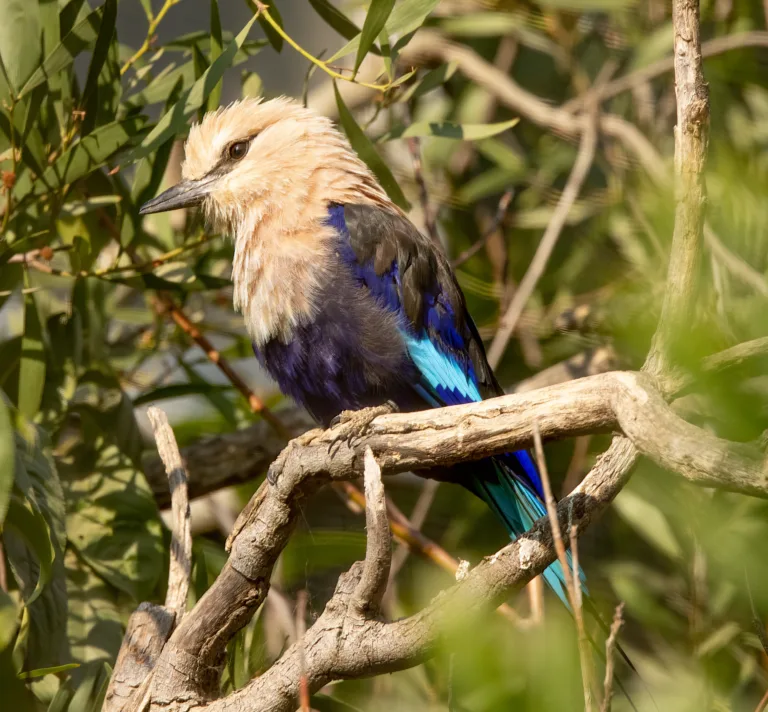
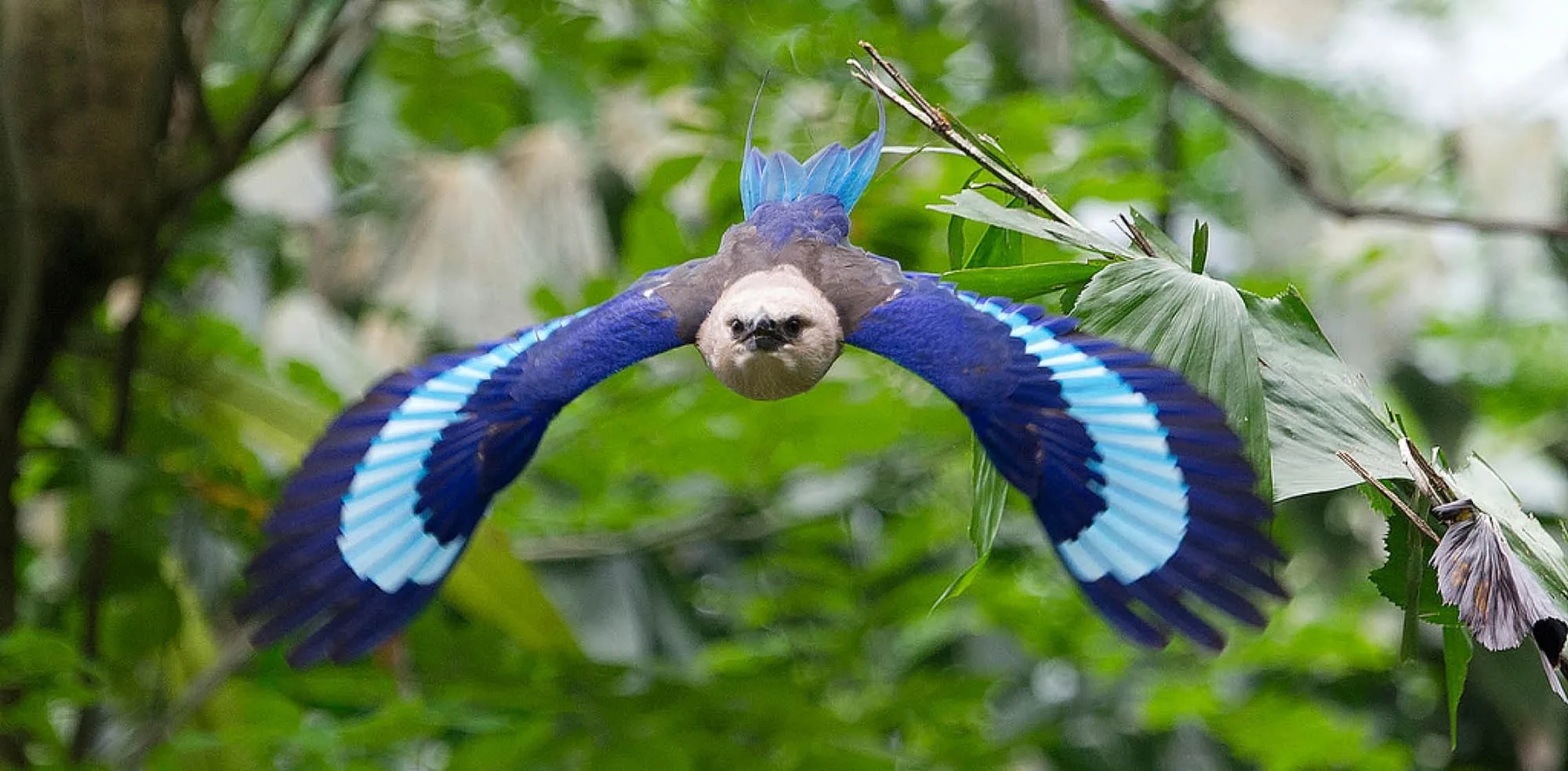
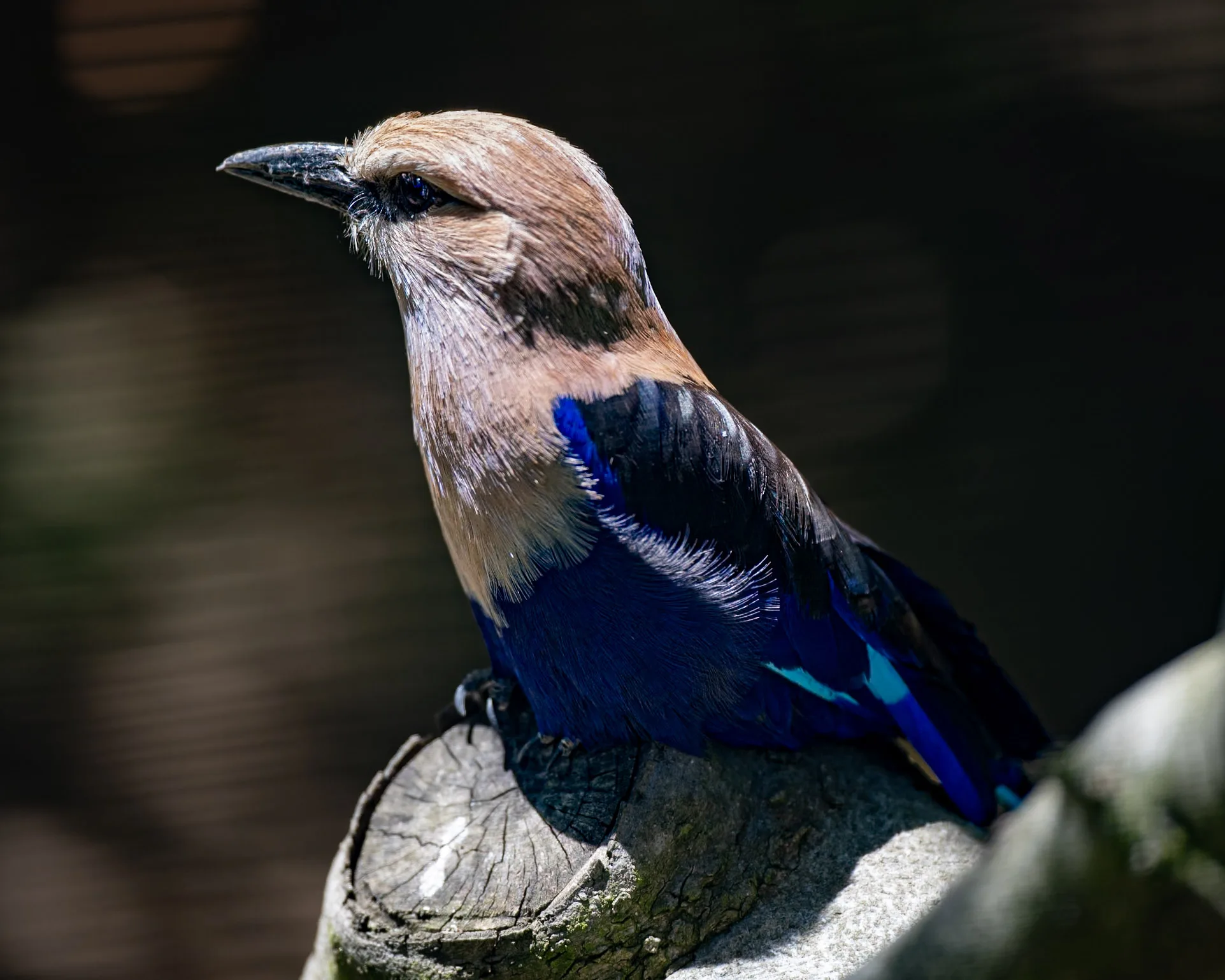
The blue-bellied roller has a white head and chest that blends into light blue at the belly. Their wings and back are dark green, with the rest of the body being dark blue and ending with light blue tail feathers. The outer tail feathers are 6 cm long and called tail streamers. They have a strong body and a crow-like beak that is widened at the base. While they are good fliers with long wings, they also have short legs and weak feet, so they rarely walk or hop. The three anterior toes are joined along their basal segments. They are around 11-12 inches tall and weigh 3.8-5.3 ounces.
Habitat & Ecology
There are 11 species of roller that occur in Africa, Asia, and Europe. Blue-bellied rollers are found in Central Africa from Senegal and Gambia to Sudan. They have a preference for Isoberlinia woodlands (a habitat type widespread in south-central Africa, made up of trees from the genus Isoberlinia), but are found in a variety of forested areas such as rainforests, gallery forests, and groves of palms near streams. The pairs and small groups that live together often defend as much as 10,000 square meters of territory. They have adapted to live near humans, especially in agricultural areas with burnt-over clearings.
Diet
These carnivorous birds specialize in catching their prey in mid-air! They prefer large invertebrates such as beetles, grasshoppers, winged ants, and termites.They also hone in on locust swarms and termite mounds. In addition to insects, they are also known to eat small reptiles and even oil palm nuts, when available.
Blue-bellied rollers rely on their keen eyesight to spot grass fires. Grass fires cause a disruption that results in large groups of insects fleeing the scene. This makes for a perfect hunting ground for rollers. Once they’ve spotted their prey when hunting, they will dive straight down from 30 feet in the air to catch them.
Behavior & Reproduction
These social birds are conspicuous and usually noisy. Groups of blue-bellied rollers usually consist of 3 to 7 individuals, though they can be larger. They play, vocalize, and hunt together. They will also attack other animals together to defend their territory. They frequent the topmost branches of tall trees from which they indulge in wild erratic flights, accompanied by loud cries and attack any large bird that passes. Others perch on dead branches on low trees from which they swoop down on their prey. Blue-bellied rollers make some seasonal movements during wet winters but no great migration. They will travel great distances to fires to feast on insects that flee the burning heat.
Blue-bellied rollers are usually seen in pairs, though there is evidence that males will court and mate with multiple females. Courtship involves fast chases on the wing with the following bird breaking away and rocketing earthwards, rolling from side to side and calling raucously all the while. They are territorial and reversed copulations have been witnessed, which appeared to be dominance displays. They nest in holes in trees and lay 2-3 white eggs. The male and female roller will incubate the eggs for about 3 weeks, though it is unclear how much time the male spends in this role. After four weeks, the offspring will fledge and leave their parents' care.
Unknown, but est. 5-10 years
April-July
2-3
1 year
Conservation
Listed as Least Concern by the IUCN. Populations are decreasing but not at a high rate. Their woodland habitats are being developed by humans, causing a problem for certain populations.
Fascinating Facts
- Rollers are named for their acrobat-like flight. When trying to impress potential mates, they will roll back and forth in the sky before tumbling to the ground.
- These small birds weigh less than a third of a pound!
- When perched, these birds can resemble a crow with their stocky build and large beak. In fact, the Latin word ‘coracium’ means "like a raven".