Emu
Least Concern
Grassland/Forests
Australia
Diurnal
Omnivorous
Wild Australia
Characteristics
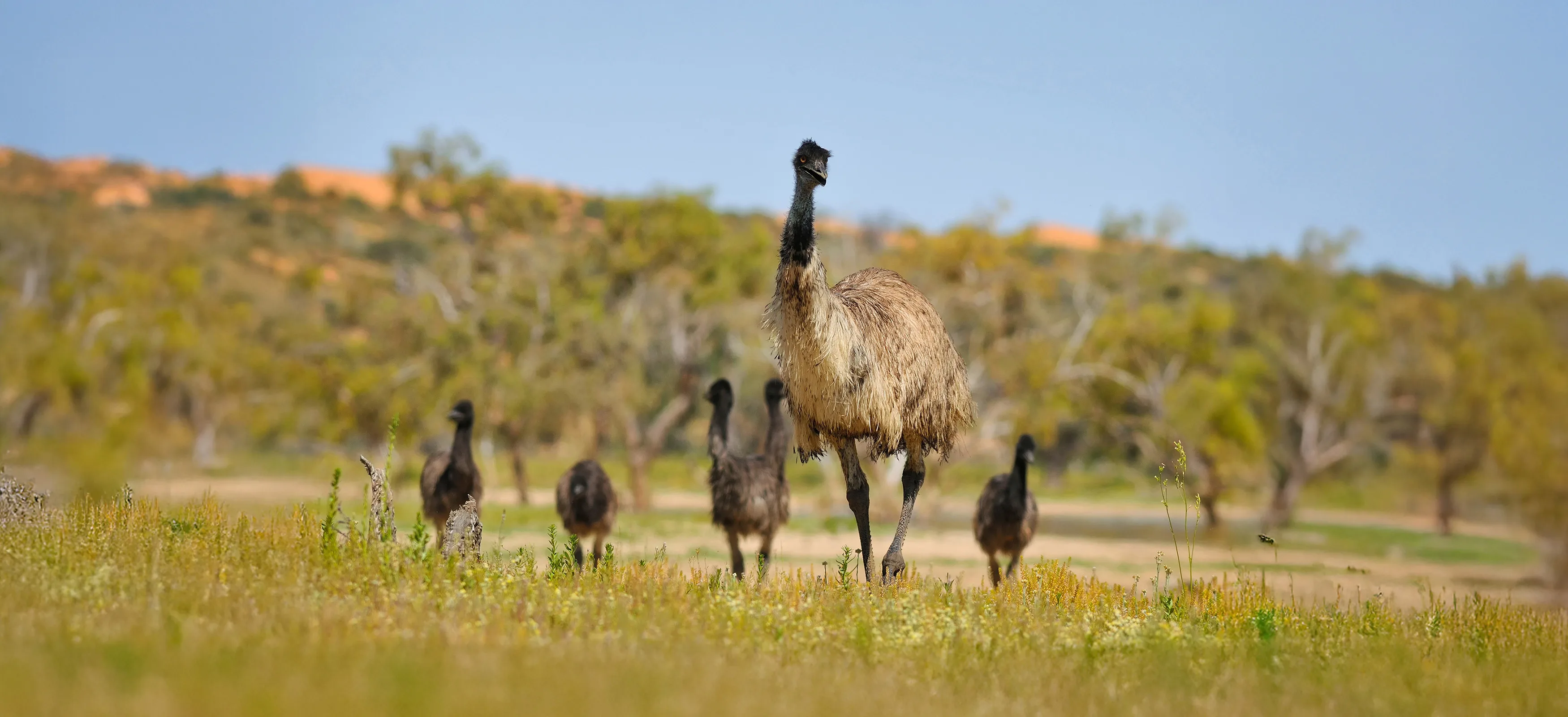
Emus are large, stocky, non-flighted birds. They generally weigh between 66-120 pounds and stand up to 6 feet tall. Though they appear wingless, emu have very small vestigial wings that are less than 8 inches long and can be seen drooping below breast level. These wings are left over from their flighted ancestors long ago. Emus have long legs with three toes at the end.
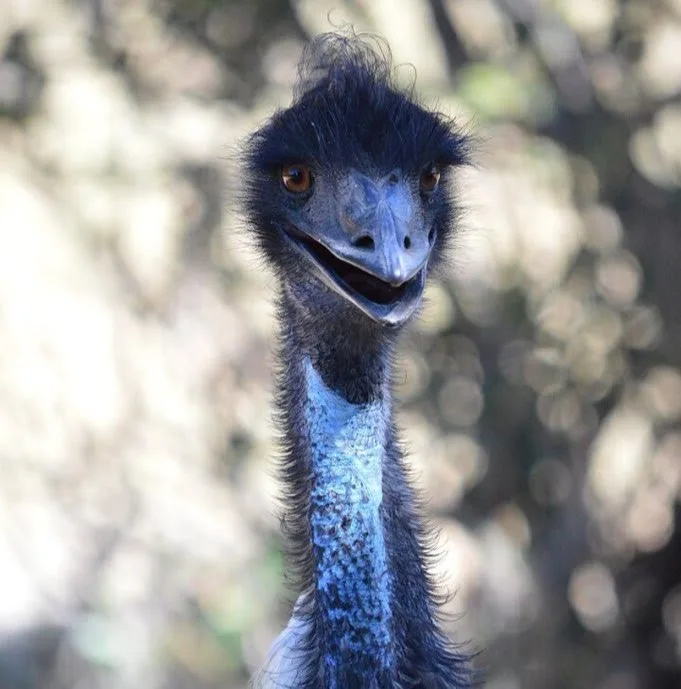
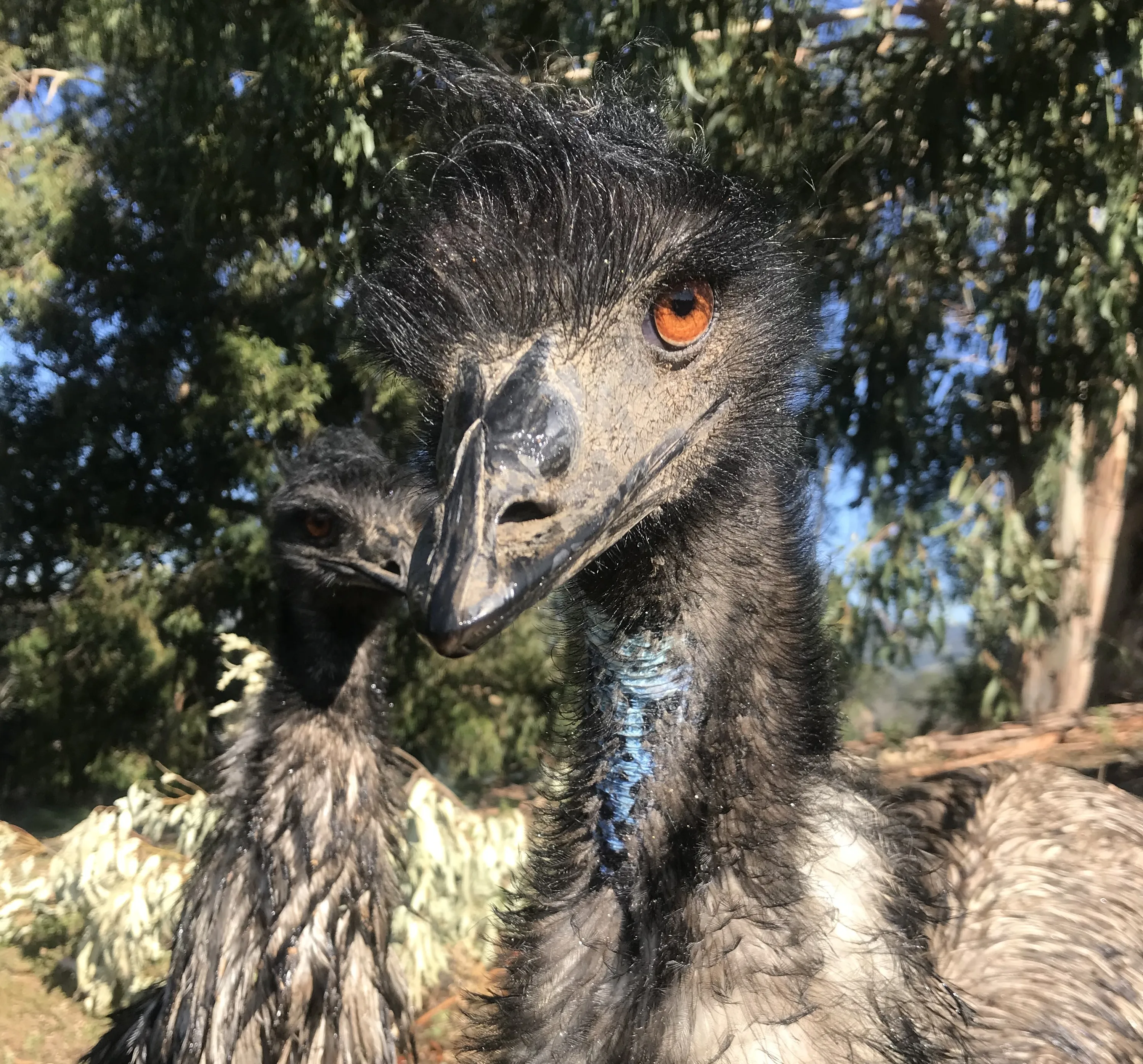
Emu feathers are shaggy and light to dark brown. This is because the tiny barbules on each feather do not interlock like in most birds, giving them a shaggy appearance. Their feather’s main function is to act as insulation, keeping them cool by trapping a breeze during the summer, and keeping them warm by trapping their body heat during the winter. Their long neck and head are sparsely covered in black feathers with a relatively short and pointed beak. Both males and females have blue skin going down their necks, with females having a brighter blue. Juveniles have very dark feathers covering their whole body, including their neck and head. As they age, the feathers on their neck and head thin to reveal the light bluish skin. Adult plumage is reached at the age of two.
Habitat & Ecology
Emus live nearly everywhere in Australia, inhabiting savannah forests, grasslands, and subtropical climates. They avoid heavily wooded or desert areas due to a lack of water. Historically, emus inhabited Tasmania and King Island, but have become regionally extinct in these areas. On the Australian mainland, emus have managed to expand into areas that were previously inaccessible to them. Due to urban expansion and agricultural development, water is now readily available in new areas and emus have expanded their range— to the point where they are now considered pests in some regions.
Emus play an important role in the ecosystem as seed dispersers. Because they mainly feed on vegetation, any seeds that aren’t digested are then fertilized by their feces! Because of the emu’s nomadic nature, plants grow far and wide across Australia.
Diet
Emus are omnivores. They feed on fruits, seeds, insects, and occasionally small animals. They lack crops, which is a digestive organ many birds possess that helps with the mechanical breakdown of tougher material. Instead, emus have a modified esophagus that can store food for up to 30 minutes. These birds can also store large amounts of fat to allow for periods of starvation. Because of this adaptation, males can incubate nests for days at a time without having to leave the nest to feed.
Behavior & Reproduction
Emus are strictly diurnal, meaning they are awake during the day. These birds tend to be solitary, but will be more social when it is advantageous, like looking for food or nesting. They are also nomadic, aside from mating season. Emus communicate through body language and vocalizations. They use their inflatable neck sacks to create a low thumping sound that sounds like their own name, “e-moo”, and can be heard up to 2 kilometers away.
As in most flightless birds, the males are the ones to incubate the eggs, which can last 56 days. Females will mate with a male and leave him to care for the eggs while she goes to mate with other males. Males will perform courtship dances to entice the females and can spend up to 5 months with a courted female if successful. Female emus are able to store sperm, which allows them to lay eggs every three days after mating. This means a clutch of eggs can get as big as 24 at one time! Males will care for their young for the first 5 months of their life.
Wild: 5-10 years, Protected Care: 15-20 ye
December-January
5-15
1 year
Conservation
Emus are listed as Least Concern by the IUCN. The latest assessment was conducted in 2018 and found their population to be stable with 630,000-725,000 mature individuals in the wild. Their only current threats are predation from dingoes that try to steal their eggs and chicks, and humans, from encroachment and hunting.
Fascinating Facts
- Emus are the second largest bird in the world!
- Emus are the only species of bird to have developed calf muscles, an adaptation that allows them to sprint long distances, reaching speeds of 30mph.
- Emus protect themselves with their powerful legs. One kick from an emu can sometimes be lethal, especially to predators like dingoes.
About Our Animals
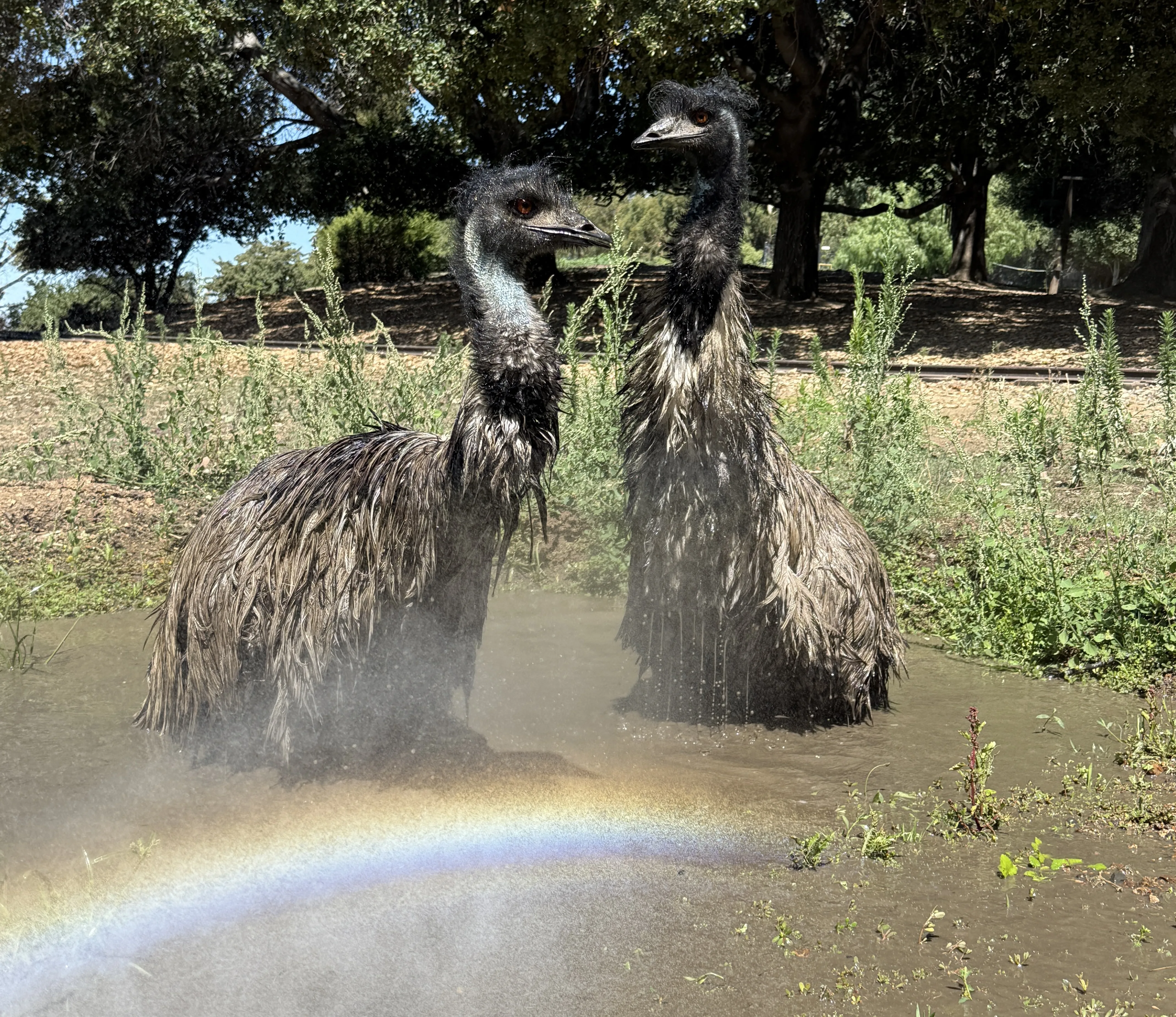
Oakland Zoo is home to three emus that can be visited by riding the train through the Australia section. Henrietta and Angus are a mated pair that can usually be spotted near each other. Angus hatched in 1999 and Henrietta hatched in 2011. Though emus are usually only social during breeding season, Henrietta and Angus choose to stay with each other year-round. Henrietta is the more dominant of the two and will become jealous if Angus spends too much time with the keepers.
Lou, who hatched in 2008, is the loner of the group. He is very independent and not usually spotted with the other two. Lou is fascinated by the train and the people coming through to visit every day. If your train ever gets stopped by an emu crossing, it’s most likely Lou hanging out on the tracks!