Speckled Mousebird

Least Concern
Savanna, open woodlands, common backyard bird in gardens
Cameroon, Eritrea, eastern Africa, southern South Africa, Tanzania
Diurnal
Omnivore
African Savanna

Characteristics
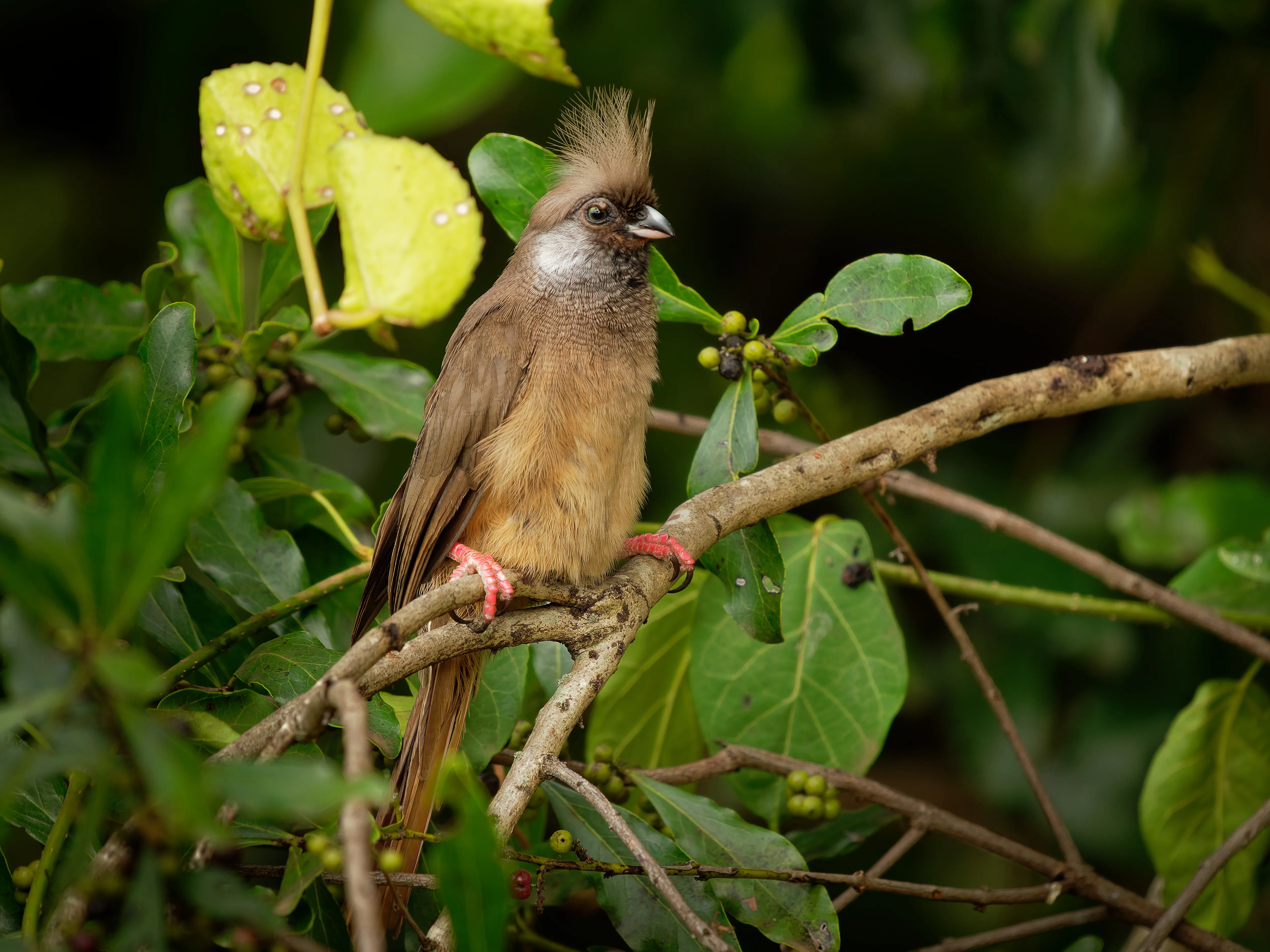
These birds have dark faces, brownish-grey bodies with slightly darker feathers on their backs, tufts of pale feathers on top of their heads, and long, scruffy tails. Speckled mousebirds are the largest of the mousebirds, reaching a total length of about 14 inches, half of which is the tail, and weighing up to 2oz. They have pamprodactyl feet, meaning two of their toes permanently face forward and the other two can rotate to face forward or backward, allowing them to grip onto a variety of surfaces and hang upside down to consume fruit. The name mousebird refers to the way they scamper through bushes like mice.
Habitat & Ecology
Speckled mousebirds are found throughout sub-Saharan Africa in dry woodlands and brushlands. They are able to survive in most non-rainforest habitats in their range from sea level to 2100 meters of elevation. These animals have adapted well to urbanization, and enjoy urban areas with less abundant predators. They are common backyard birds, and are often seen near gardens and orchards. They avoid predators like snakes, birds of prey, and wildcats by hiding in bushes and freezing until danger has passed.
Diet
Speckled mousebirds forage in the mid to upper canopy. The majority of the mousebird’s diet consists of ripe and unripe fruit, seeds, other plant material, and the nectar of aloe plants. Some reports indicate they may consume ants and termites occasionally for protein. Having pamprodactyl feet allows them to hang upside down to consume fruit. They are also known to consume rocks and clay to aid in digestion, especially after consuming harder to digest food.
Behavior & Reproduction
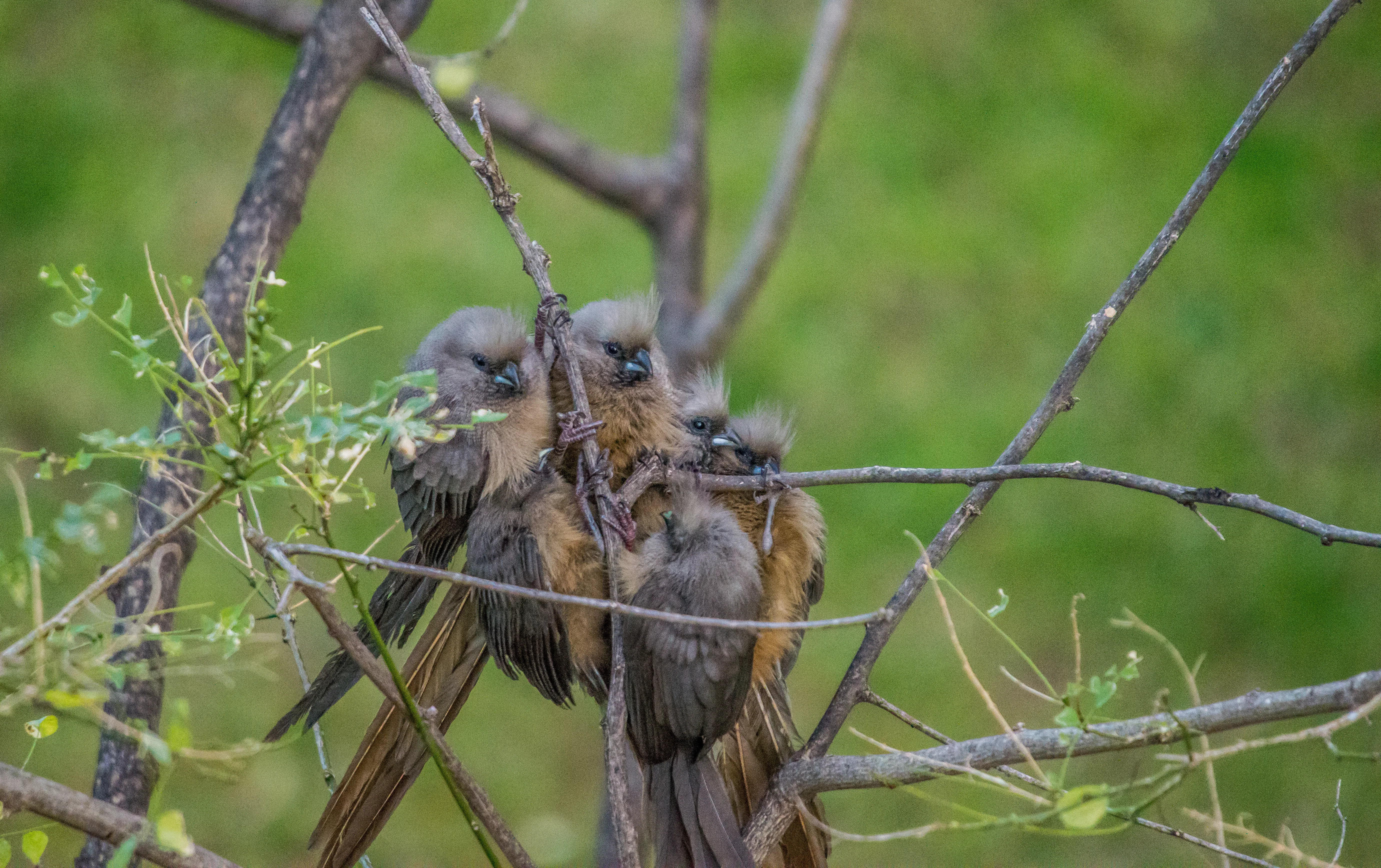
These creatures are highly social, and are found in flocks of 15-20 individuals. Flocks are often seen preening, taking dust baths, and foraging together during the day, then roosting together closely for warmth at night. On cold nights, these animals enter a torpid (temporary hibernation-like) state, decreasing their metabolic rate and temperature by up to 90% to conserve energy. This makes the birds defenseless, but their large, noisy flocks seem to deter predation. In the morning, they will sunbathe and preen to return to normal temperatures.
Their short, round wings make them incapable of flying long distances, instead they beat their wings rapidly and glide short distances. They are often described as looking clumsy in flight. Mousebirds move similarly to parrots, using their feet and beaks primarily to move around in the trees. They often eat upside down, and are occasionally observed hanging upside down after eating, exposing their bellies to the sun to aid in digestion. They are also able to sleep upside down.
Adults can breed at any time of year, with exact breeding patterns varying greatly throughout their range and depending on food abundance in the region. Courtship behaviors include calling, jumping up and down, preening, and exchanging food. Males and females will work together to build a cup-shaped nest of grass and twigs, with softer material like cotton and spiderwebs used for padding inside. Males and females take turns incubating the clutch, usually consisting of 2-3 eggs, for about 18 days. Mousebirds have a low survival rate compared to many other bird species, only about half of the eggs from each clutch hatch and many chicks do not reach 2 months of age, and pairs will have multiple clutches per year. Chicks are born artricial, and begin opening their eyes and developing quills after 3-4 days. Both parents take turns regurgitating food to the clutch. Juveniles are often seen returning to assist in raising new chicks. Chicks generally begin to fly around day 15, and begin independently foraging at about a month old. Adult plumage develops around 2 months of age, and sexual maturity is reached at 6 months of age, though copulation behaviors are observed beginning at 1 month. Pairs are generally not reproductively successful until around a year and a half, and only after leaving to join another flock.
8-10 years
Year-round
2-3
Up to 6x/yr
Conservation
Speckled mousebirds are often considered backyard birds because of how well they have adapted to urbanization, preferring areas with gardens and orchards that offer easy food and shelter from predators. Because of this close contact with humans, threats like pesticide and hunting in retaliation for crop damage are relatively common. Despite this, they continue to be common throughout their home range and are listed as Least Concerned by IUCN.
Fascinating Facts
- Males and females work together to build nests and raise chicks, and the returning parent will often present a stick, leaf, or other nesting material to the sitting parent upon returning to the nest.
- These birds have pamprodactyl feet, meaning two of their feet face forward and the other two can rotate between facing forward or backward. This allows the birds to hang upside down for long periods of time comfortably, even occasionally sleeping upside down next to mates.
About Our Animals
Oakland Zoo is home to a flock of 8 female speckled mousebirds, who joined the Savanna Aviary in December of 2025. Keepers say of the group: “While they tend to move about in a flock, they’re also busy exploring their new surroundings. There are eight in total—stop by the Aviary and see if you can spot them all!”