California Condor
Critically Endangered
Rocky, open-country scrublands and forests
California
Diurnal
Carnivorous
California Trail
Characteristics
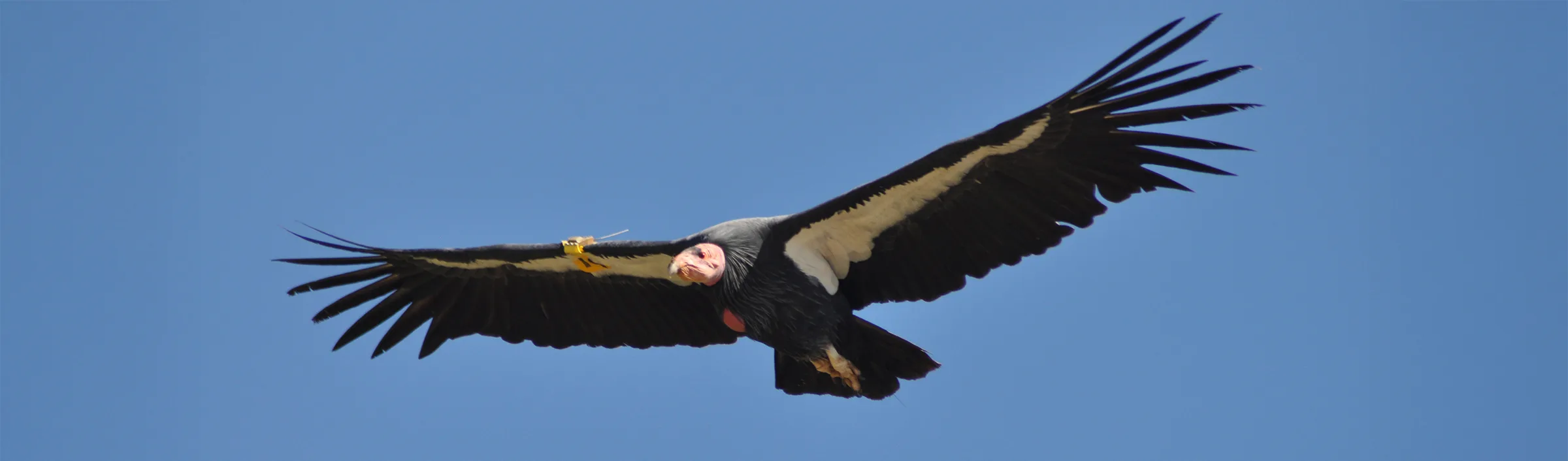
With a wingspan up to 9 ft wide, California condors are the biggest birds in North America. These large birds are mostly black in color with a long, wide white stripe on their underwing coverts. Their wings have a notable long, broad shape and long primary feathers that give the illusion of fingertips. Their beaks are grey, and their eyes are reddish brown. Noticeably, their feet are often white because they urinate on them to cool down (in a process called urohydrosis).
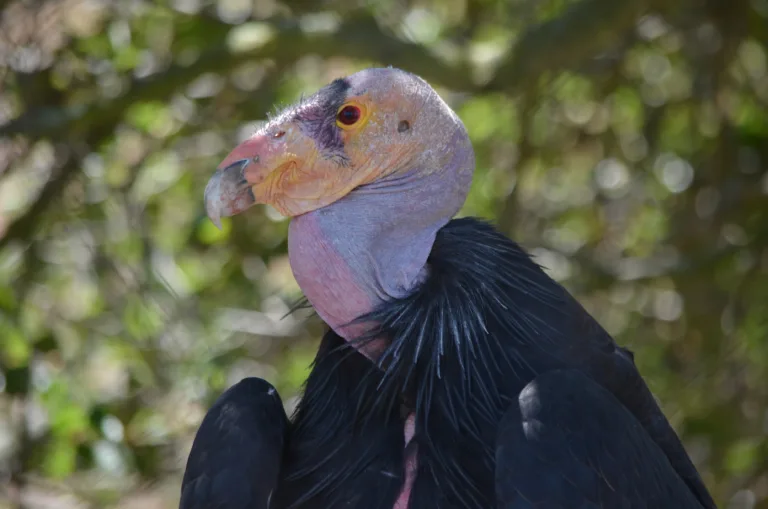
As with other condors and New World vultures, California condors have bald heads and baggy or wrinkly skin. One of the theories as to why their heads are bald is that it could help keep their heads clean of disease when they’re eating carrion. As juveniles, their heads are gray, but this color lightens into a blend of pink, orange, or yellow as they get older.
Habitat & Ecology
As their name suggests, California condors live almost exclusively in California. Historically they used to range from the entire west coast, all the way to Texas and even Florida. They live in a variety of habitats that California has to offer but prefer areas with cliffs and forests. Rocky cliffs and large trees are often used as nesting sites. Open-country scrubland and certain desert habitats are used as feeding grounds. Condors will often travel for miles to find a carcass to feed upon. Because condors feed mostly on carcasses, they help break down decomposing matter, as well as help rid the ecosystem of disease.
Diet
California condors are scavengers. They wait for other animals to make a kill, then go in for the leftovers. They tend to prefer fresh kills and look for larger carcasses like deer, cattle, sheep, and marine mammals. On occasion, the remains of marine mollusks and barnacles have been reported to be found in their nests, most likely for an increase in their calcium intake. They have very large crops, which is a specialized pouch at the end of their esophagus, that can hold up to 3 pounds of food. This large crop means they could go several days without eating.
Behavior & Reproduction
California condors are diurnal, meaning they are active during the day. Condors are rarely the first to discover a carcass. Instead, they follow the activity of other scavengers, such as ravens or vultures, to find food. California condors have been documented travelling up to 112 miles in one trip to find food. Sometimes they fly between 5-8 hours a day depending on the season. When arriving at a carcass, they displace most other scavengers since they are much larger.
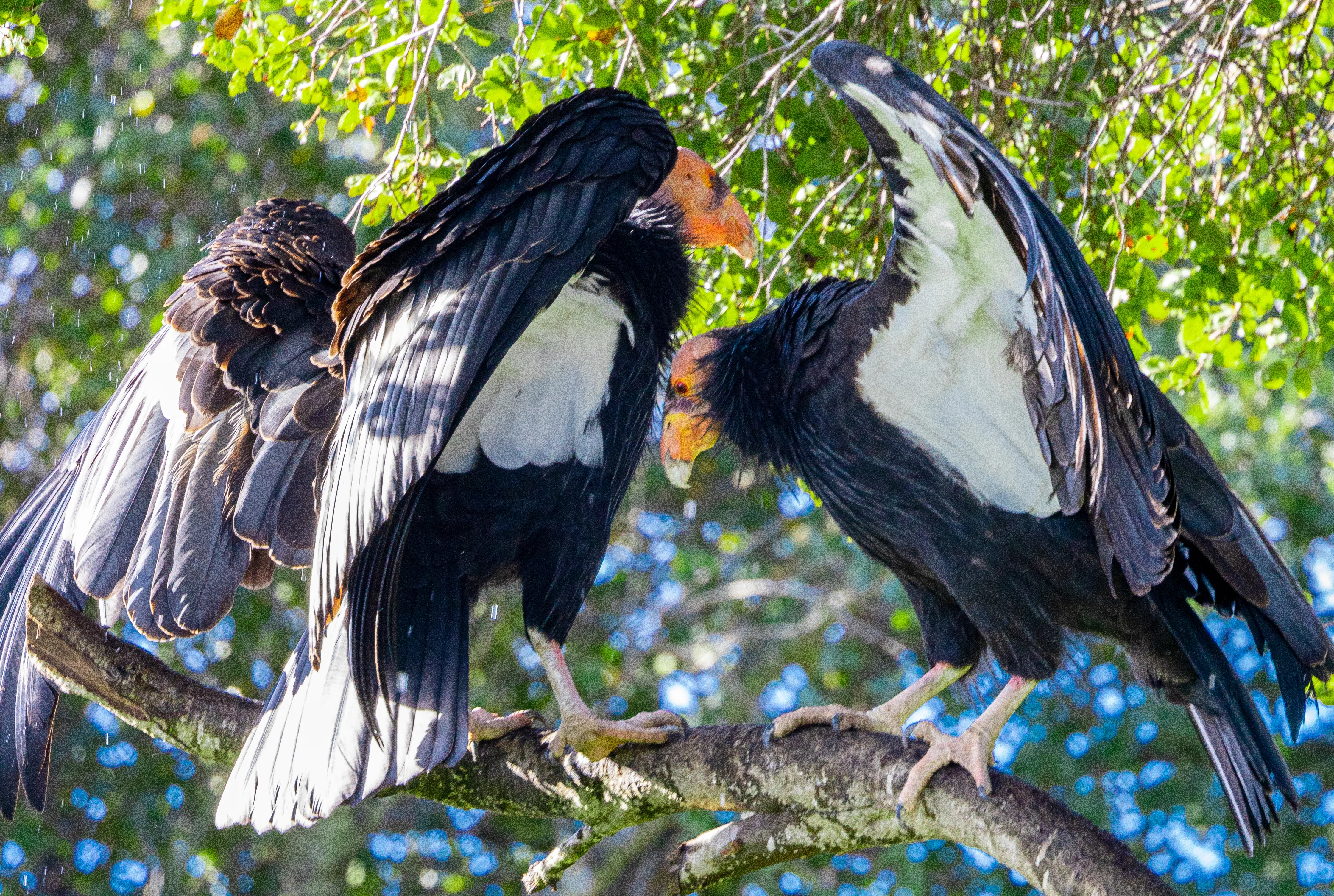
California condors do not have a syrinx (voice box) like most other birds. They communicate mostly by using their body posture. They can live in fairly large groups and spend most of their time around other California condors. Prior to their extinction in the wild, California condors would roost in groups of about 20 birds.
Generally, condors reach sexual maturity at 6 years. They are generally monogamous and seek out the same partner every year. No nests are built, instead partners scrape out a rocky outcrop or cliff to lay their eggs. California condors have very low reproductive rates, only producing one offspring every other year. Gestation lasts a little under 2 months and chicks fledge at 6 to 7 months.
Wild: 20 years, Protected Care: up to 60 years
February-April
1
2 years
Conservation
California condors are listed by the IUCN as Critically Endangered. Unfortunately, this is a direct result of human encroachment. The leading cause of death among condors is lead poisoning. Toxins such as lead tend to become more concentrated as they move further up the food chain. Furthermore, condors are especially prone to feeding on carcasses that may still have ammunition in them. Lead bullets fragment into hundreds of tiny pieces when they strike an animal. Ingestion of lead fragments can lead to paralysis, seizures, blindness and sometimes death. This is a huge threat to all raptors, but with California condors’ low reproductive rate, it has hit them especially hard.
In 1987, there were only 22 California condors living in the wild. The decision was made to bring them all into managed care to implement a breeding program to save the California condors. As of 2022, there are now 550 condors. More than half of these condors have been released and live in several habitats across California, Arizona, Utah, and Baja California. In 2019, California passed a new ban on lead ammunition state-wide. With this policy in place, the future of the California condor looks bright.
Fascinating Facts
- California condors came back from the edge of extinction! There were once only 22 condors left in the wild due to DDT and lead poisoning. There are now over 300 wild condors, and 200 in protective care.
- If their faces are pink, why are their feet white? This is because condors (along with vultures) urinate on their legs to cool down! As their waste evaporates, the blood circulating through the feet cools down and can lower their whole body temperature.
- California condors can soar for hours on end without beating their wings!
About Our Animals
The Oakland Zoo currently has 5 male condors. Two are permanent residents, two are temporary residents, and the last is a seasonal visitor. Kanno and Hiinepa came from other zoological facilities where they were deemed non-releasable. They now live at the zoo permanently to act as ambassadors for their species. Paaytoquin is our seasonal visitor. He works part of the year at the Yurok tribe’s Northern California Condor Restoration Program facility. Paaytoquin has an important job there as a “mentor bird” to juvenile California condors that are still learning the ins-and-outs of being a condor.
Our newest residents are youngsters Xulpep and Wewey, They will live at the Zoo until they are old enough to become part of the breeding program to save their species.
Our Role
Oakland Zoo works with other zoos and institutions to contribute to the California Condor Recovery Program. Other institutions, like Ventana Wildlife Society, regularly test wild condors for lead. Oakland Zoo works to provide chelation treatments for lead poisoning. The Oakland Zoo Veterinary Hospital also treats condors sick with other ailments, or injured condors.
Support for Ventana Wildlife Society: Funds support the resources to be able to test all the condors in their areas that are vulnerable to lead poisoning twice a year. Oakland Zoo supplies food for their wild populations. Oakland Zoo provides field video cameras for biologists to easily monitor health and locations. Plans include campaigns to inspire hunters to move to copper bullets.
Learn more about how we are Taking Action for condors here.