Guira Cuckoo
Least Concern
Open woodlands
South America
Diurnal
Carnivorous
Tropical Rainforest
Characteristics
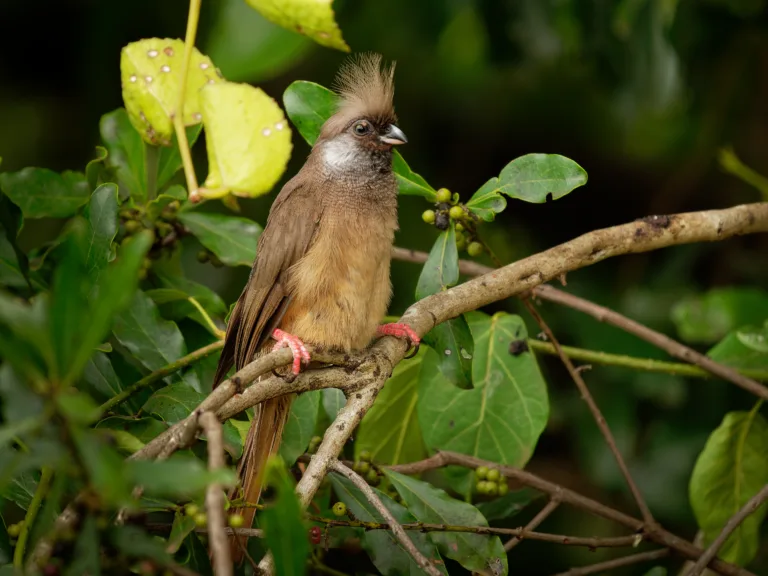
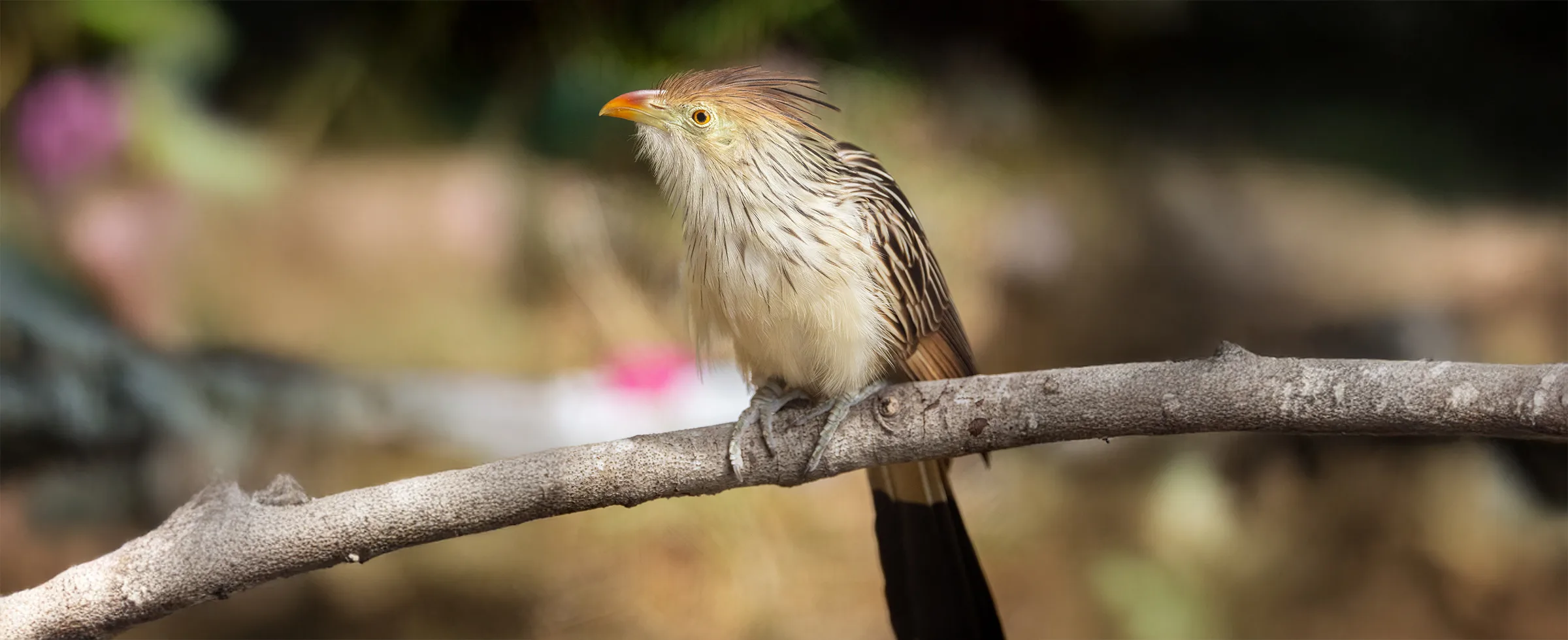
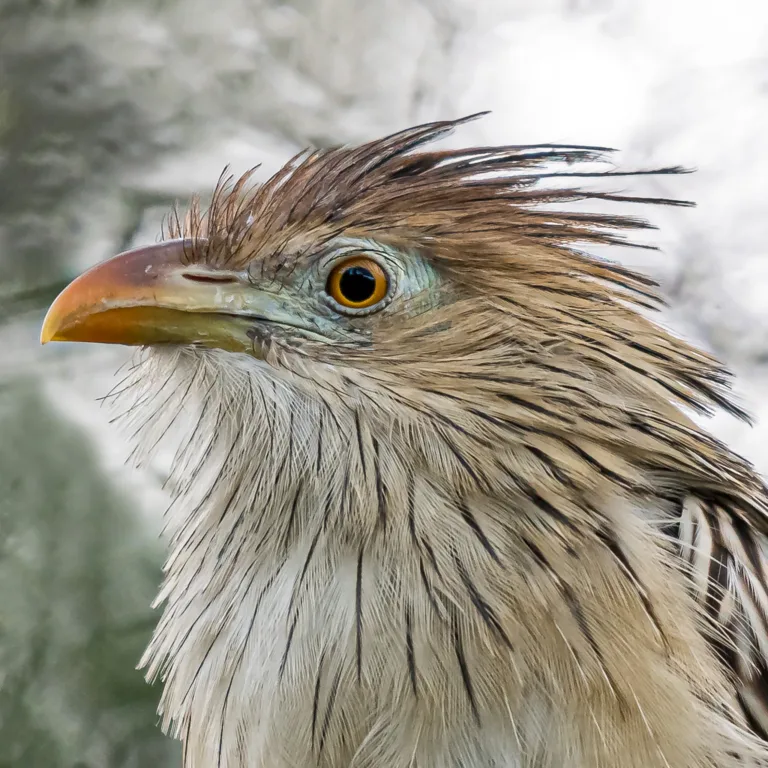
Guira cuckoos are medium-sized birds that, on average, stand 15 inches tall, not including their 8-inch tails. At most, these birds weigh a third of a pound. Guira cuckoos have a spikey or scruffy appearance due to their long, distinctive feathers that stick up on their head and neck. Their heads are a sandy red color, with their body being more tan. Their wings and tail feathers are dark brown with tan streaks. They have yellow-orange eyes.
Habitat & Ecology
Guira cuckoos are native to South America. They can be found on the eastern side ranging from Brazil and Bolivia all the way down to the northern parts of Argentina. They can live in a variety of habitats but prefer ones that are more open. This can include scrub woodlands, scrub savannas, pastures, and even coastal dunes. They are a non-migratory species and can be found throughout their range year-round.
Diet
Guira cuckoos are carnivores. Oftentimes they will feed on insects and amphibians. They are also known to feed on smaller reptiles, eggs, and even the chicks of smaller bird species.
Behavior & Reproduction
Guira cuckoos are active throughout the day. During the early mornings, these social birds will often huddle with flock mates and sunbathe to get ready for the day. Their flocks average 6-8 individuals, but there have been flocks documented with up to 20 individuals. Flock mates engage in allopreening, which is when two birds reciprocally preen each other.
The breeding season is variable. While they usually nest in the rainy season. However, in Brazil, they nest in the dry months. Courting takes place on the ground, where males will dance around the females with their wings and tail fanned out and their crest raised. Guira cuckoos are promiscuous, meaning that males and females will both mate with multiple individuals. They nest communally high up in thorny trees, in large open cups made of sticks and lined with leaves. Usually, flock mates will take turns watching over a nesting site while the others forage for food.
As many as 20 eggs may be laid in a single nest, though each female will contribute only 5-7 on average. Even though these birds nest communally, there is still intense competition to ensure the survival of their own offspring. When laying eggs, if a female finds eggs already laid in the nest, she may toss a few of them out in order to lay her own. This can result in a survival rate as low as 50%. Even after hatching, hatchlings only have a 26% chance of survival as the fierce competition continues.
Protected Care: 13 years
May-August or August-December
5-7
1 year
Conservation
Guira cuckoos are currently listed as Least Concerned by the IUCN, last assessed in 2016. Their population is considered to be increasing, and they are common in their natural range. Interestingly enough, this species benefits from human disturbances in the landscape, as they much prefer open lands. Clear cutting forests can provide them with even more habitat.
Fascinating Facts
- Guira cuckoos are not strong fliers. They hop and make short glides most of the time.
- Guira cuckoo is in the same family as the roadrunner, a species found here in California!
- The Guira cuckoo is in the subfamily Crotophaginae, along with 3 other species of birds, all of which give off a strong odor.
About Our Animals
The Oakland Zoo has two Guira Cuckoos, Simon and Theodore! They were both hatched a month apart from each other in 2018 and have lived together ever since. They came to live with us when they were a year old. They are a little hard to tell apart, but Simon has a green band on his leg and Theodore has a pink band. The cuckoo’s favorite food is crickets and worms, and they will make a special noise in anticipation when they see keepers coming.