Hadada Ibis
Least Concern
Wetland
Sub-Saharan Africa
Diurnal
Carnivorous
Flamingo Plaza
Characteristics
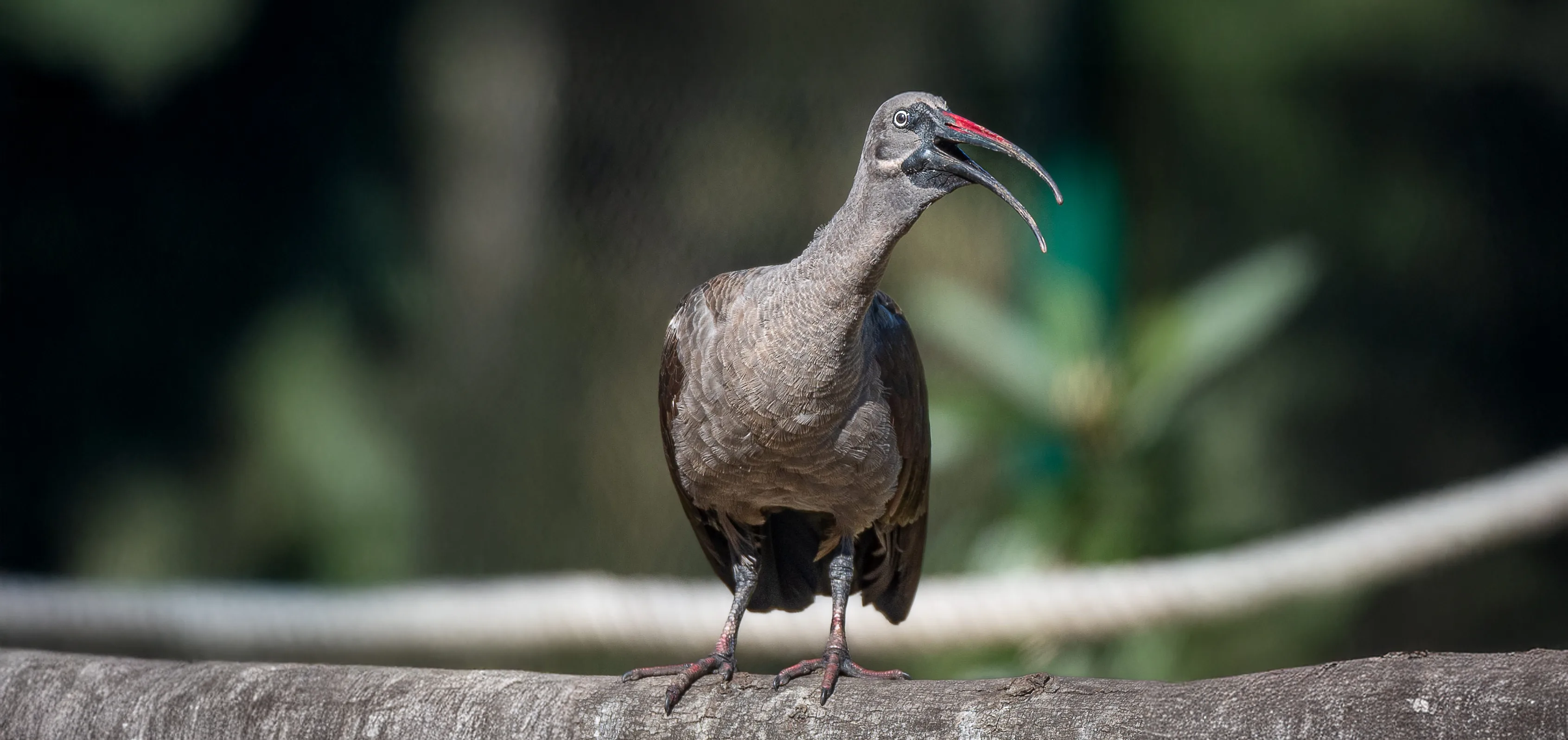
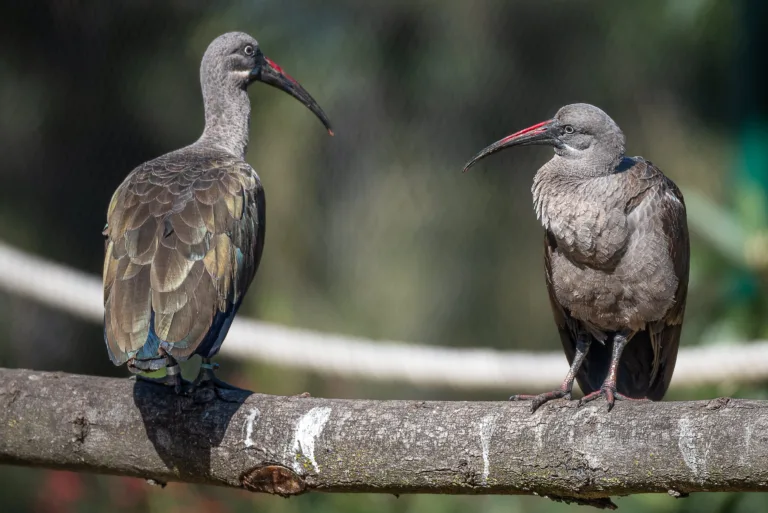
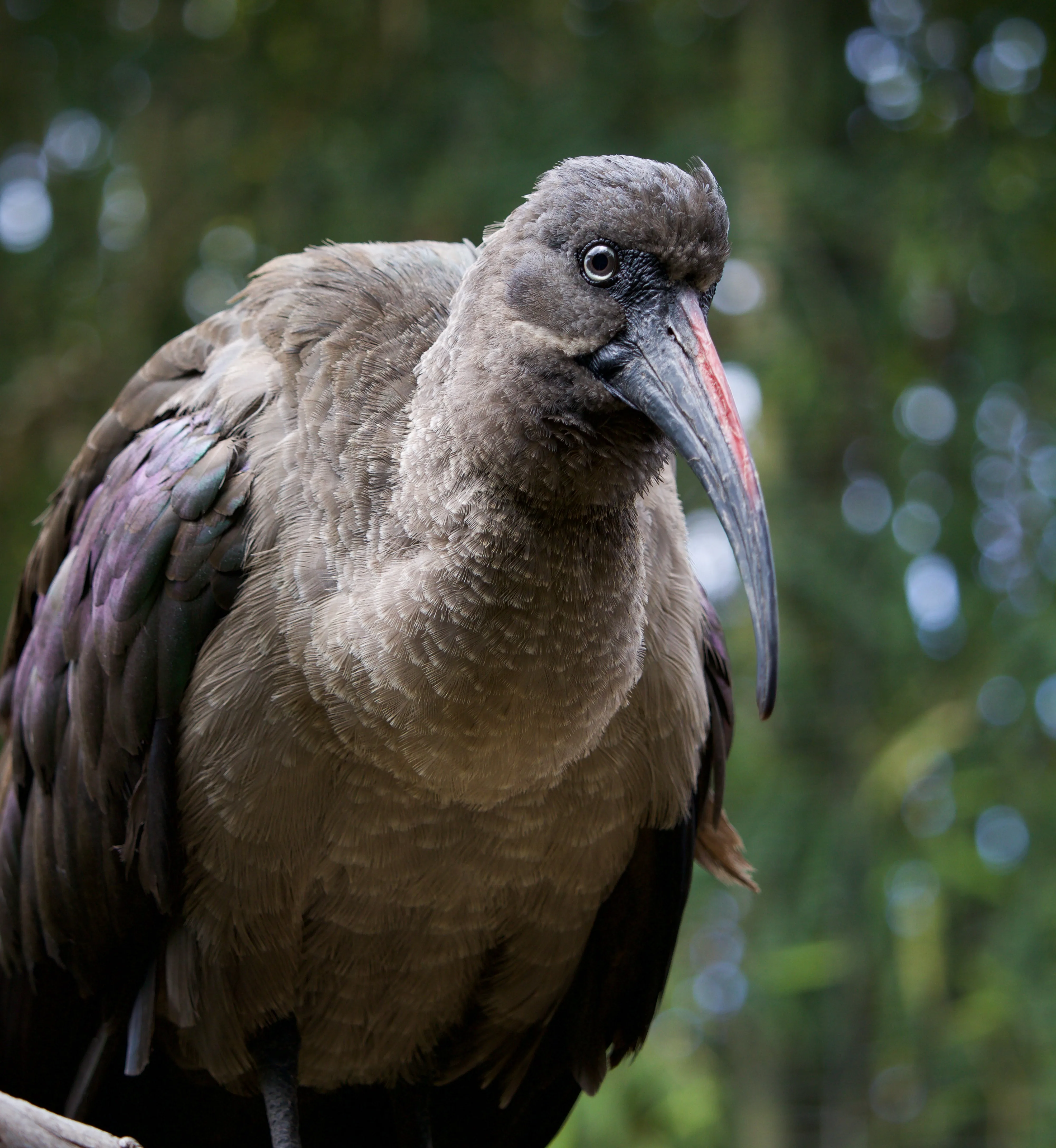
Hadada ibis are large-bodied birds with dark gray and brown colorations, getting lighter in color going up their chest and neck. Their wings are adorned with glossy green-purple feathers. They have a signature white stripe marking their lower cheeks, just behind their bill. They have a long, curved bill that acts as a tool to find their prey in the mud. The bill is dark gray-black with some red on the upper mandible. They have relatively short black legs, and eyes that can be either yellow or brown.
Habitat & Ecology
Hadada ibis live throughout most of sub-Saharan Africa, while avoiding excessively dry regions. Hadada ibis, unlike most ibis, do not prefer dense wetlands. They prefer to stay in wetland edges like wooded areas or grasslands that give them access to streams, rivers, or other bodies of water. These birds are also known to inhabit cultivated land, like playing fields or gardens. Because of how they feed, probing the mud and dirt with their bill, the Hadada Ibis helps to aerate the soil.
Diet
Hadada ibis are carnivorous. They feed mostly on fish and small invertebrates, like insects, snails, centipedes, and crustaceans. Due to such a large quantity of their diet coming from insects, Hadada ibis play an important role in keeping their populations stable. Occasionally they hunt small lizards and amphibians. Hadada ibis are also not shy about scavenging any carrion they can find.
Hadada ibis mainly hunt in the grass or soft ground. They walk around plucking up small invertebrates from the grass or probing their long beaks into the ground. They have two different methods for catching prey, a “bill grab” and a “bill snap.” The bill grab is when the adada ibis use their bills like tweezers to pick up immobile prey. The bill snap is a rapid closing of their bill as a reflex reaction to tactile stimulation, such as their bill encountering prey.
Behavior & Reproduction
Hadada ibis are social and spend their days in pairs or small flocks of 5-30 individuals. They communicate with loud, raucous calls. They make noise most often at dawn and dusk but will still vocalize during the day during flight or when alarmed. They are sedentary birds, reusing the same nesting spot year after year. They may venture a few kilometers away to find food but will always make it back to the same roosting spot. When coming together to roost at night, hadada ibis may gather in groups of up to 100.
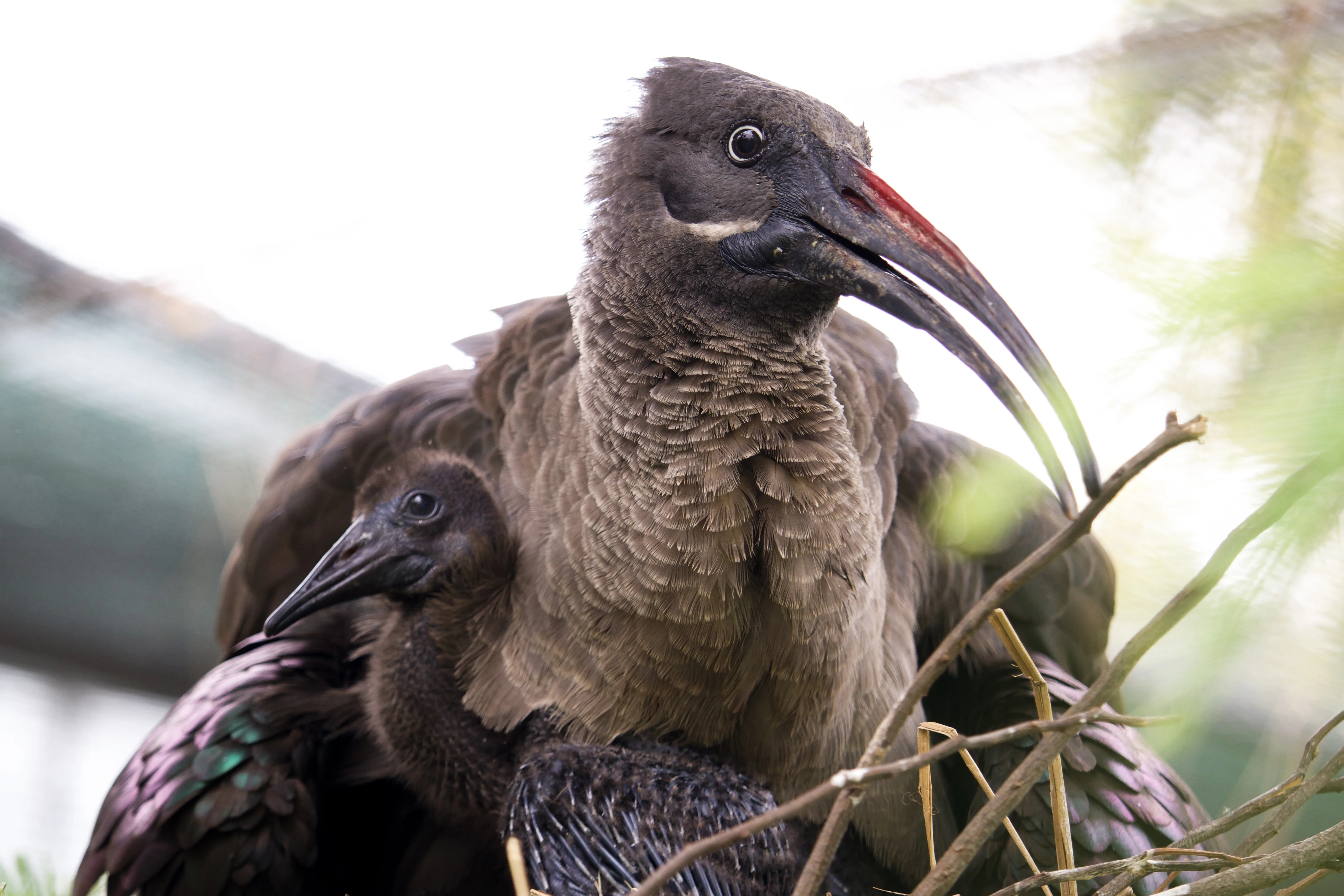
Hadada ibis do not mate for life. However, they will stick with their chosen partner throughout the breeding season. They work on their bond throughout the season by performing mutual preening and bowing displays. Males gather nesting materials to present to the female and they build their nests in isolation out of twigs, greenery, lichens, and grasses. These nests can be found near or above water such as in trees or telephone poles. Nests get reused year after year, though not always by the same birds. Both male and female ibis care for their young and take turns incubating their eggs for 28 days. Chickens learn to fly at 40 days, and are fully independent by 60 days.
Protected Care: 16 years
July-January
2-3
1 year
Conservation
Hadada ibis are currently listed as Least Concern on the IUCN Red List. Because of their proximity to humans, and nature to feed in gardens and other agricultural lands, they were nearly hunted to extinction in the early 20th century. After several efforts to gain legal protection for them, they made a tremendous comeback. There are now an estimated 100,000-250,000 individuals in the wild.
Fascinating Facts
- Hadada ibis are named after the call they make! They make a loud three- to four-note call that sounds like “ha-da-da.”
- The glossy feathers on their chest and shoulders may look iridescent, but this is not due to their pigment. The way the light scatters when it is reflected off the keratin in the feathers produces this iridescent sheen.
- Hadada ibis are sometimes confused with the glossy ibis, a similar dark-colored bird of similar shape and size. However, the hadada ibis have that signature “mustache” to help tell them apart.
About Our Animals
Oakland Zoo currently has three resident hadada ibis, 2 males and 1 female. Our hadada ibis love mealworms and aren’t shy about coming right up to take them. The special cells on the tip of their beaks allow them to be extra sensitive to motion and they are the first to notice when the keepers drop anything!