Hamerkop
Least Concern
Wetland
Sub-Saharan Africa
Diurnal
Carnivorous
African Savanna
Characteristics
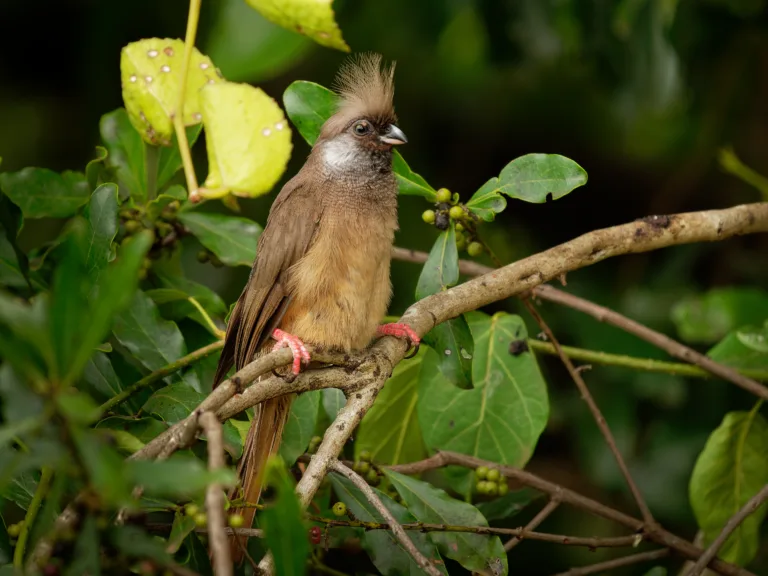
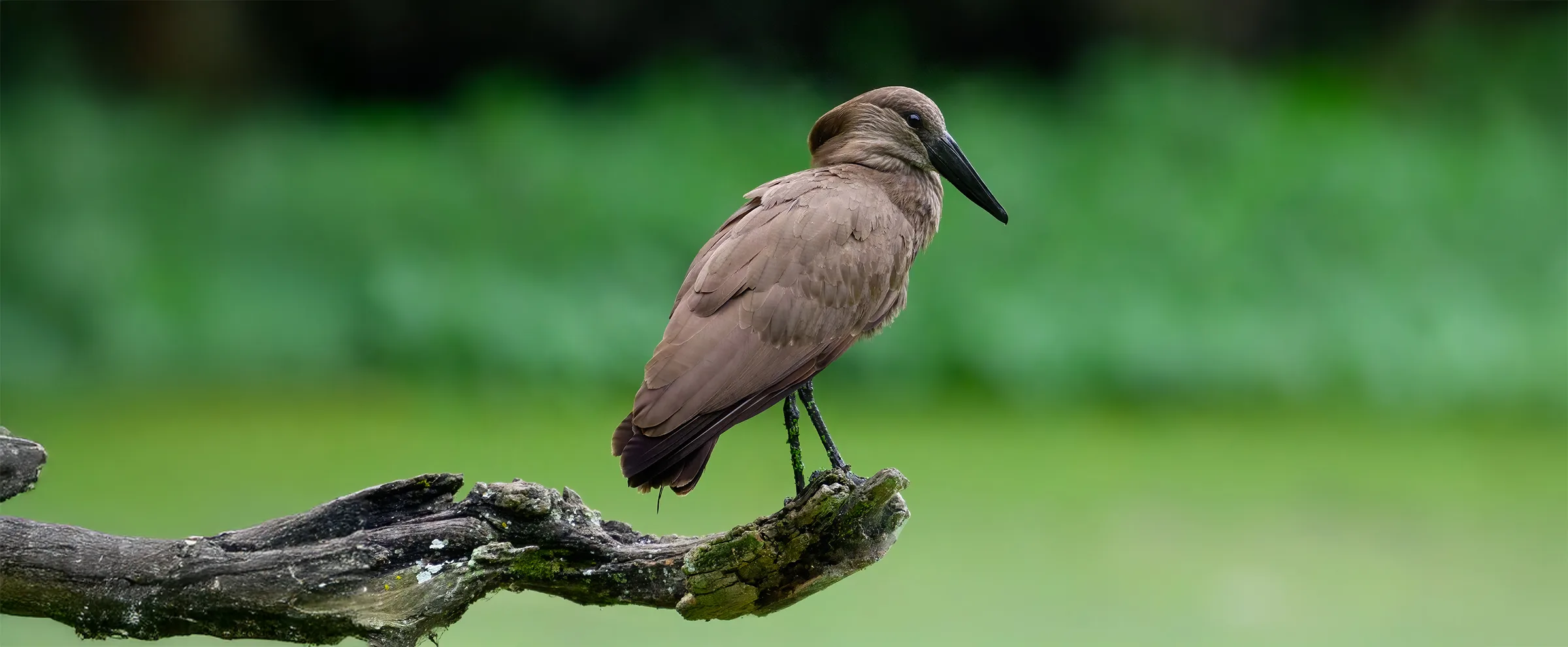
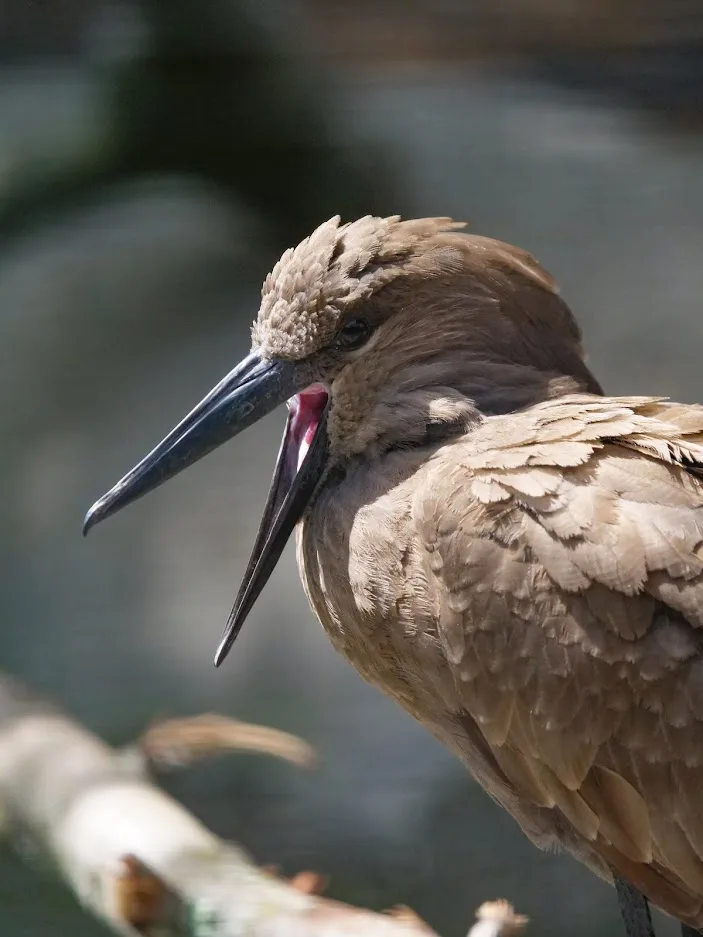
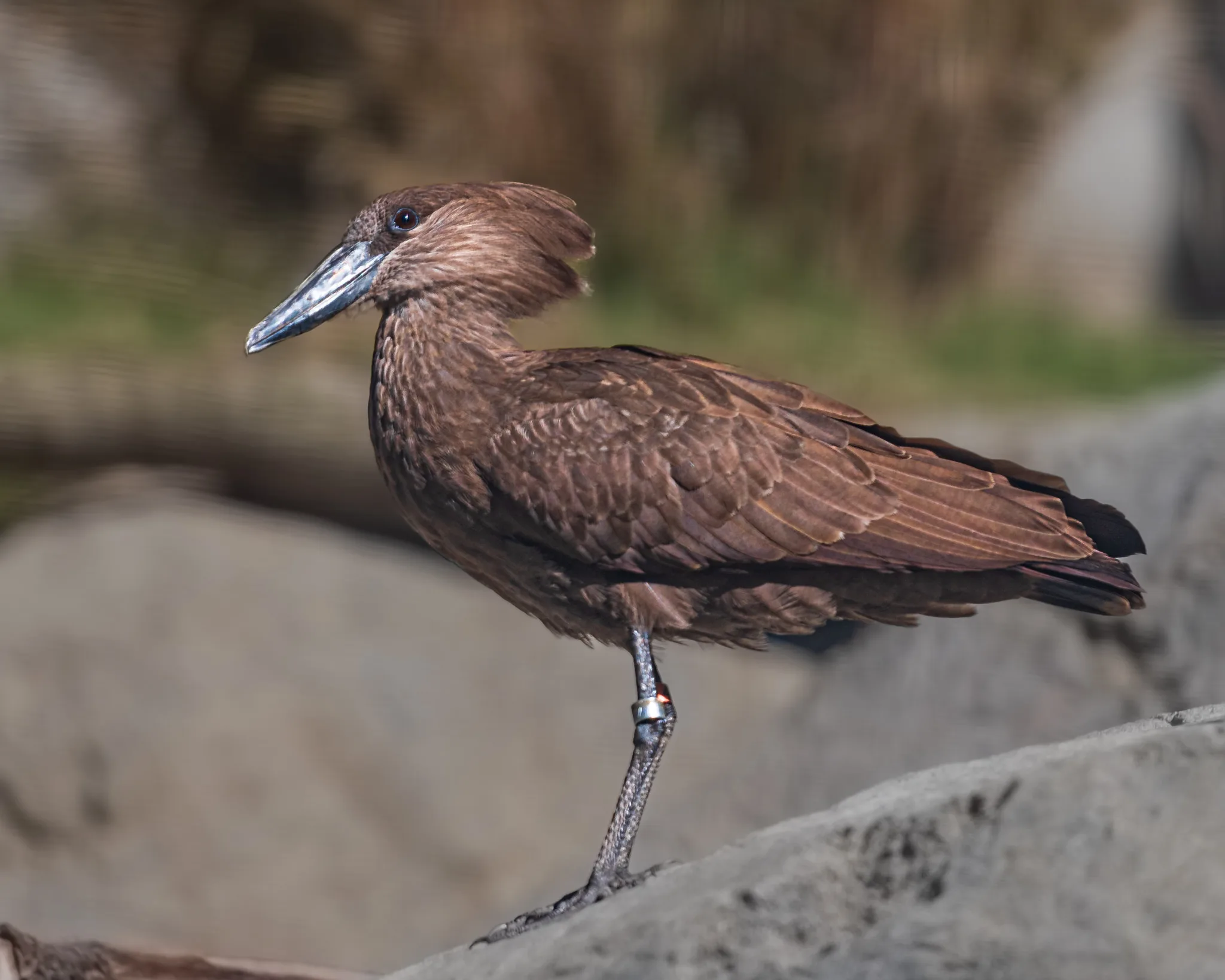
Hamerkops are named for their unique head shape, which resembles a hammer thanks to a pointed wedge of feathers on the back of the head. Their large beak is flattened in shape and has a small hook at the end of the upper mandible. These are the smallest African storks. Females weigh around 16 oz. Males are typically larger at 19 oz. Both genders grow to about 20 inches in height and display solid, dusky brown feathers. These wading birds have long, bare legs with partially webbed toes that aid them in hunting in shallow waters. Their long bills and necks allow them to pluck prey out of the water without submerging their heads.
Habitat & Ecology
Hamerkops are widespread over central and southern mainland Africa, as well as Madagascar and a narrow strip in the southwest of the Arabian peninsula. The Scopus umbretta minor subspecies is restricted in range to coastal areas of West Africa from Senegal to Nigeria, while the S. umbretta umbretta subspecies is much more widespread and occurs from the Arabian peninsula to the Western Cape and on Madagascar.
Hamerkops typically inhabit wetlands, particularly riparian areas in forests and woodlands. However, they can occasionally be found in more arid semi-deserts. Their large nests are utilized by many other members of their ecosystem in a variety of ways. Smaller birds, such as weaver birds, mynas, and pigeons will sometimes attach their own small nests to the main nest. Unused nests are quickly taken over by other hole-nesting birds like the Egyptian Goose or Knob-billed Duck. Some more aggressive birds such as the Verreaux’s Eagle Owl and Gray Kestrel will sometimes evict a Hamerkop pair from an active nest and take over.
Diet
These carnivorous birds feed on frogs and tadpoles, small fish, small mammals, and aquatic invertebrates. They forage for food in shallow water, where they may stir the water with their feet or flap their wings to startle prey. Hamerkops can also hunt in flight, dipping down to grab a fish out of open water. Their distribution is closely correlated with that of the Xenopus genus of frogs, suggesting that they are reliant on Xenopus as a major food source.
Hamerkops are very resourceful in their hunting techniques. They are known to hunt while perched on the back of a hippo, giving them access to deeper water than they cannot wade in. They will also follow a cattle or buffalo herd as they graze, preying on the insects that get flushed out.
Behavior & Reproduction
Hamerkops are not considered migratory, but some pairs will move between adjacent habitats seasonally. Nesting and breeding behavior will occur in riparian areas, and more arid habitats can be utilized during non-breeding times. Hamerkops are monogamous in their breeding behavior, but are often found congregating in groups of 8-10 individuals outside of the breeding season. Groups can occasionally reach over 50 individuals.
Individuals will gather near nesting sites for social courtship displays, where many birds start calling all at once while running around each other in circles with crests raised and wings fluttering. False copulation may occur during these displays, but true mating does not occur until a pair has begun building their nest. Once a mated pair has been established, hamerkops are monogamous and will build a massive, domed nest that will be used for several years. The male and female build the nest together, collecting up to 8,000 twigs and other items that weigh at least 25 kg when complete. The enormous cave-like nest is accessed only by a single small, narrow entrance hole. Females lay 3-7 eggs which are incubated for 30 days. The male and female will both feed the chicks until they fledge at about 50 days. Chicks will often continue to return to their nest for two weeks after their first flight, and may roost together in the nest for another month before dispersing.
Wild: 20 years
Variable
3-7
Variable
Conservation
The hamerkop is listed as Least Concerned under the IUCN Red List. Their population is currently stable and neither increasing nor decreasing. Hamerkops are not listed under CITES. The greatest threat to their population is pollution, particularly to wetland habitats. Overuse of pesticides causes the wetland water quality to deteriorate over time and is already causing problems for other wetland species worldwide.
Fascinating Facts
- The hamerkop’s nest is the largest roofed nest of any bird species. It can be up to 2 meters in both width and height and can support the weight of a human.
- Many stories from traditional folklore warn of disaster befalling humans who abuse or destroy hamerkops or their nests. This may be why they are rarely disturbed or hunted by humans.