Superb Starling
Least Concern
Grassland and forests
East Africa
Diurnal
Omnivorous
African Savanna
Characteristics
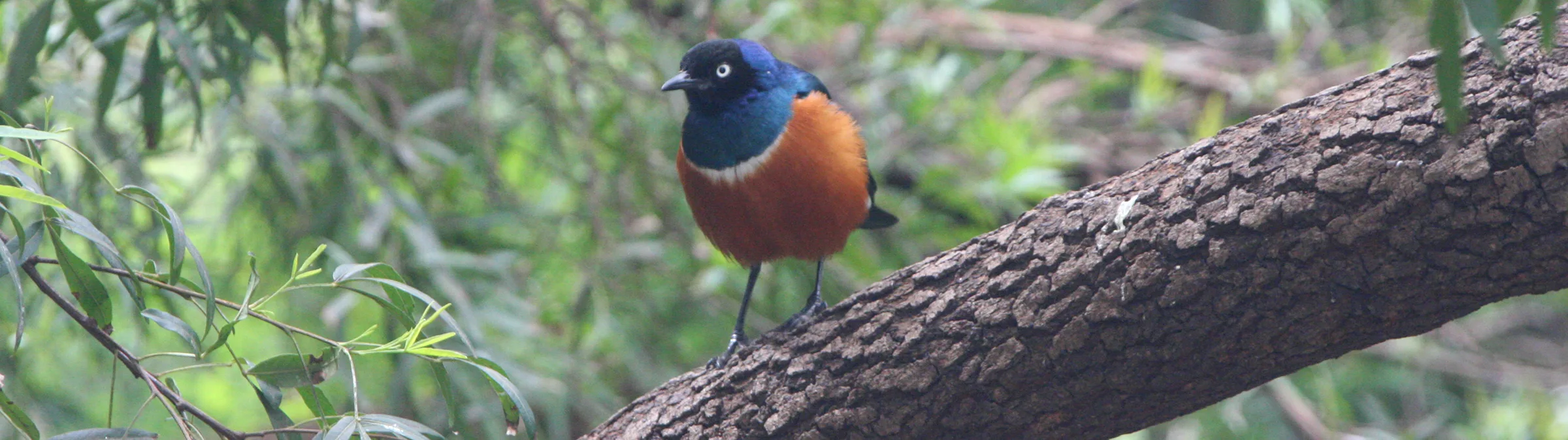
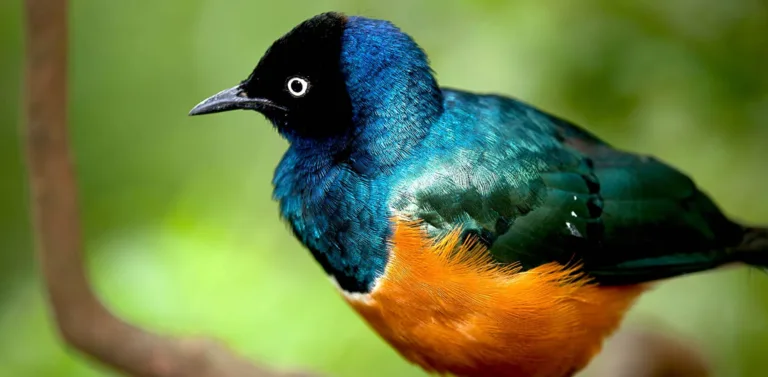
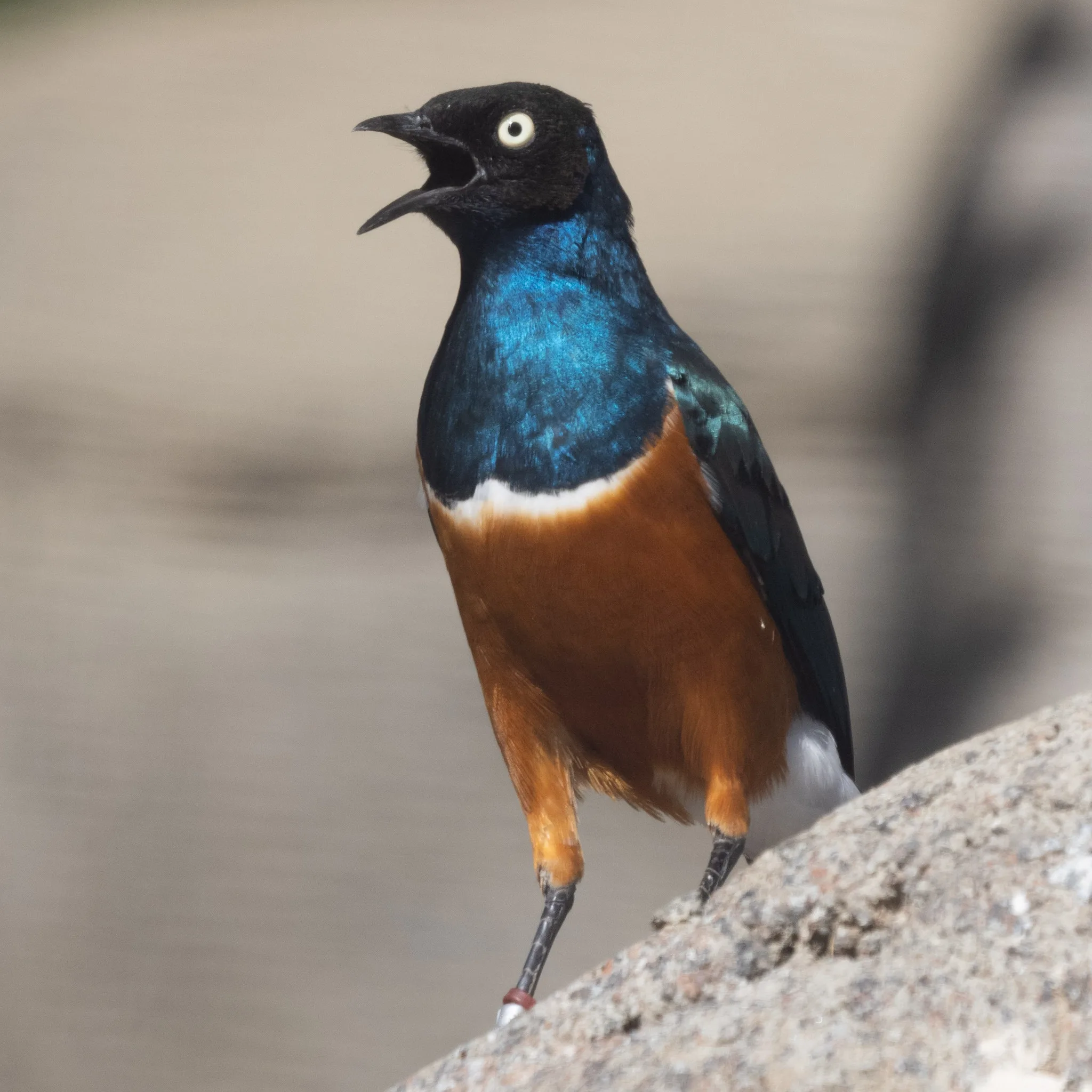
Superb starlings are small but brightly colored birds. They are only 6-7.5 inches long and weigh less than a fifth of a pound. Their heads, beaks and legs are black, and they have pale yellow eyes. Most of their bodies are covered in iridescent blue-green feathers. A thin white stripe separates the glossy blue breast from a red-orange belly. This white distinguishes superb starlings from other starling species. The under-tail coverts and wing linings are white. Before reaching maturity, these starlings have dull colors, lack the white breast band, and have darker eyes.
Unlike most birds where the male is the colorful one, male and female Superb Starlings are equally colorful. This results from them being cooperative breeders, which means that rather than just males competing to breed, females compete as well and therefore have a more intense sexual selection on traits than females from non-cooperative breeding species.
Habitat & Ecology
Superb starlings are native to eastern Africa. They can be found in Ethiopia, Kenya, Somalia, South Sudan, Sudan, Tanzania, and Uganda. They live in dry woodlands and forests, thorn and acacia woodland, scrub grasslands, and around human inhabited areas such as agricultural fields and urban and suburban areas.
Diet
Superb starlings are omnivorous and eat both plant and animal material. Their diet primarily consists of insects, berries, fruits, and seeds. Their strong beak muscles help them forage by probing through the soil to find food.
Behavior & Reproduction
Superb starlings live in family flocks of up to 40 individuals that defend a territory of 0.5 km or more. They are a non-migratory species, though after reaching maturity they may disperse up to 20 km away from their natal group, with females being more likely to disperse. They feed together as a flock and will even form mixed-species flocks with other starlings during non-breeding season.
Ranks within the flock are established during breeding season. The ranks are: pair-bonded breeding pairs, nonbreeding and non-helping individuals, and helping individuals. Pair-bonds usually endure from season to season. However, mate-switching and extra-pair fertilization are not unheard of. Females that engage in extra-pair fertilization from males within their social group gain that male as a helper for her nest, which increases the chances of her offspring surviving. Females that engage in extra-pair fertilization from males outside their social group choose males that have differing traits from their pair-bond, thus increasing genetic diversity in her offspring.
Breeding season is primarily from March and lasts until June during the rainy season but may also occur during a secondary breeding season from October to November during the short rains. Courtship involves small jumps on the ground with the neck stretched out and wings trailing. Breeding pairs choose separate trees in which to make their nests, often in the acacia family near a central feeding ground. Nests are made of grass, woven into dome-like structures with a tunnel entrance, and lined with feathers. Females lay 2-5 eggs that hatch after only 13-15 days of incubation. Males and additional “helpers” in the flock provide most of the care, while females are the first to defend the nest from predators.
Wild: 10 years, Protected Care: 15 years
March- June, second breeding season is October-November
2-5
1-2 times a year
Conservation
The superb starling is listed as Least Concern on the IUCN Red List and was last evaluated in 2016. They are not listed on the CITES appendices. Superb starlings are considered abundant and widespread within their range.
Fascinating Facts
- Starlings are all native to the Old World (Africa and Eurasia) except for the common starling, which has been introduced to Australia and the Americas.
- The superb starling is also a superb flier! The shape of their wings helps them fly swiftly and maneuver quickly. Such agility is helpful in woodlands or to escape predators.