White-faced Whistling Duck
Least Concern
Wetland
Africa and South America
Nocturnal
Omnivorous
African Savanna
Characteristics
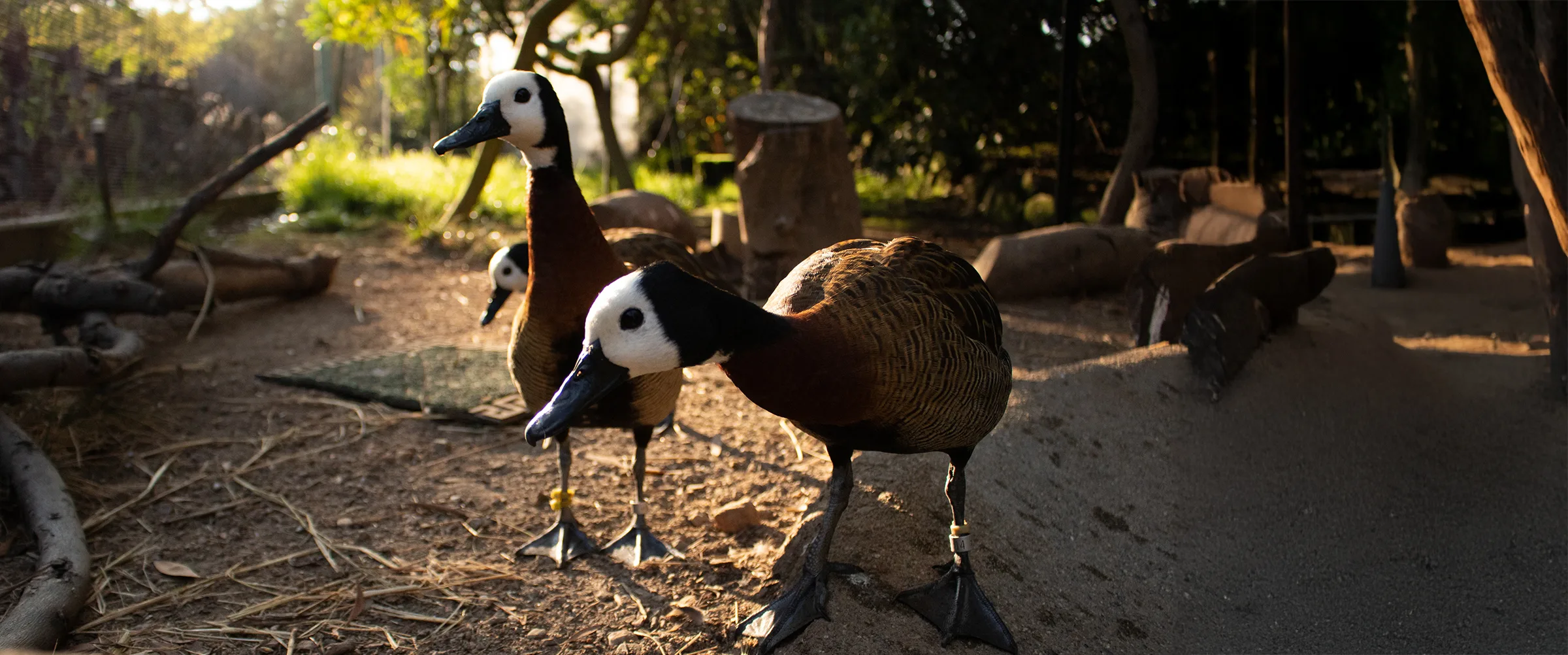
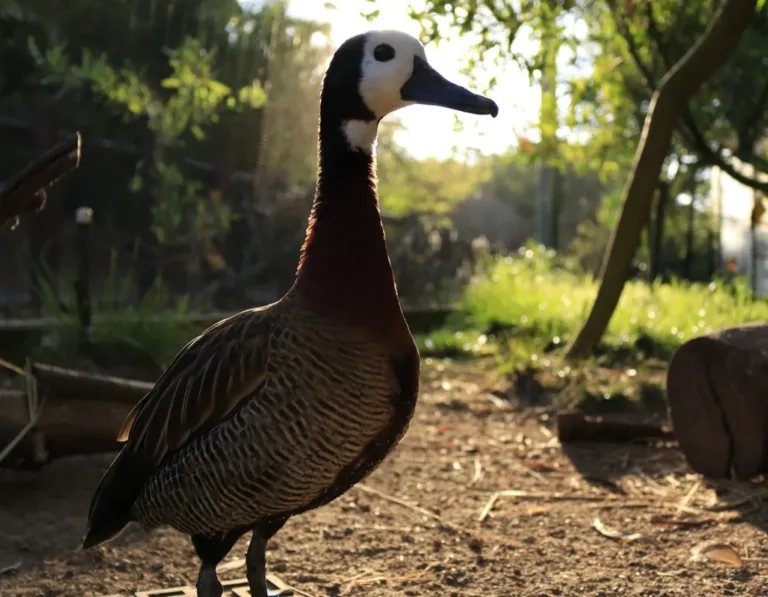
This species is easily distinguished by its black-and-white head and round, reddish-brown chest. They are usually 1-2 pounds and become fully mature at 2 years old. Like most whistling ducks, White-faced Whistling Ducks have long necks, legs, and webbed feet to aid in swimming. This gives them a relatively goose-like look. In fact, whistling ducks are not considered “true ducks” and there are even theories that “true ducks” are more closely related to certain species of geese than they are to other duck subfamilies. This explains why there is so much crossover between duck and goose traits!
Habitat & Ecology
White-faced Whistling Ducks are pretty widely distributed across sub-Saharan Africa. In Central and South America they have a spottier range starting in Costa Rica and extending southeast to Uruguay and Argentina. They live primarily in freshwater wetlands, lakes, marshes, lagoons, and occasionally brackish water.
Diet
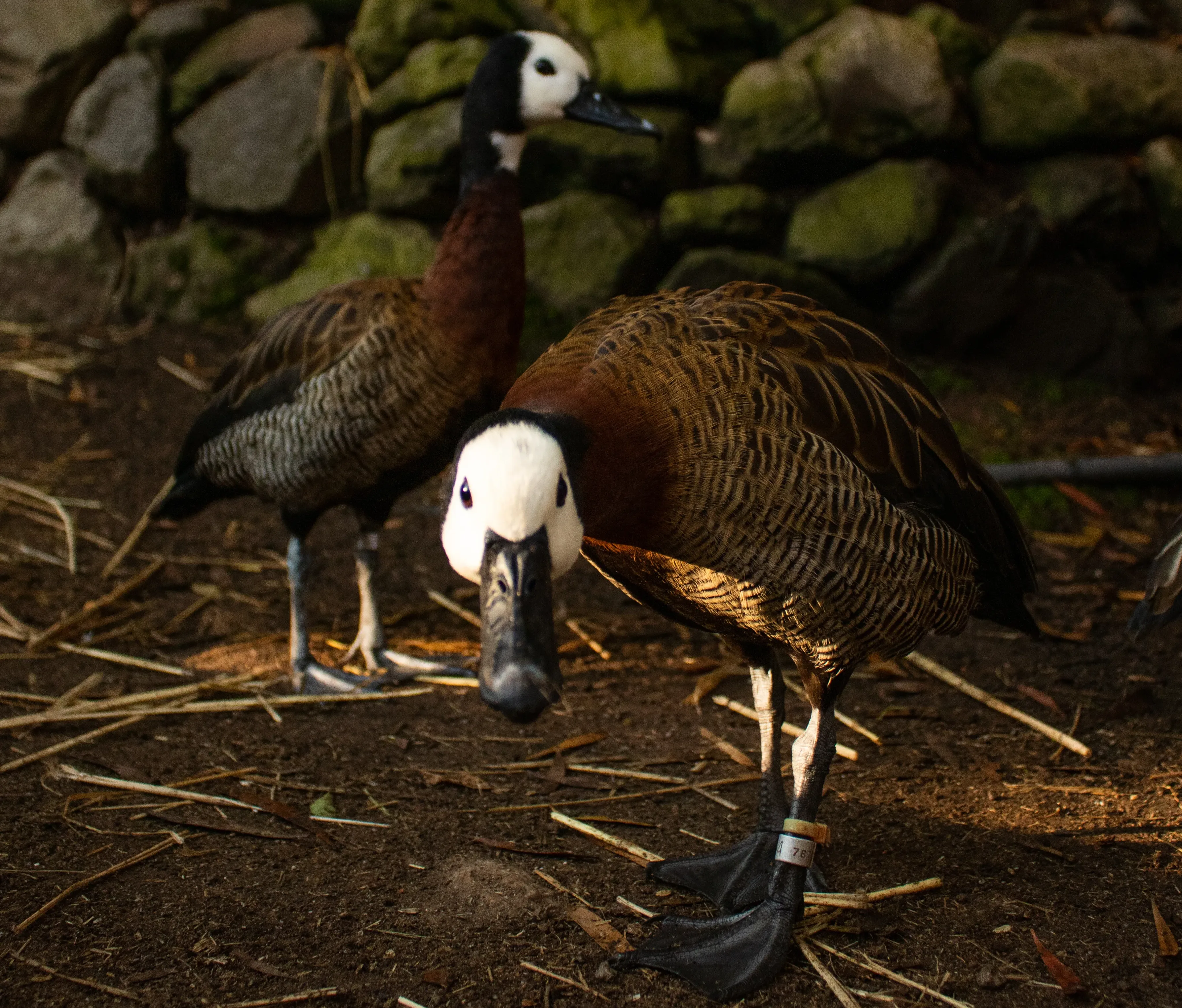
White-faced Whistling Ducks are nocturnal ducks, spending most of their day standing alert in flocks around water. Only at night do these birds come out to forage, sometimes in flocks that can reach up to several thousands of individuals in the non-breeding season. They are omnivorous and feed on a variety of grass, seeds, aquatic plants and aquatic invertebrates, often diving for their food.
Behavior & Reproduction
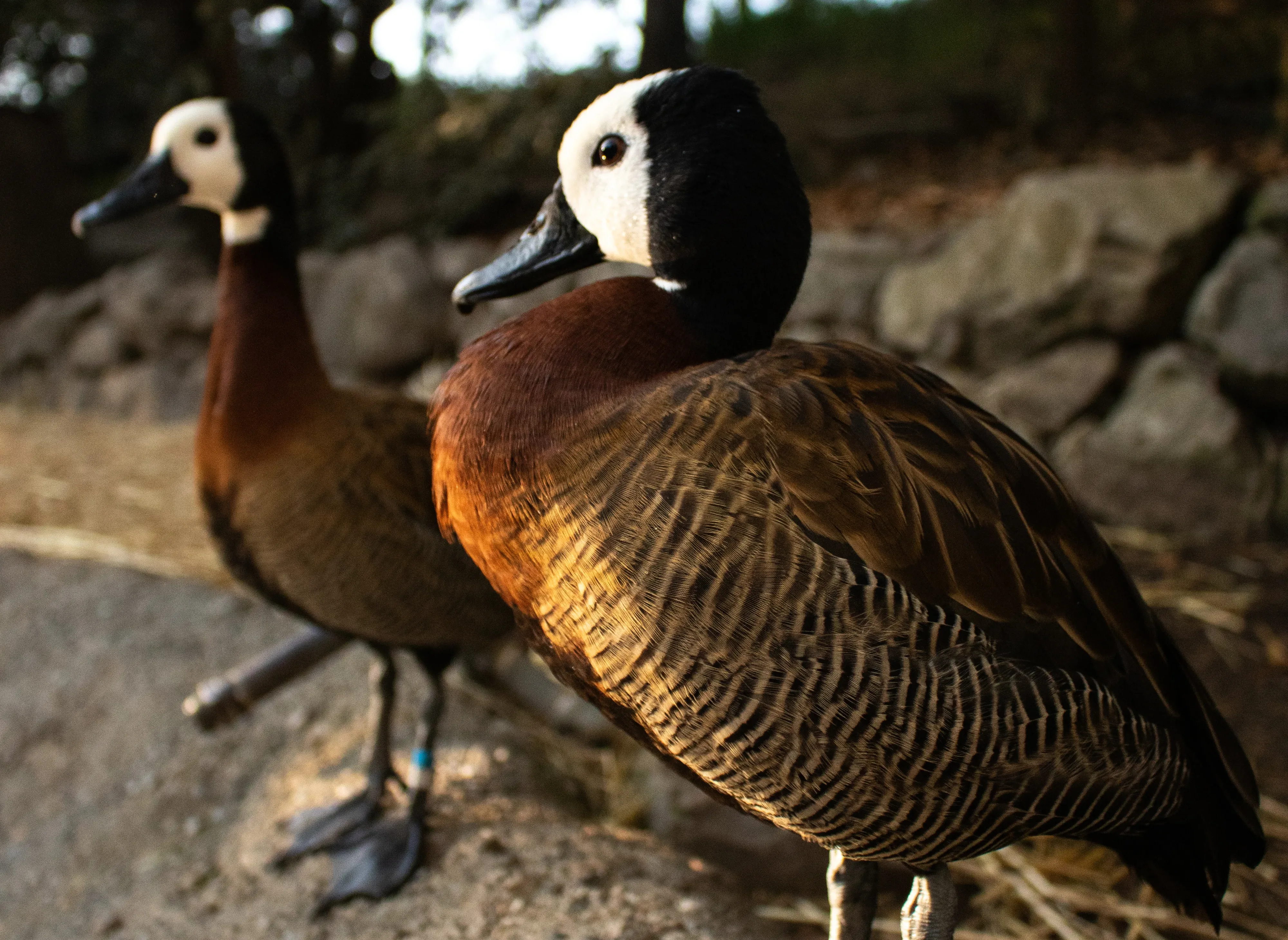
Whistling ducks migrate throughout the year as a result of flooding or changes in food availability. Unlike most waterfowl who favor standing on solid ground, whistling ducks often perch in branches and have earned the alternate name: “tree ducks”. Unlike many other duck species, White-faced Whistling ducks have no sexual dimorphism. Because the males are lacking in flashy plumage to attract a mate, they invest more time in keeping the mate they have. Mating pairs often stay monogamous through several breeding seasons and share parenting roles.
The breeding season coincides with the local rainy seasons. Courtship displays consist of both individuals dipping their bills into the water, followed by the male rubbing the sides of his head on the female’s backside. After mating, the couple takes part in a step-dance in which the two ducks wade side by side in the water with their wings outstretched. Their bond is kept strong even during the non-breeding season through mutual preening.
Nests are typically built in the tall grass or in hollow trees and can be built alone or in a colony. Eggs are incubated for 27-32 days by both parents and ducklings fledge after 8 weeks. After the breeding season, adult birds undergo a flightless molt period that lasts 18-25 days.
Wild: 6+ years, Protected Care: 10-12 years
Rainy season
6-12
4 clutches every year
Conservation
White-faced Whistling Ducks are listed as Least Concern on the IUCN Red List and the population trend is overall increasing.
Fascinating Facts
- There are eight different species of whistling duck, named for their high-pitched whistling contact call.
- Have you ever wondered why ducks waddle? It’s because their short stubby legs are located towards their rear for paddling in the water and it results in a funky little waddle on land.
About Our Animals
White-faced Whistling Ducks, Lindy and Harriet, are always a joy to observe. Lindy hatched in 2009. Harriet is younger and hatched in 2015. This loveable duo has full dominion over the pool in the Savanna aviary and can be seen diving, splashing around, preening each other, and enjoying their daily afternoon naps. They always perk up when the keepers come by and follow them around hoping for an extra worm or finch seed.