Yellow-billed Stork
Least Concern
Wetland
Sub-Saharan Africa
Diurnal
Carnivorous
African Savanna
Characteristics
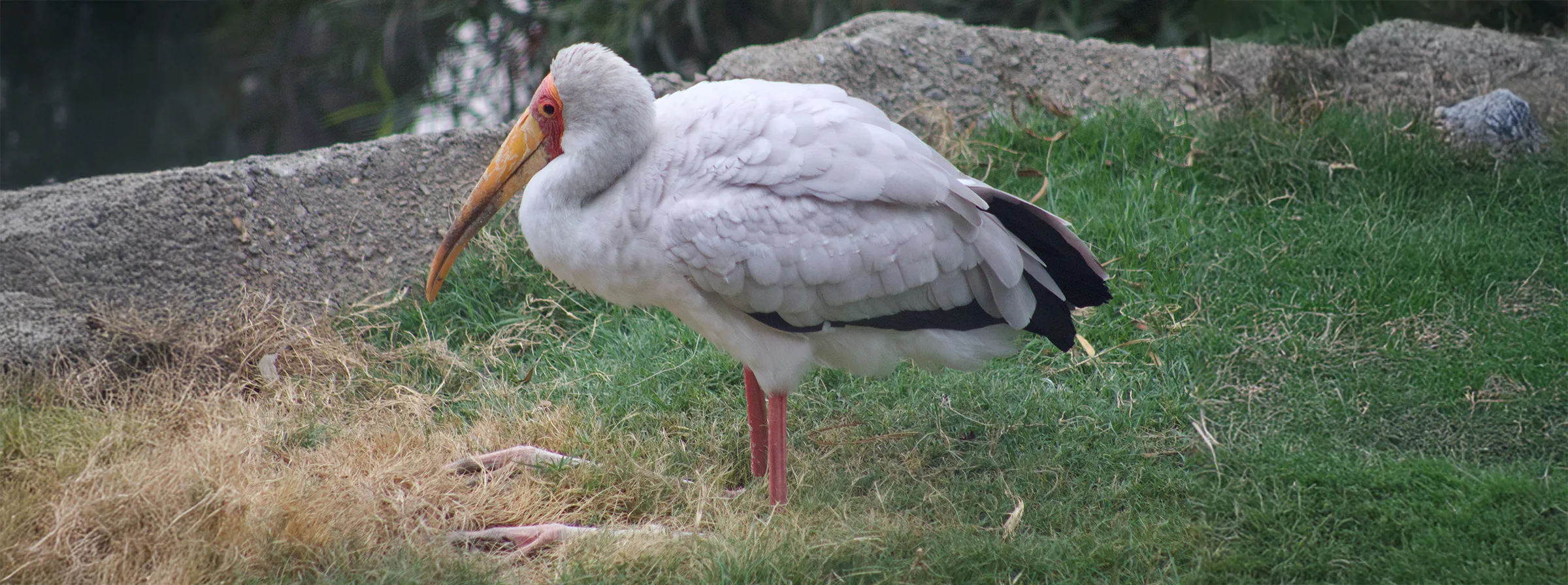
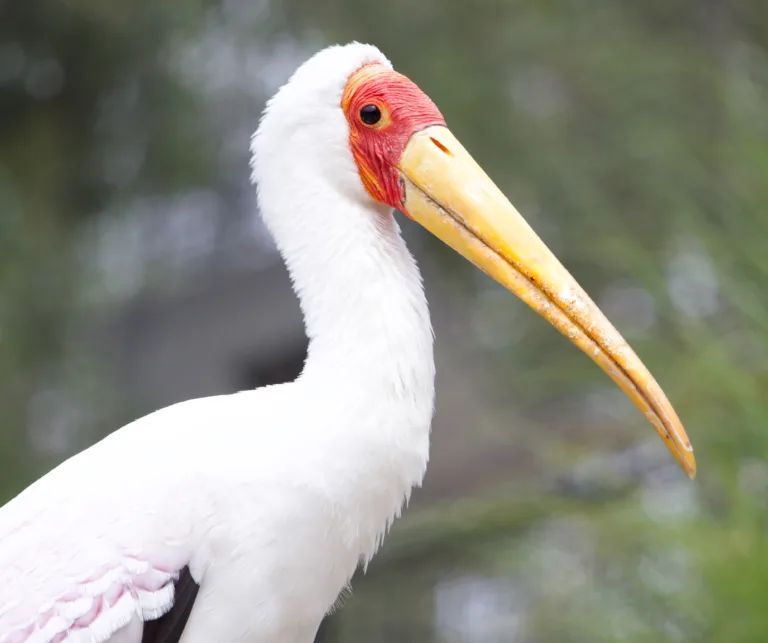
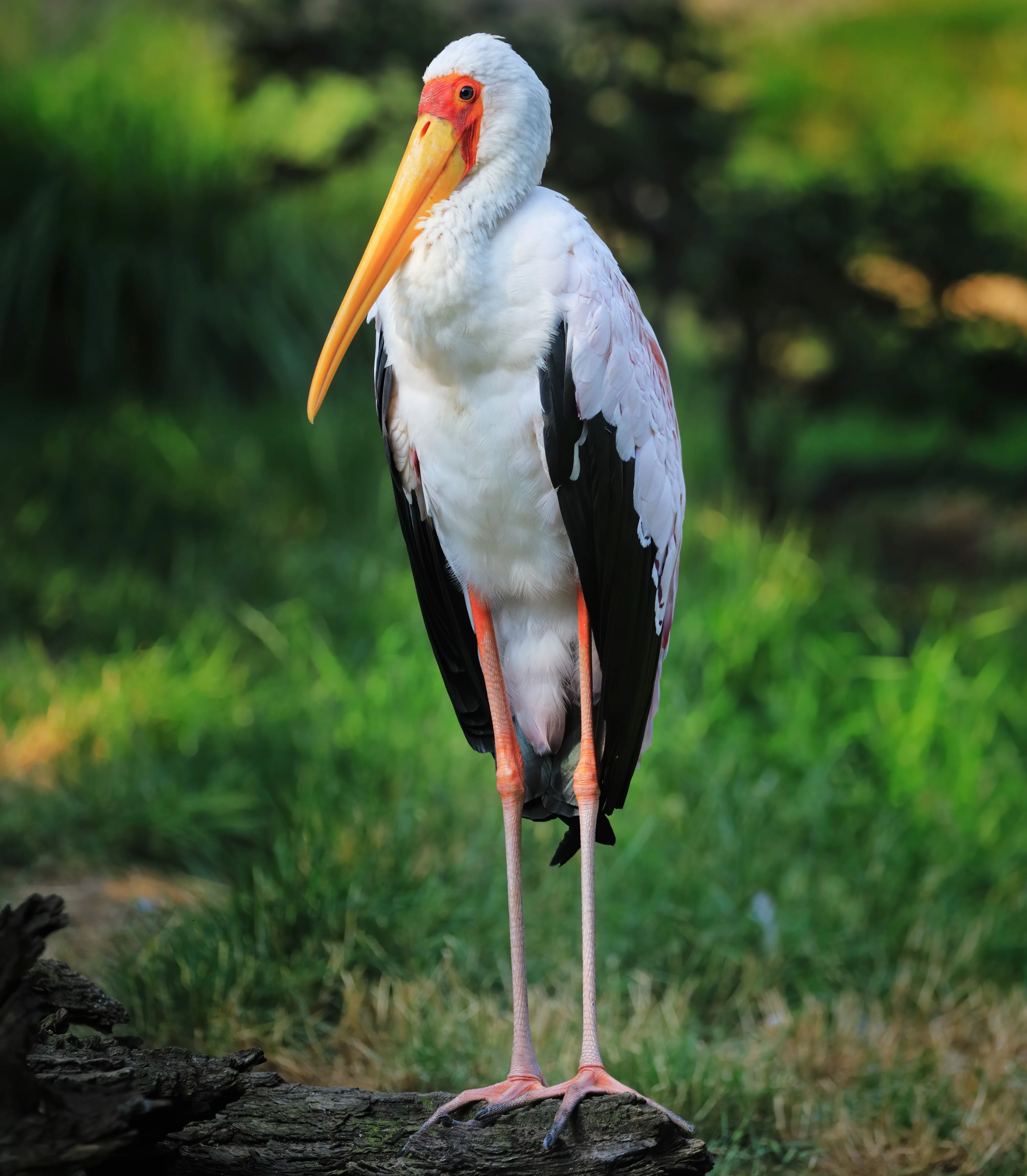
The Yellow-billed stork is over 3 feet tall and has distinctively long pink legs. Their tail and wing edges are lined with glossy black feathers. Most of their body, neck, and head feathers are white. Their face and forehead are bald and deep red in color. Their long thick bill is bright yellow. During the breeding season, their colors become more vivid. Bright pink feathers start to pop up on their upper wings and back. Males are on average slightly larger than females. These storks have a 5-5.5 foot wingspan and weigh 2.5 to 5 pounds.
Juvenile Yellow-billed storks have a very different coloration than their adult counterparts. They hatch with fluffy white down feathers and start growing gray-brown feathers as they age. During their juvenile stage, they also sport an orange face and brown legs and feet. As they get older, they start growing more white feathers and their skin becomes more colorful as well.
Habitat & Ecology
Yellow-billed storks are mostly found in sub-Saharan Africa. They are more abundant on the eastern half of the continent and can also be found in Madagascar. They prefer wetland habitats such as wetlands, marshes, lakes, and mudflats. As wading birds, they stick to areas with water depth of between 3 inches and 1 foot. They avoid flooded areas and dense forests.
Diet
Yellow-billed storks wade through shallow water to forage for their food. They stir up the water with a single foot to flush out the prey and poke their heads in the water, ready to snap their bills at any moment. This position doesn’t allow for getting a good visual of the prey. Instead, storks rely on tactile cues to know when to snap. They will walk along the shallow end, stopping every so often to repeatedly probe the water.
Their diet mainly consists of frogs, small fish, and other small aquatic prey.
Behavior & Reproduction
This species is not a consistent migrator and makes movements within Africa to follow changing water levels and fish availability. Some populations are largely sedentary and do not leave their general territory. Yellow-billed storks are social and flocks can have up to 50 individuals, but they are more often seen in pairs or small flocks. At night, they come together in favored roosting sites to roost communally.
The breeding season occurs when food is most abundant. This can vary depending on region, but generally occurs late in the rainy season or in the dry season. Nests are made of sticks and located up in the trees. During the nesting season, small multi-species communities are formed that include Yellow-billed storks. There can be as many as 10-20 pairs in one tree of differing species. Neighboring nests are usually about 1-3 meters away from each other. Yellow-billed storks lay clutches of 2-4 eggs that are incubated for 30 days. They fledge after 55 days, but don’t reach sexual maturity until 3 years of age.
30-40 years
End of rainy to dry season
2-3
1 year
Conservation
Yellow-billed storks are listed as Least Concern on the IUCN Red List, but with a noted decreasing population trend. Since this species has an extremely large range, they do not approach the thresholds for Vulnerable under the range size criterion. The main threat to the Yellow-billed stork is loss of wetland habitats, including the system of pans, marshes and floodplains on which the birds depend for foraging.
Fascinating Facts
- Storks are nearly voiceless as they are missing a fully developed vocal organ (syrinx). Some species will clatter their bills when they’re excited.
- Yellow-billed storks belong to the genus Mycteria. The members of Mycteria are sometimes called “wood ibises” because their slightly curved bills resemble ibis bills more than other storks.
- The myth that storks are the ones that deliver babies to new parents can be traced all the way back to ancient Greece. The original myth was about the goddess of childbirth, Hera, turning her rival into a crane that stole children. Over time, the myth has evolved into storks delivering children!
About Our Animals
Oakland Zoo has an all-female flock of three yellow-billed storks. Mena and Ellie are our oldest storks and are both over 20. Vibibi is the flock’s youngest and was hatched in 2016. Ellie is quite shy and relies on Vibibi for confidence. They can often be spotted together as Ellie enjoys Vibibi’s presence. Mena is the boldest of the three and has even made friends outside their immediate flock. She can sometimes be found hanging around the Madagascar Sacred Ibis crew!