Red-Lored Amazon
Least Concern
Forest
Central & South America
Diurnal
Herbivorous
Tropical Rainforest
Characteristics
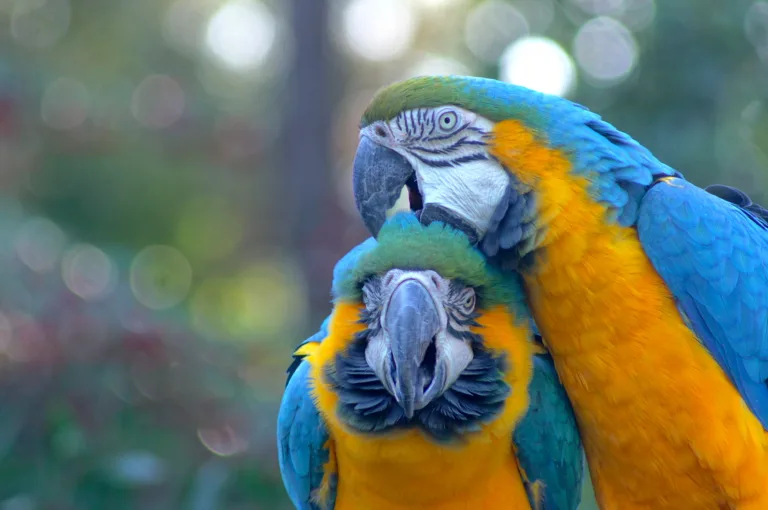
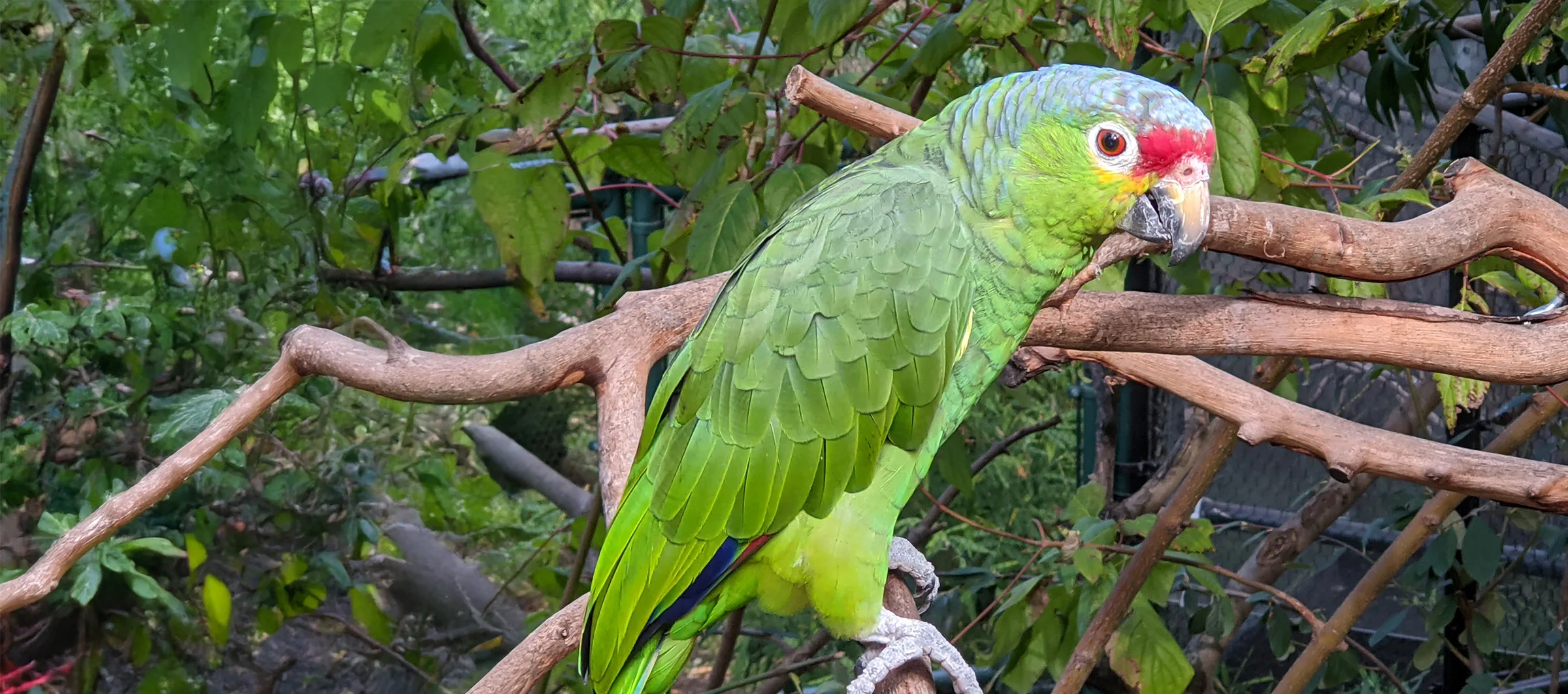
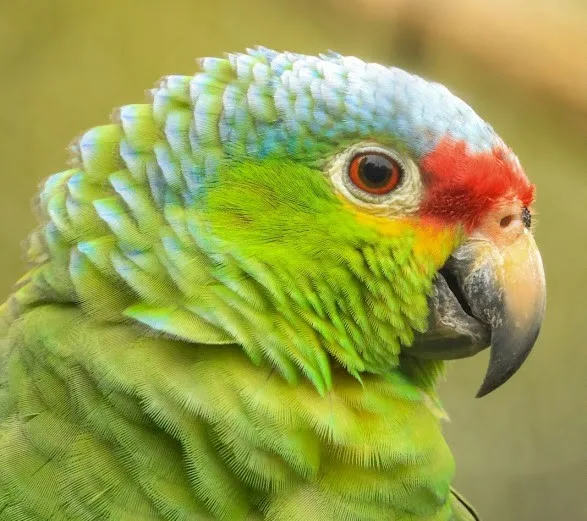
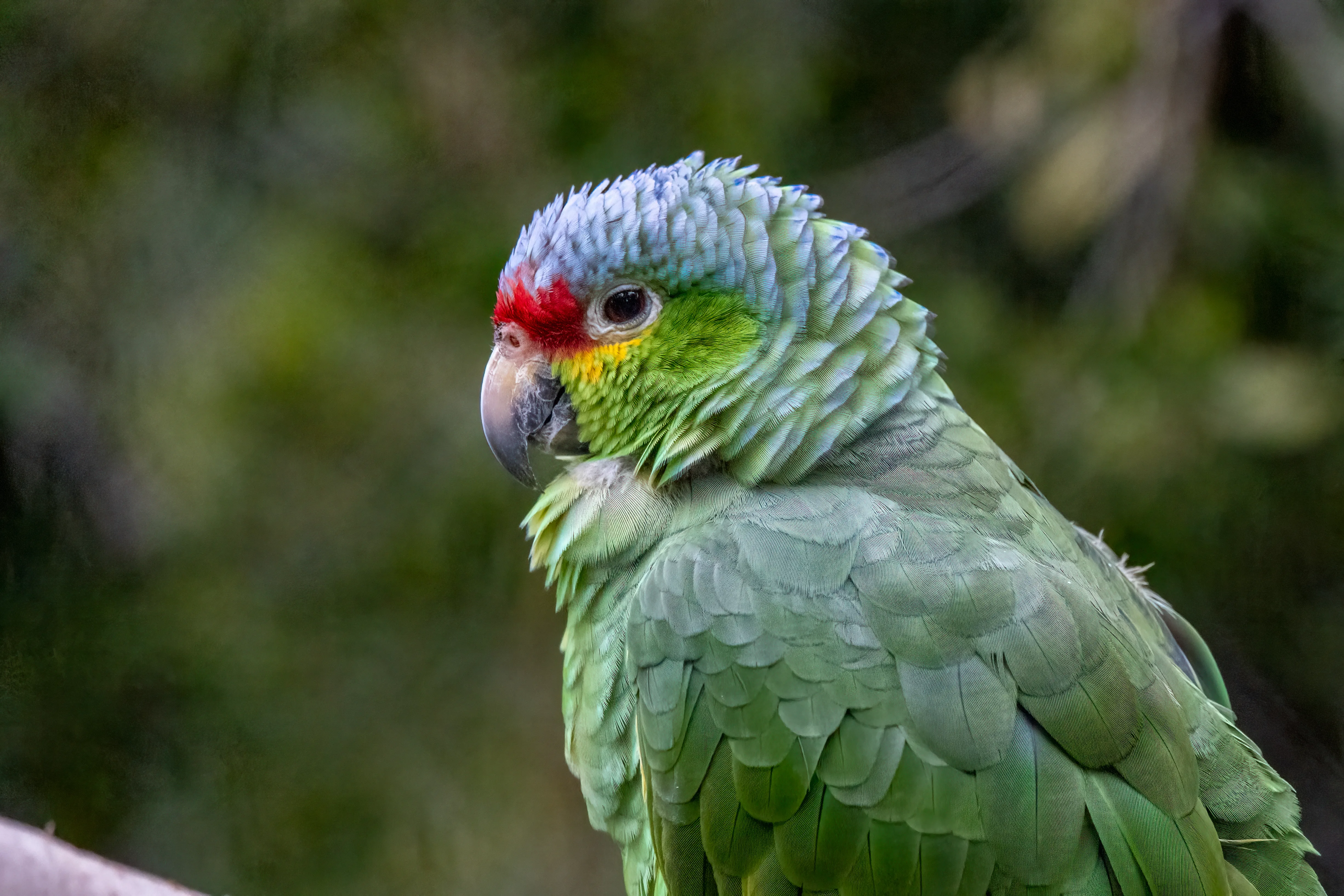
Like other Amazon parrots, Red-lored Amazons are stocky birds with characteristically green plumage. Red-lored Amazons are named for the red coloration of their lore, which is the area between the eyes and beak. They also have small patches of yellow feathers on their cheeks and pale lilac-blue feathers on the top and back of their head. While their body is predominantly shades of green, their wing feathers have shades of blackish-blue with red and yellow patches, which are only visible when stretched. Red-loreds are small Amazon parrots, measuring around 13 inches tall and weighing around 1 pound. Their legs are gray and have zygodactyl feet (two toes pointed forward and two towards pointed backwards), like all parrots do.
Habitat & Ecology
Red-Lored Amazons have a natural range that extends from Mexico south through Central America and down into Colombia and Ecuador. They prefer to live in forests such as dry forests and mangroves, rainforests, humid evergreen and semi-deciduous forests, gallery forests, and semi-wooded areas such as plantations and groves. They tend to avoid areas with too much human activity.
Diet
Red-lored amazons are herbivores and specialize in fruit such as palm fruit, figs, mangoes, berries, and citrus. They will also eat flowers, ripening legumes, and seeds of various native fruit trees that have hard skin.
Parrots have a very powerful beak and tongue that helps them with their diet. As humans, our upper mandible is fixed, meaning we can only move our lower jaw independently. In birds, the upper mandible is not fixed, adding an extra degree of flexibility. Parrots in particular have an astounding ability to move their upper and lower jaws independently. This allows them to do such things like peeling fruits and seeds in their mouths using only their beaks.
Behavior & Reproduction
Red-lored Amazons are a diurnal species of bird. The basic unit of their social structure is a mated pair that stays together year-round and mutually preens and feeds each other. They also forage in large flocks that include other Amazon species and macaw species as well. Red-lored Amazons are non-migratory, but nomadic, meaning that within their home range they switch their habitat usage seasonally, but do not migrate to other areas within their global range.
Breeding occurs during the wet season and is variable across their range but lasts about 3 months. In the northern part of their range, it starts later, starting in March or April and lasting until May. In the southern part of their range, it starts as early as December or January and lasts until February or March.
Females lay between 2-5 white eggs in a dead tree cavity, where they are incubated for 26 days. The chicks are cared for by the mother for their first ten days after hatching, after which both parents assist in feeding. During this time, the male will attend the nest during the day, but go to communal roosts at night. The chicks fledge the nest after about 55-60 days. Juveniles may stay with their parents after fledging for as long as a year. Sexual maturity is reached at around 3-4 years of age.
20-50 years
Wet season
3-4
1 year
Conservation
Red-Lored Amazons are currently listed as Least Concerned by the IUCN. However, they were last assessed in 2018 and were found to have a steadily decreasing population. While their population still inhabits much of their natural range, they are faced with habitat loss and unsustainable levels of exploitation. Many parrots are taken out of the wild to be part of the illegal pet trade.
Fascinating Facts
- Like all parrots, the red-lored Amazon has a bone in its tongue to help it husk seeds with dexterity.
- Red-lored Amazons were first described in 1758 by Carl Linnaeus, the creator of binomial nomenclature, which we use to name all organisms.
- Red-lored Amazons eat coffee beans.
About Our Animals
Oakland Zoo has one red-lored Amazon that lives with other Amazons in the Tropical Rainforest section of the zoo. His name is Junior, and he was hatched in 1997 at the San Francisco Zoo. He arrived at the Oakland Zoo in 2020 and has lived with our Amazon flock ever since! Junior is very smart and careful and takes time to process everything during training with the keepers.
Our Role
The Oakland Zoo has partnered with ARCAS, a non-profit Guatemalan organization that works to end the illegal wildlife trade in South America and rehabilitate affected animals.
If you are interested in having a parrot as a pet, do extensive research before deciding. Parrots are long-lived birds who may outlive their human caretaker. They require lots of stimulation, enrichment, and attention. If you are determined to get a parrot, please consider getting a rescued parrot as opposed to a young/baby parrot to avoid the risk of getting a parrot that was smuggled from the wild (a very traumatic experience for birds) and supporting the illegal wildlife trade. The Oakland Zoo is a conservation partner to Mickaboo Companion Bird Rescue, a good organization to adopt from.